Tuesday, June 30, 2009

New Zealand's Westpac bank commits second million-dollar blunder in just one month

Melbourne, June 27 (ANI): Just about a month after it had mistakenly put 10 million New Zealand dollars into the bank account of a couple from Rotorua instead of the requested 100,000 dollars overdraft, Westpac bank has committed yet another blunder by paying a customer 4.3 million dollars instead of 43,000 dollars.

Computer company Elite Business Systems, in Hamilton, received a Westpac fax on behalf of a client paying a bill.

However, the payment made was 4.3 million dollars rather than the expected 43,000 dollars.

"We were hopeful, almost had our tickets booked to fly out to Hong Kong," News.com.au quoted Elite Business Systems administration manager Graeme Richer as having told The Waikato Times newspaper.

Richer revealed that the bank later realised its mistake, and transferred the correct amount into the firm's account.

Westpac spokesman Craig Dowling said that the mistake occurred due to "a simple typing error".

"The most important thing was that the correct amount was transferred and that controls, including a verification process, were in place to ensure accuracy of such transactions," Dowling said.

The new blunder from the bank is shocking, especially, because police are already seeking the help of Chinese authorities to find the couple who have skipped New Zealand for Hong Kong, after getting extra money due to the last month's mistake.

Westpac said that most of the money had been recovered, but 3.8 million dollars were still outstanding. (ANI)

A V Rajwade: Giant gravy train - Reducing the colossal waste of funds in public sector is the real challenge

Whether it is Air India or various social welfare schemes, reducing the colossal waste of funds is the real challenge.

In a way, the timing of Nitish Sengupta’s article on the public sector published in this paper on June 21, was unfortunate. Just as he was singing paeans to the virtues of the public sector (how “companies did not go in for retrenchment and reduction of emoluments”; how “the public sector…has scaled glorious heights in recent times”), the Air India story started attracting headlines. It needs Rs 15,000 crore of taxpayers’ money. The Indian Express quoted Civil Aviation Minister Praful Patel as saying, “There is excess flab on the entire body of Air India, not only of manpower but due to salaries and the internal functioning style. The airline will have to improve its on-time performance, aircraft engineering, commercial operations, especially in the face of competition and choice (available to customers).”

Earlier, The Wall Street Journal quoted Dalbir Singh, the Congress party’s head of election logistic as saying, “Bureaucrats last forever. That is the problem.” He wants to “overhaul an entrenched, unresponsive bureaucracy that rewards mediocrity” and “pave the way for greater specialisation in the civil service”. Unfortunately, many employees in the public sector have become bureaucrats, in their mentality and attitudes, and Major Singh’s comments are perhaps equally applicable to them: Their “owners”, as represented by the netas and babus, are also much more comfortable with that culture, than with “a culture of enterprise and innovation” which the President lauded in her recent address to Parliament.

Apart from this, I tried to locate Air India’s balance sheet on its website. Unfortunately, the latest balance sheets available are those of March 2006 (Air India), and March 2007 (Indian Airlines). (Obviously, things have not improved since the time when Arun Shourie was disinvestment minister.) Newspaper reports suggest that the airline has about 50,000 employees, 60 per cent of whom are permanent; it has a debt of Rs 30,000 crore, a carried-forward loss of something like Rs 12,000 crore, and a hundred aircraft on order, which would doubtlessly need further public support. (Incidentally, American Airlines, which is no paragon of efficiency, has about 60,000 employees but seven times the number of aircraft, and services eight times the number of passengers.) As Shyamal Majumdar wrote in an article (What productivity?) in this paper on June 24, the productivity-linked incentives were “never linked to productivity from the start”; that every base-performance-level was so fixed that it could be easily exceeded, without any improvement in productivity or performance! Has Air India become a gigantic welfare state for its 50,000 employees, on whom it spends an average of Rs 600,000 per annum? (General Motors had become like this and its fate is well-known.)

This is not to condemn the public sector in general. It has some great companies, with highly committed and capable managers who are doing excellent work. Their problem is the bureaucratic, neta/babu stranglehold within which they are required to operate. There is of course a bigger issue: In terms of the priorities of the government, should its monetary and managerial resources be spent on bailing out Air Indias — or use them for high-on-priority social welfare of the truly poor?

Sonia Gandhi, the Congress party president, has recently written a letter to the Prime Minister recommending the passing of a National Food Security Act(NFSA) “to ensure food security for the poor and vulnerable sections of the society”. While nobody can question the worthy objective, does the government have the fiscal and, more importantly, administrative resources to meet this? In a prepared talk titled “Is India a Flailing State?” Lant Pritchett, who recently spent four years in India with the World Bank, argued that India is today “a nation-state in which the head, that is the elite institutions at the national level remain sound and functional but that this head is no longer reliably connected via nerves and sinews to its own limbs. In many parts of India in many sectors, the everyday actions of the field level agents of the state — policemen, engineers, teachers, health workers — are increasingly beyond the control of the administration at the national or state level ….. In police, tax collection, education, health, power, water supply — in nearly every routine service — there is rampant absenteeism, indifference, incompetence, and corruption. As this is true of even relatively routine services, even more so for more sophisticated ones like networked irrigation or groundwater management.” Mr Pritchett goes on to claim that, if you ask an official about India’s health system “you will get an elaborate and intriguing story about how many of this type of facility per that type of population, how each of those is staffed … all backed … with data and reports. Travel to any part of India … and you will realise that this description of India’s actual health system … is … a complete fiction.” Any comment is superfluous!

Unless delivery of the basic services to the poor improves quite significantly, whatever legislation the government may pass, an ever larger part of the country could come under the sway of the extreme left. For future historians, Lalgarh may turn out to be just a trailer, with the big picture still to unfold!

avrajwade@gmail.com

Monday, June 29, 2009

Maya gets SC notice for her Rs 1,000-cr statues

New Delhi: The Supreme Court issued a show-cause notice to Uttar Pradesh government for using public money for installing statues of Chief Minister Mayawati on Monday.

A vacation bench of the Supreme Court took up a public interest litigation (PIL) filed against Mayawati for allegedly misusing public money for installing statues of prominent Dalit leaders like Dr BR Ambedkar, Kanshi Ram besides party symbols.

The PIL seeks a stay on the inauguration of these statues on July 3.

The petitioner has alleged that the multi-crore projects of installing statues are being carried out as a state policy, which is arbitrary and violates Article 14 of the Constitution.

Sixty statues of the elephant, the party symbol of the BSP, have been installed at a cost of Rs 1,000 crore. The PIL also seeks the removal of Mayawati statues and all party symbols from public places.

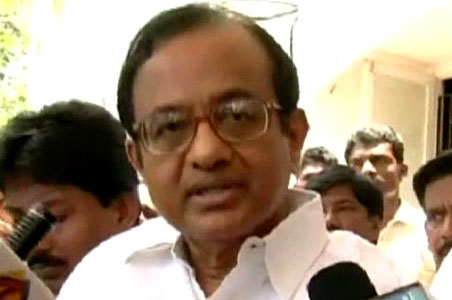
Union Home Minister P Chidambaram, too, described Mayawati’s alleged spending as “shameful.”

“She is spending Rs 1,000 crore on establishing statues of elephants and herself. Can there be something more shameful than this in Indian politics?” he asked.

“Of what use will be the statues in UP. The Rs 1000 crore could have helped wipe out poverty of thousands of people, provide basic amenities and education,” he said, addressing a meeting to thank voters of his constituency Sivaganga on Sunday night.

Pointing out that people all over the country had rejected caste politics, he said this was especially true in Bihar, Uttar Pradesh and Madhya Pradesh, “where 20 years of caste domination has gone”.

India's first 8-lane sea bridge in Mumbai to open Tuesday

The Rs.1,600 crore (Rs.16 billion), 5.6-km Bandra-Worli Sea Link (BWSL), India's first open 8-lane, cable-supported sea bridge that will reduce traffic congestion in this metro, will be inaugurated by Congress chief Sonia Gandhi Tuesday, an official said.

The BWSL inauguration will be held at the northern end of the sea bridge which joins Worli in south Mumbai with Bandra in north Mumbai, the official told IANS here Sunday.

A galaxy of leaders, including Maharashtra Chief Minister Ashok Chavan, Deputy Chief Minister Chhagan Bhujbal, central ministers Sharad Pawar, Vilasrao Deshmukh, Sushilkumar Shinde, Praful Patel, state ministers, legislators and parliamentarians shall attend the inaugural.

In construction for over 10 years, the new link between the southern island city and the northwest suburbs will be an alternative to the existing Mahim Causeway.

Currently, a daily traffic volume of over 1.4 million vehicles causes massive traffic snarls, especially during the morning-evening peak hours.

The distance of 8 km between Bandra and Worli currently takes 60-90 minutes to cover during the morning-evening peak hours.

'After BWSL becomes operational Tuesday, this travel time will reduce to barely six-eight minutes. It will also entail savings in vehicular operating costs (VOC) of over Rs.1 billion a year,' an official of the Maharashtra State Roads Development Corporation (MSRDC) said.

The chief attraction of the magnificent structure would be the two cable-stayed bridges, one 500 metres long (northern side) and another 350 metres long (southern side), for the passage of fishing boats.

The bridge rests on two towers, each 126 metres tall or equivalent to a 43-storeyed building.

MSRDC has plans to provide a viewers' gallery at the top of the towers which would offer a bird's eye glimpse of the entire city.

There is a modern, automated, 16-lane toll plaza at the southern end, and the bridge has been equipped with sophisticated security and monitoring systems.

Executed by Hindustan Construction Company over a period of more than 10 years, the MSRDC's project suffered a long delay of five years owing to various hiccups. The company will also maintain the bridge for the next five years.

The public sector giant, Steel Authority of India Ltd (SAIL), has provided almost two-thirds of the steel used in building the link.

The BWSL has gobbled up a total of nearly 22,235 tonnes of steel of which SAIL's share is pegged at over 13,780 tonnes, according to a senior SAIL official.

'The steel is of the best quality and has come from our integrated plants. All the steel rods, if laid in a straight row, would measure almost 3,000 kilometres or the breadth of India,' the SAIL official said.

Although the bridge is designed for speeding at 100 km per hour, initially the MSRDC plans to impose a 50 km per hour speed limit to enable motorists to get used to the bridge and prevent accidents. Two lanes are proposed to be reserved exclusively for buses and heavy vehicles.

Nilekani wants 'best talent' from govt, outside

Leading the ambitious Unique Identification Database project, Nandan Nilekani, former Infosys co-chairman, is keen to take the "best people" from the government and outside in his core team.

Nilekani said that in his book, 'Imagining India', he had devoted a chapter on using technology to transform the country and was happy that he could come close to implementing it in reality with this project.

"I am happy that the Prime Minister has reposed trust in me," he told PTI.

On the flexibility of drawing resources to build his core team, he said, "It is a national effort. I would look for the best people. It could be from the government, from outside".

sked whether his former colleagues would form part of the team, he said it was too early to say. "I want the best talent," he added.

Sunday, June 28, 2009

TOI Chennai wins two Golds in Films Lions

CANNES: It's an ad which has a foot-tapping score, which slowly envelopes you and then gets you into the groove. The Times of India 'A Day in

the Life of Chennai' ad followed a similar trajectory at Cannes 2009 as well.


The first screening in front of the films jury elicited an enthusiastic response and even as they put it through a rigourous scan, its appeal seems to have grown on all of them. And on the last day, the Films Lions jury was unanimous in its verdict: Pure Gold.

The Nakka Mukka campaign has made Cannes history for India, picking up not just one but two Gold Lions at the International Advertising Festival. With the win, JWT India wrapped up its innings with three Gold Lions in its kitty thus giving the Indian contingent a lot to cheer about. They’re the final two wins that took the Indian tally to 25, two more than last year's 23.

Andrea Stillaci, jury member said he was blown away when he heard Nakka Mukka. “Mixing social life, politics and amazing music in just one minute was fabulous,” he said. For jury chairman David Lubars, chief creative officer BBDO North America, the TOI ad saw the perfect combination of elements – but he singled out the song for a special mention.

"Any other song wouldn't have done," was his verdict. What makes the TOI win even more special is the fact that the jury has applied extra rigour to the judging process this year. Said Lubars, "Some scams may have slipped under the net, but the vast majority are real ads which have delivered value for the clients in such an adverse economic climate."

Senthil Kumar, ECD, JWT India, who wrote the ad, said that the interesting part is that the world's largest English newspaper spoke to the largely Tamil audience in their mother tongue and helped raised a folk phrase from the underbelly of Chennai with its cinema, politics, superstar minister and every other double role in just two words; 'Nakka Mukka'.

Even member of the jury, Agnello Dias, chief creative officer, TapRoot India, who was involved in the project when he was with JWT said that in the second and third viewings, more and more nuances of the film came across.

"I also seem to have a history of being associated with memorable films in my past few agencies where TOI is concerned. In Leo Burnett it was the Pakya — Old man hockey film and now it is this."

Piyush Pandey, executive chairman & NCD, Ogilvy India, said; "India is actualising what it has been capable of for a very long time and today we are getting our due. I am very proud of the Indian contingent and I hope the youngsters are inspired to convert the 25 metals to 40 next year."

Saturday, June 27, 2009

Jackson dies, almost takes Internet with him

London: How many people does it take to break the Internet? On June 25, we found out it's just one -- if that one is Michael Jackson.

The biggest showbiz story of the year saw the troubled star take a good slice of the Internet with him, as the ripples caused by the news of his death swept around the globe.

"Between approximately 2:40 p.m. PDT and 3:15 p.m. PDT today, some Google News users experienced difficulty accessing search results for queries related to Michael Jackson," a Google spokesman told CNET, which also reported that Google News users complained that the service was inaccessible for a time. At its peak, Google Trends rated the Jackson story as "volcanic."

As sites fell, users raced to other sites: TechCrunch reported that TMZ, which broke the story, had several outages; users then switched to Perez Hilton's blog, which also struggled to deal with the requests it received.

CNN reported a fivefold rise in traffic and visitors in just over an hour, receiving 20 million page views in the hour the story broke.

Twitter crashed as users saw multiple "fail whales" -- the illustrations the site uses as error messages -- user FoieGrasie posting, "Irony: The protesters in Iran using twitter as com are unable to get online because of all the posts of 'Michael Jackson RIP.' Well done." The site's status blog said that Twitter had had to temporarily disable its search results, saved searches and trend topics.

Wikipedia saw a flurry of activity, with close to 500 edits made to Jackson's entry in less than 24 hours. CNET reported that by 3:15pm PDT, Wikipedia seemed to be "temporarily overloaded."

The LA Times, the first news organization to confirm Jackson's death, suffered outages. The site also reported that AOL's instant messenger service had been hit, quoting an AOL statement that said, "AIM was down for approximately 40 minutes this afternoon." The statement said, "Today was a seminal moment in Internet history. We've never seen anything like it in terms of scope or depth."

By Friday morning, news sites seemed to be coping with traffic but Jackson fan site mjfanclub.net was still performing sluggishly. Mashable.com reported that tributes to, and remarks upon, Michael Jackson's death were responsible for 30 per cent of tweets.

As with any breaking piece of news on the Web, the reports of Jackson's death sparked something of a feeding frenzy - and with that came rumor that dragged in other celebrities completely unconnected to the King of Pop's death.

One Wikipedia prankster wrote that Jackson had been "savagely murdered" by his brother Tito, who had strangled him "with a microphone cord."

Soon rumors spread online that movie star Jeff Goldblum had fallen from the Kauri Cliffs in New Zealand while filming his latest movie. On several search engines, "Jeff Goldblum" soon became the only non-Jackson-related term to crop up in the top 10.

The rumors forced Goldblum's publicist to issue a statement to media outlets, saying: "Reports that Jeff Goldblum has passed away are completely untrue. He is fine and in Los Angeles."

At the same time Harrison Ford was also rumored to have fallen from a yacht off the south of France.

Web site snopes.com, which shoots down rumors, gossip and urban legends -- and how they originated -- said the likely culprit was a Web site which allows users to input celebrity names -- and then inserts them into fake templated stories (a further variant has stars dying in a plane crash).

In a sense the feeding frenzy was understandable -- Jackson's death, coming only hours after that of 1970s icon Farah Fawcett, left many Web users, shocked by the news of Jackson's death, asking what would happen next. In this febrile climate any rumor runs the risk of being seized on, believed and treated with more credulity than usual.

The need of the professional media to be first with the news -- many did for a short time report the Goldblum rumor as fact -- adds further veracity. And, of course, the whole process is speeded up by the Web.

There is also, of course, the old adage that celebrities die in threes, with the deaths of Gianni Versace, Princess Diana and Mother Teresa in 1997 frequently held up as an example of this.

advertisement

But while Diana and Teresa passed away with seven days of each other in August and September, Versace was killed in early July. Their deaths were most keenly mourned by the same broad sections of the public – and hence were inextricably interlinked.

The Web can link disseminate news – but like any form of communication it can also help us create what we expect to see next.

Wipro to slash variable pay by half

Employees who are on the bench for at least 60 days in a quarter to be affected.

To cut costs further, Wipro Technologies, India’s third largest information technology services provider, is understood to have effected a 50 per cent cut in the variable pay of a certain band of employees who are not billable (on the bench) for at least 60 days in a quarter.

Last year, the company had cut the variable pay of employees who were not billable for at least 75 days in a quarter. The new policy was made effective from the first quarter of fiscal year 2010.

The variable pay policy in Wipro, which is known as the Quarterly Performance Linked Compensation (QPLC), is decided every year and given to the employees on a quarterly basis. Wipro decides the QPLC of employees based on their level and seniority in the organisation. The company has decided to give variable pay to a certain band of employees (e.g. project managers) only when their respective business units achieve 80 per cent of the business targets set for the quarter.

Company sources say variable components comprise around 10 per cent of most Wipro employees’ total cost to the company (CTC). So, the overall compensation of the employees who are not billable for at least 60 days in a quarter will be impacted by around 5 per cent.

Wipro’s HR Head Pratik Kumar said, “We revisit our variable plan every year. This year, fundamentally we have not changed anything.” He added that “it (the 60-day number) is too specific a number to comment on.” He, however, added that the individual billability-linked system has been there in the company for the past two-three years. “This is not something we have introduced recently.”

Wipro had 97,810 employees as of March 31, which includes 74,986 working with the company’s IT services business. Of these, close to 8,000 are on the bench. However, not all will be affected, since in the case of a certain level of employees — who are primarily into sales and support roles — the QPLC has been linked to the performance of the overall (IT) business of the company. For employees belonging to certain other bands, it has been linked to the profitability of their respective business units, as well as the company’s overall business performance.

The QPLC of the third category, which comprises primarily software engineers and constitutes the largest chunk of the overall employees, is linked to an individual’s billability factor and the performance of the company. The individual billability factor and the performance of the company is being given equal weightage while deciding a variable pay of the employees in a particular quarter, for this third category of employees.

Birlasoft among 10 best outsourcing service providers in Australia, New Zealand

Noida, (UP), June 25 (ANI/Business Wire India): Birlasoft has been named among the top 10 best outsourcing service providers in Australia and New Zealand region, by the International Association of Outsourcing Professionals (IAOP), in their list 2009 Global Outsourcing 100.

Birlasoft has been chosen by an independent panel of industry-recognized experts from business and academic institutions. Birlasoft's selection is based on a set of measurable parameters like excellence in service delivery, customer experience, technical competencies, management capabilities and growth.

"Each year the competition to be named to the top 100 companies continues to reach higher levels, as the outsourcing industry continues to grow and mature in many markets. This year, the judges evaluated the most diverse set of applicants we've ever had, with ongoing strong interest from Asia-Pacific and Europe," said Jagdish Dalal, Managing Director, Thought Leadership, IAOP.

Commenting on the development, Brajesh Ugra, executive vice president and managing director APAC, Birlasoft, said, "We are honored to be recognized by IAOP as one of the leading outsourcing providers in Australia and New Zealand. This award stands testament to our commitment to provide substantial value that enables the business of our clients." Birlasoft has Citibank, Genworth Financial, The Hospitals Contribution Fund of Australia Limited (HCF) and Stream Solutions (a toll holdings company) as some of its customers in this region and has offices in Sydney and Melbourne.

Birlasoft is a leading provider of IT services in both onshore and offshore models to Fortune 1000 as well as SMBs in BFS and I, retail, healthcare, manufacturing and ISVs.

Birlasoft's services include application development, support and maintenance, enterprise application implementation, integration, infrastructure management and QA and testing.

Birlasoft's robust delivery processes embrace digitized project management methodologies, embedded within proven practices of Six Sigma and SEI CMMi Level 5 on Continuous Representation.

Headquartered in Noida (National Capital Region), India, Birlasoft has about 4000 employees across Americas, Europe and APAC.(ANI)

Friday, June 26, 2009

PC apologises to Kandhmal riot victims


Home Minister P Chidambaram, who is on a two-day visit to Orissa, visited one of the relief camps in riot-hit Kandhmal district on Friday.

While speaking to the victims, he apologised for the conditions they had to face in the wake of a series of communal clashes following the killing of 85-year-old VHP leader Swami Laxmananda Saraswati in August 2008.

"I am sorry that certain things happened last year and you have been brought to these camps. But you must go back to your villages. I am here to tell you, don't fear," he said.

Condemning the incident, Chidambaram asked them to start life afresh, build the churches and practice their religion.

"Whatever happened was wrong. Build your churches and practice your dharma," he said.

When some refugees spoke of fear of RSS and Bajrang Dal, the Home Minister assured then that the guilty will be "prosecuted and punished."

"All those who have indulged in this ghastly crime will be prosecuted and punished," he said.

The Home Minister visited Mandaika, Rahikola, Tinigia and Tikabali camps in the district providing shelter to about 1500 people.

The Home Minister, who is on his first visit to Orissa after the Lok Sabha polls, patiently listened to the plight of the victims living the camps.

"Bringing back all displaced is our endeavour. What happened was wrong. Over 4,620 families were affected out of which majority have returned. Now only a few - approximately 1,500 -- have to go back," he said.

On some residents' complaint that the state government's relief of Rs.10,000 was inadequate, Chidambaram assured them that he would take up the matter during his meeting with Chief Minister Naveen Patnaik.

"Christians are living all over the country and it is not correct to say they are not being protected," he said. The Kandhamal riot victims are being used by Naxals for creating communal divide in the area in order to strengthen their base among the local minority population, the officials told the Home Minister.

Several groups of Naxals have been seen tying up with minority groups in the area to win their support, official sources said.

"The killing of Saraswati was the handiwork of Naxals. The RSS leaders, who were arrested during the riots, were also killed by them in a targetted manner after their release," they added.

Nilekani quits Infosys to head Govt's unique ID project

New Delhi: Nandan Nilekani resigned as Co-Chairman of Infosys Technologies and its board on Thursday. Prime Minister Manmohan Singh has given him a mission to head an IT-driven Government program for providing unique identification numbers to citizens of the country.

“I am sad to let go off that great and intimate association but this was an offer for which I could not have refused,” says Nilekani.

This project which count, account and acknowledge every Indian citizen.

Once a person gets his UID or unique identification number he will not have to carry so many identity cards. It will not only make one’s wallet lighter but has many other benefits too –

  • One permanent identifier from birth to death

  • No need for multiple documentary proof

  • Deters illegal immigration, curb terrorism

  • Change of name and address? Change only in UID

  • Facilitates online verification

  • Prevents defaults; frauds

“We will need one year to roll out unique IDs. The UID system will be superior to any existing identification system. The UID will have biometric identification system. Other ministries can use UID system,” says Planning Commission Deputy Chairman, Montek Singh Ahluwalia.

WHAT WILL THIS CARD LOOK LIKE

This card will look like a credit card and will make your life simpler but there is more to it.

  • Birth date, parents, address details embedded

  • Given at birth

  • Carry photo and finger impression

  • Income level, education might be included

  • Microprocessor chip-acts like a mini computer

  • Memory of 16KB

Can't be tampered and cloned

This is also seen as a boost to Indian IT companies hit by downturn in Europe and America. America was the first country that implemented the unique ID cards for its citizens.

Nilekani comes with the administrative skills and an indepth understanding of IT solutions to enumerate this country of a billion plus.

9 out of 10 Aussies feel racial bias exists Down Under

Australians are in two minds about multiculturalism, and a long-term survey has found that nine out of 10 Australians believe that racial prejudice exists in the country.

They believe cultural diversity is good for the country but are worried that cultural differences will stop everyone from getting along.

An 11-year study by a collaboration of Australian universities has found 85 per cent Australians acknowledge racial prejudice occurs in the nation, and one in five has been a victim of racist verbal abuse.

The study found that 6.5 per cent of the 16,000 Australians surveyed were against multiculturalism, The Sydney [ Images ] Morning Herald reported.

Professor Kevin Dunn, from the University of Western Sydney's school of social science, said the study revealed that the majority of Australians are pro-multiculturalism but are anxious that the diversity will not be managed well.

'Over 40 per cent of those surveyed feel that cultural differences pose a threat to societal harmony. So if you take that alongside the 87 per cent that are pro-multiculturalism, clearly you've got a third of the nation that tolerate cultural diversity, but are concerned at the impact it will have on society,' Professor Dunn said.

"The Cronulla riots and the recent attacks on people of Indian descent are an example of this. The figures show that 85 per cent of Australia [ Images ] acknowledge there is racial prejudice in the country," he added.

Dunn believes previous governments have done nothing to address the issue for the past decade, with Aboriginal and Torres Strait Islander Social Justice Commissioner Tom Calma spending only part of his time dealing with race discrimination.

'For the last decade, the government hasn't appointed a full-time Race Discrimination Commissioner. Take the issue of the Indian students recently. There's no way that the commission is resourced enough to deal with their (the Indians') reports (of violent attacks on them), and to offer support and advice,' he said.

The survey also found that at least one in five Australians experience verbal abuse such as offensive slang names for different cultural groups, or swearing and offensive gestures, while 11 per cent feel they don't belong or are inferior.

Mayawati to unveil 40 statues, six of them of herself

NEW DELHI: Uttar Pradesh chief minister Mayawati is all set to unveil 40 statues — including six of her own — on July 3, along with the Kanshi

Ram Memorial and the Gautam Buddhasthals, which has cost the state exchequer dear.

According to the reply of an RTI filed in the Lucknow Development Authority (LDA), statues of Mayawati and Kanshi Ram at various places in Lucknow and erected by LDA, cost Rs 6.68 crore. And, the 60 marble elephants at the Ambedkar memorial cost Rs 52 crore, according to the reply. If the figures in the Uttar Pradesh budget are anything to go by, this is just the tip of the iceberg.

The Uttar Pradesh culture department's budget for 2009-10 shows that in 2008-09, the department had allocated more than Rs 194 crore for building statues of "great leaders" — the entire amount was spent.

Thursday, June 25, 2009

Troubled Satyam woos NAB

TECH Mahindra will hold high-level talks with key corporate clients in Australia next week in a bid to salvage the reputation of troubled Indian IT services firm Satyam Computer Services.

National Australia Bank is one of the key customers Tech Mahindra executive vice-chairman Vineet Nayyar will be meeting.

Mr Nayyar will be in town to spruik Satyam's new identity -- it has been renamed Mahindra Satyam -- and try to regain its standing with NAB and clients such as Qantas and Suncorp.

In February NAB suspended work on the second phase of an outsourcing contract after Satyam's co-founder admitted cooking the books to the tune of $US1 billion ($1.3bn). Tech Mahindra is the company's new owner.

However, Satyam continues to provide application development and IT maintenance services to NAB. "We still have a relationship with Satyam, but we haven't committed to anything further with them,'' NAB group business services chief Gavin Slater said.

"We've been monitoring the situation closely and Satyam has been meeting all the service-level agreements that have been in place.''

Mr Slater confirmed he would be in talks with Mr Nayyar, who will be in Melbourne and Sydney as part of a three-day visit.

"As you would expect, they're very keen to continue the relationship with the NAB,'' Mr Slater said.

The talks would not result in specific decisions, he said. "We'll make any decisions (regarding Mahindra Satyam) in the future as we see fit."

NAB's outsourcing program is part of a plan to upgrade the bank's legacy technology systems that includes spending $1 billion over five years on revamping its core banking systems.

The first phase of the overhaul to next generation systems will start with UBank -- NAB’s new direct banking business.

UBank will be delivered by Oracle under a $30 million agreement.

"UBank is nearly done and dusted, on-time and on-budget," Mr Slater said. "We'll spend the next two to three months on how to move ahead with the second phase of the project."

Meanwhile, NAB has made significant changes to its technology team and 10 senior executives have left the bank, including Craig Bright, the right-hand man to ousted chief information officer Michelle Tredenick.

Former Jones Lang LaSalle chief executive Christine Bartlett has been named executive program director for the bank's $1bn next-generation core banking overhaul project. She will join the bank on July 6.

My priority is to leverage Satyam's strengths': Mahindra Satyam CEO Gurnani

CP Gurnani, the new CEO of Mahindra Satyam, brings to the table over two decades of experience in the IT industry. As head of global operations

in Tech Mahindra, he played a key role in expanding the non-British Telecom business of TechM . The ex-HCL honcho has his task cut-out of restoring credibility and customer confidence in fraud-hit Satyam. Tech Mahindra will hold a stake of up to 43% in Satyam, if the open offer fails to elicit response, said Mr Gurnani in an exclusive interview with ET Bureau. Excerpts:


What are your top priorities?

Our single-minded objective is to get Satyam back to the status that it enjoyed as a respected top-tier IT services player. The company has tremendous strengths in delivery excellence, its committed associates and differentiated service offerings. My priority is to get the company re-energised and leverage these strengths effectively, to gain traction for accelerated growth.

What are the key challenges ahead?

The past few months have been a difficult period for Satyam and its associates. They have stood by the company and stepped up the quality of the services. We are in a phase of stabilisation now — stabilising the organisation, the business and the financials.

What will be TechM’s stake in Satyam, if the open offer does not elicit any response?

We will go up to 43%, if the open offer does not elicit any response.

What will be the joint go-to-market strategy between TechM and Mahindra Satyam?

We are looking at taking Mahindra Satyam’s extended services in enterprise business services, engineering and consulting to the TechM customer base and these efforts have started. Similarly, TechM’s expertise in account-mining and innovative pricing models would be leveraged as we expand and deepen the relationships with Mahindra Satyam customers.

Are you planning to restructure verticals to optimise revenues?

We have redesigned the organisation structure to make it even more customer-centric and agile. Our access to customers and geographical penetration stands further enhanced, as decision layers are being minimised and a greater role is being envisaged for the delivery teams in mining and nurturing accounts.

Will there be more top level changes in the firm?

We are keen to keep the customer facing organisation as stable as possible. Having said that, if there are specific changes required — based on market and organisational realities — we will continue to make them with minimal disruption to the business.

Will it be big-ticket contracts or large number of small contracts to boost revenues?

It is a strategic imperative to pursue all possible deals. Both options will, hence, be actively pursued. Mahindra Satyam still has a robust customer base — a number of them in the Global 500 list. We are viewing this as an opportunity to invest in these relationships, mine them effectively and grow them at a steady pace

Are you also looking at re-pricing contracts to beat competition?

Re-pricing to outbid competition is not a sustainable strategy. What is of importance is to be able to show value growth for our customers and share in the gains that we can enable them achieve.

Is out-of-court settlements in legal disputes being considered? What is the revenue target for this fiscal?

Given that the matter is sub-judice, it would be inappropriate for me to comment on the case or on the recourse being contemplated. We cannot comment on the specifics on revenues cannot comment on the specifics at this time. We still have challenging times ahead. But I am confident that the collective efforts of the team will help us tide over this situation

When will the re-statement of Satyam’s accounts be completed?

We continue to work on expediting the announcement of restated financials. Given the gravity of this issue, it is expected to take some more time. At this stage, we are unable to commit to an exact timeline.

Wednesday, June 24, 2009

Mynampati Quits Mahindra Satyam

BANGALORE -- Ram Mynampati, the former interim chief executive of fraud-hit Satyam Computer Services Ltd., now called Mahindra Satyam, has resigned from the company, Mahindra Satyam's newly appointed chief executive said Wednesday.

U.S.-based Mynampati, who was the president of the commercial and healthcare divisions, has been replaced by Keshav Panda, C.P. Gurnani told Dow Jones Newswires.

Mr. Panda was the company's Europe head as well as heading its manufacturing, automotive, energy and utilities services divisions. Gurnani declined to elaborate on Panda's replacement.

Mr. Mynampati, also a former board member, had taken over as the interim chief executive in January after founder and former chairman B. Ramalinga Raju revealed he overstated Satyam's profits and revenue and created fictitious cash balances.

Mr. Mynampati was subsequently removed after the government stepped in and disbanded the board and appointed new directors. He has since been in the U.S. and couldn't be immediately reached for comment.

TCS, Infosys see signs of recovery on order flow

BANGALORE: India’s top two software exporters TCS and Infosys are seeing the first signs of an economic recovery as their top customers start
ET-NOW
discussing outsourcing contracts in order to further reduce their operational expenses. For instance, customers of Infosys, which signed over $100 million contract with Australian phone firm Telstra earlier this month, are now saying that the worst may be behind them.

“There is a lot more confidence among our clients; they feel that the worst is behind them. Especially in the US, many customers are saying that they were aggressive in reacting (to the recession)-they cut costs and renegotiated contracts,” S Gopalakrishnan, chief executive of Infosys told ET NOW. In a year when both Infosys and TCS have cautioned their investors on lower to negative growth in revenues, India’s $40-billion software exports industry is going through one of the toughest recessions in over two decades.

TCS, which counts Citigroup and GE among its top customers, is also seeing the first signs of recovery when it comes to the IT spending.

“We are seeing a recovery, but at a slow pace. The overall decline is slowly getting arrested. The recovery is showing but can’t predict the slope of this recovery,” N Chandrasekaran, chief operating officer, TCS told ET NOW.
Despite, financial problems and tightened IT budgets customers continue to work with offshore outsourcing companies in order to lower their operational costs anywhere between 20-30%.

As reported by ET earlier, tech biggies such as TCS, Infosys, Wipro and HCL are all set to get new outsourcing contracts worth $4 billion from top customers including British Telecom, Citi, GE and Bank of America this year. In a bid to cope with their tightened budgets, these companies plan to send their information technology works to offshore locations such as India.

Meanwhile, the ongoing slump is forcing many customers to evaluate different models of outsourcing, beyond traditional mode of structuring a contract based on number of hours and number of professionals on different projects.

“In the BSFI Segment itself I think that the downturn will drive some changes in terms of how clients engage with their partners. One major shift is shifting from capital expense to operational expense-it may be an interesting model to watch for in the future,” Mr Gopalakrishnan said. While top customers in the US are gradually beginning to discuss new outsourcing contracts, companies in Europe have been more active on the outsourcing front. According to research firm Gartner, almost 60 per cent of organisations in Western Europe will outsource more IT and business process functions in 2009, while renegotiation of existing contracts will rise to more than 60%.

“The focus on cost reduction is driving a high usage of outsourcing and global delivery in Europe in 2009 and 2010. However, under the current economic and technological conditions prices are going to decrease, creating a market full of opportunities and challenges for both end-users and external service providers,” said Claudio Da Rold, vice president and distinguished analyst at Gartner. Gartner anticipates prices of IT services outsourcing to decline by 5% to 20% through 2010.

Crusader against injustice

NDTV Correspondent, Wednesday June 24, 2009, New Delhi


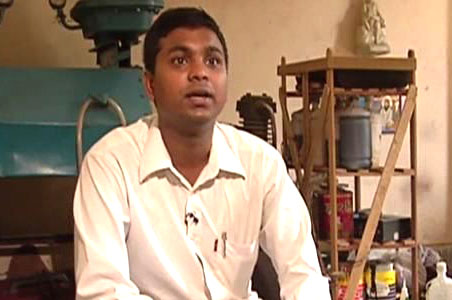
A crusader against injustice who has successfully raised his voice against some unscrupulous LPG dealers, Devendra Kumar lives in a slum in south Delhi where some gas dealers would refuse a new connection if the customer did not buy a stove from them.

Worse, they would even charge nearly four times the price of the stove. Two years ago, Devendra who was 20 then, filed an application with the Indian Oil Corporation under the Right to Information Act.

Within a month, he got a response that came as an eye-opener. It said customers cannot be forced to buy the stove from the dealer and that there is no provision to wait for 21 days to get a cylinder refilled.

"When the RTI Act was passed, I wasn't fully aware of it. But in 2007, when I got to know the provisions, I realised that it was equivalent to the powers of an MP or an MLA," says Devendra Kumar, RTI Activist.

Devender and his friends circulated copies of the RTI response among slum dwellers, educating them about their rights. They got threats from the gas dealers but Devendra didn't budge - a move that finally paid off.

"Now when I go, then they all stand up and all the work is done in minutes but I want the same treatment to all," observes Devendra.

Devendra refurbishes designer shoes for a living. Now that he knows the power of RTI he's trying to make lives easier for many others.

Tuesday, June 23, 2009

Are Australian employers racist?

A new study has revealed that people with foreign or indigenous-sounding name have less chance of landing a job in Australia [ Images ].

However, applicants with Italian sounding name or if they are Melbourne-based, have an advantage.

The study was undertaken by Australian National University researchers Alison Booth, Andrew Leigh and Elena Vargonova who sent out 4000 fake job applications to employers advertising on the Internet for entry-level hospitality, data entry, customer service and sales jobs, changing only the racial origin of the supposed applicants' names.

The study revealed that applicants with Chinese names were the least preferred having only a one-in-five chance of getting interview calls compared to applicants with Anglo-Saxon names whose chances exceeded one-in-three.

Typically a Chinese-named applicant would need to put in 68 per cent more applications than an Anglo-named applicant to get the same number of calls back and a Middle Eastern-named applicant needed 64 per cent more, an indigenous-named applicant 35 per cent more and an Italian-named applicant 12 per cent more, the study published in The Age said.

However, the results varied from city to city.

Taking a comparison of other cities the study said, Sydney [ Images ] employers were generally more discriminatory than those in Melbourne [ Images ] or Brisbane [ Images ], except when it came to indigenous names, where they were more accepting.

Melbourne employers were seven per cent more likely to respond well to someone with an Italian name than they were to an Anglo name, it said.

Leigh pointed out that the 7 per cent bias in favour of Italian-sounding names was not statistically significant. "But what it does allow you to say is that there is no statistically discernible discrimination against Italian names in Melbourne. They are as well-regarded as Anglo names. This could be because Melbourne has a higher share of Italians than other Australian cities, and has had for a long time. Discrimination tends to be higher when you have a recent influx of arrivals, as Sydney has from China and the Middle East," Leigh said.

"Or it could be because many of the jobs we pretended to apply for were waiter and waitress positions in bistros, bars, cafes and restaurants," he added.

On the query if the study found that Australian employers were racist, Leigh said it was clear they discriminated on the basis of the racial origin of applicants' names.

"There is no other reasonable interpretation of our results," he said. The fake applications had made clear that the supposed job-seekers had completed secondary schooling in Australia, making it unlikely that the employers had assumed the non-Anglo applicants could not speak English.

Justice for one, justice for all

The landmark Right to Information act was passed by parliament almost 4 years ago. Since then this powerful law has brought about accountability from governments. Well there are just a few days left for all those who feel they have either used or facilitated the use of this powerful law to submit nominations to the first ever RTI awards.

This is the story of Jaspal Singh, a Right to Information crusader because of whom one lakh citizens of Chandigarh could vote again.

Forty-five-year-old Jaspal Singh was a relatively unknown journalist in Chandigarh. An RTI crusader in his free time, he helped friends and neighbours solve problems they faced in government offices.

Then in October 2008, he discovered his name was not on the electoral rolls.

He filed an RTI application demanding an explanation.

The reply was startling. Names of one lakh voters including his has been mistakenly deleted by the agency to which electoral roll processing had been outsourced.

"Those who deleted my name, my wife's name, and names of other voters in Chandigarh without any reason were penalised Rs 1 lakh. We very got our names back on the voter list," recalls Jaspal Singh.

Because of Jaspal Singh, one lakh citizens of Chandigarh could vote and he became a mini celebrity.

Now, he has been nominated for an RTI Award that goes to citizen crusaders who have used the Right to information Act to make a difference all along encouraging others to do the same.

"Every every citizen of the country should become aware and they should know and exercise their rights. They should fight for their rights," says this RTI activist.

The politics of education

P.V. Indiresan

Competition will work where there is no scarcity of any commodity. Evidently, the number of aspirants to colleges of similar quality is much larger than the number of seats available. It is this scarcity that is impelling the corruption, says P.V. INDIRESAN.


Competition by itself will not eliminate corruption.

A couple of medical colleges in Tamil Nadu have been caught red-handed taking unauthorised money from applicants for admission. There is nothing really new about their story which is known to happen in many (if not in most) private institutions. The new minister for HRD wants to change the situation. The solution that has been offered is a High-Power body to regulate and oversee colleges. On the face of it, such a solution appears fine and reasonable. Is that really true?

We already have a High-Power body in the University Grants Commission which does have the responsibility to maintain high standards of admission as well as for ethics. If UGC could not maintain standards and ethics, what guarantee is there that yet another High-Power body will succeed? What guarantee is there that such a body, however high-powered it may be, will not be subverted the way the UGC has been?

Competition effect

Not very long ago, we had corruption in the allotment of telephones and of cars. There are no such complaints any more. Competition is the reason why suddenly corruption collapsed and the number of telephones and of cars increased enormously. Similarly, should not competition act as a remedy for corruption in this case too? If so, considering there are thousands of professional colleges, why is that not happening in education?

Competition will work where there is no scarcity of any commodity. Evidently, the number of aspirants to colleges of similar quality is much larger than the number of seats available. It is this scarcity that is impelling the corruption.

In that case, will corruption vanish if there are no restrictions on the numbers of colleges? Possibly, yes. If the number of seats in medical colleges is in excess of the number of aspirants, theoretically, there should be no corruption at all. Unfortunately, college education is not like having a mobile. All mobiles of a particular type are identical; anybody who wants any particular model can get it. Likewise, if everyone who wants to study in any particular college can get admission, there will be no corruption. Unfortunately, that is not feasible; every college has a limit to the numbers it can admit. Hence, better colleges will have to reject many aspirants and that rejection can lead to corruption.

In other words, the system of education is such that competition by itself will not eliminate corruption. That is why regulation appears to be such a good idea. Unfortunately, a single regulator is a monopolist and is liable to suffer from all the ills of monopoly.

Ethical rules and anomaly

Suppose we look at the issue from the context of money only: Why not have colleges that admit only on the basis of the fees the student is willing to pay? It legalises the practice that actually prevails in many professional colleges these days.

If colleges are given that freedom, the several billion dollars that our parents are spending every year to get their children educated abroad will virtually vanish. If Harvard and Stanford are willing to admit an Indian student on the basis of the fees the student is willing to pay, why should the University of Delhi or the IIT Madras refuse admission to the same student?

The fact is we are applying certain ethical rules in the education field that we do not apply elsewhere. A rich child can go to an expensive school, travel to school in a car, have dinners in Five-Star hotels, live in a grand bungalow and enjoy many comforts which a poor child cannot. Those luxuries are legal and accepted. However, when it comes to college education, that benefit is removed; the rich child has to compete with poorer ones (often on unequal grounds) and pay the same fees.

Private colleges are exploiting this anomaly. The country is aghast that they do so. It is not aghast when rich children go to better appointed schools — which no poor child can ever hope to attend. The result is the country loses — according to one estimate —– $5 billion a year with rich children studying abroad (and getting into trouble in countries such as Australia).

Changes in the UK system

The UK had a reasonably equitable system till the 1970s: It selected bright students at age eleven and sent them to grammar schools where they got good quality education. The result was that till the 2000s, the top positions in various professions was quite democratic; children from both rich and poor families could rise to the top.

In the 1970s, the socialists removed the eleven-plus examination on the argument that it was unfair to “late developers”. The consequence was that the middle class and the richer families opted out of government schools and sent their children to private schools – and got them much better education. The result is that, in England, top positions are no longer democratic the way they used to be; children from poorer families have far fewer chances of rising to the top.

What should India do?

As a matter of fact, family culture is important; middle class families inculcate an interest in education in their children which the poorer families often (but not always) do not. Hence, inherent IQ is important but a certain loss of IQ can be compensated by effort — which, mainly, middle-class families emphasise. Further, the moral of the English experience is that government schools cannot combine competent with less competent students. They are unable to draw an invisible line which private schools are able to draw even when they admit children mainly on the basis of money.

In that case, what should India do? Strictly speaking, the Supreme Court has ruled in the P A Inamdar case that private colleges can admit whoever they like. Unfortunately, recently, Justice Katju has re-affirmed the older Unnikrishnan judgement; he has allowed the Madhya Pradesh government to appropriate 42.5 per cent of the seats in private colleges.

As a result, only Maharashtra, Uttar Pradesh and Rajasthan permit full freedom to private colleges; all other States impose restrictions with Gujarat having the highest government quota of 75 per cent. One wonders how the Courts permit such disparity from one State to another.

The politics of education is such that it does not appear feasible for the government to provide easier access to richer children in private colleges. However, when parents are rich enough to send their children abroad, there is no restriction whatever! That is another anomaly the Courts do not seem to have taken into account.

Three options

Suppose we have no restriction at all for the management quota. Then, any college interested in quality will find it necessary, in its own self-interest, to admit competent but poorer children at reduced, even no fees.

Only then will it have the academic quality to attract children who are both rich and quite competent. In fact, that is how institutions such as Harvard and Stanford have both high standards and the freedom to admit anyone they like.

India has now three options: (a) Retain existing system and take legal action against offending colleges that take money under the table; (b) install a new central regulator and expect it to discipline all 20,000 colleges and (c) try out an entirely new and self-regulating system on the basis of Public-Private Partnership.

(To be continued)

(This is 254th in the Vision 2020 series. The previous article appeared on June 8.)

(The author is former Director, IIT, Madras. blfeedback@thehindu.co.in)

Monday, June 22, 2009

25,000 jobs in offing for IP professionals

Rising awareness and growing competition in the corporate world is expected to boost the requirement of Intellectual Property professionals in the country, with up to 25,000 jobs likely to be created for them in the next 2-3 years, experts say.

"We expect over 25,000 jobs for Intellectual Property professionals will be created in the next 2-3 years. With need for IP professional increasing significantly in law firms, knowledge and legal process outsourcing companies and other corporate houses," Global Institute of Intellectual Property CEO Atulya Nath told PTI.

The Intellectual Property (IP) space in the country is warming up with increased awareness about patents, trademarks etc due to increasing competition among companies and growing cases of infringement of IP rights, experts said.

They believe the need for IP professionals would increase considerably in the coming years and may also lead towards IP becoming a lucrative career option for youngsters in legal or management fields.

At present, the country is experiencing a shortage of IP professionals as compared to global IP law firms and indicate towards the huge growth potential of the industry in India.

"In the next few years, IP industry, including practices at law firms and in-house corporate counsels, could see a marked rise in the number of people engaged," law firm Lall Lahiri & Salhotra Partner Rahul Chaudhry said.

At present, the estimated number of IP lawyers in India could be roughly around five to six thousand, including those involved in IP related activities within corporate houses, Chaudhry added.

The jobs of IP professionals include drafting, implementing and enforcement and can also be divided in three spheres -- legal, technical and management fields requirement IP professionals.

"Enforcement of IP issues is an area which would generate so many jobs in the coming days, as we all are witnessing an increase in the number of cases related with the infringement of intellectual property rights," law firm Kochhar & Co IP expert Rodney D Ryder said.

Intellectual Property (IP) laws in the country have been in a transition phase over the last decade as the country complies with its obligations under Trade Related aspects of Intellectual Property (TRIPs). The IP industry includes patents, trademarks, design, geographical indications and copyrights.

"The role of IP professionals would further increase in the coming days as the issues related with patent, trademarks, design and copyrights are becoming more vital," Ryder added.

However, Legal Process Outsourcing (LPO) service provider CPA Global country head India Bhaskar Bagchi said, "We estimate around 4,000 people are working in different areas of IP and should double in the next 2-3 years."

Currently, the IP industry is growing at a pace unseen before and experts believe that in the near future the country could face a shortage of trained IP professionals.

"IP, particularly trademarks and patents are considered vital in growth strategy of businesses and this can be seen from the increase in the number of patent and trademark filings in the recent years and the increase in litigation related to IP matters," Chaudhry added.

Besides, companies that have substantial reliance on IP, like pharmaceutical companies and IT companies where there are large, diverse and complex trademark and patent portfolios, the need for IP professionals involved is greater, experts said.

Further, Bagchi, who is also CPA Global's director global IP support services, said "someone joining the field today can expect excellent compensation or benefits, intellectually simulating work and a career path enabling vertical and horizontal growth."

Satyam's Mahindra satyam, now

HYDERABAD: Tech Mahindra, the new owner of Satyam Computer Services, has re-christened the scandal-hit firm ‘Mahindra Satyam’, giving it a new
brand identity.

The re-branding exercise reflects an amalgamation of the Mahindra Group’s values with Satyam’s expertise, retaining a part of Satyam’s identity that signifies commitment, purpose and proficiency of the organisation and its people, according to Anand Mahindra, vice-chairman & managing director, Mahindra Group.

ET NOW had first reported on June 19 about a hybrid name being considered for Satyam Computer Services.

The brand of the country’s fourth -largest software exporter took a beating, after its defamed founder B Ramalinga Raju floundered on corporate governance norms by fudging the books and perpetrating the country’s largest-ever corporate fraud. The new identity ‘Mahindra Satyam’, could help erase Satyam’s tainted image, feels the top management of the Mahindra group.

“This is a significant milestone towards the recovery of the company. We are optimistic that this new brand will re-energise the organisation and will be well-received by all our stakeholders. With this synergistic approach, Mahindra Satyam will learn from the best management practices of the Mahindra Group while focusing on nurturing Satyam’s innate skills and capabilities,” said Vineet Nayyar, executive vice-chairman, Satyam board.

The logo of the new brand will be adopted from the Mahindra group. However, for all legal purposes, the beleaguered IT firm will continue to be known as Satyam Computer Services, said a senior Satyam official.

The new brand name was revealed at a closed-door leadership meeting at the Satyam headquarters in Hyderabad. It will convey the synergies of Satyam, well-known for its expertise in areas such as enterprise resource planning, and Tech Mahindra’s strength in telecom.

The top brass of both companies also formulated a go-to-market strategy on bidding for projects.

While Satyam and Tech Mahindra may bid independently for some projects, only one of them would bid in projects that require domain expertise. Satyam is perceived to be strong in the SAP and enterprise resource planning (ERP) areas, while its parent has a strong hold in the telecom, operational support systems (OSS) and business support systems (BSS) services.

Satyam has 42,000 employees on its rolls, but 10,000 of them have been placed on the virtual pool to trim personnel costs. Pune-based IT services firm Tech Mahindra, holds a 31% stake in Satyam.

Satyam reported a net profit of Rs 181 crore for the quarter ended December 31, 2008. The company’s scrip fell by 1.77% to close at Rs 77.70 on BSE on Friday.

Sunday, June 21, 2009

Canada great for skilled foreigners? Think again

Sanjay Mavinkurve and Samvita PadukoneIf you thought the hurdles to gainful employment for qualified professionals was a fringe phenomenon, think again.

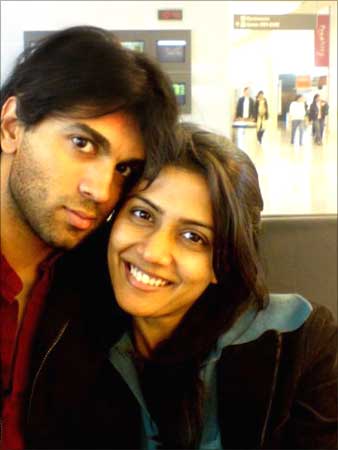
Samvita Padukone, 27, studied engineering and finance in Singapore. She married famous Google engineer Sanjay Mavinkurve, 28, last year in Mumbai , and the couple lives in Toronto.

Mavinkurve, who did his masters in computer engineering from Harvard University, travels to Google's headquarters once every two weeks and one week he works out of the Internet giant's office in Toronto.

The New York Times recently ran a story on him, calling him Google's star product designer who is the team leader working on digital mapping and trying to how to improve "downloading on mobile phone maps and other information."

He doesn't have his green card yet. So, he's a landed immigrant in Toronto, as is his wife. Mavinkurve has an H-1 visa that allows him to work in the United States, but he wouldn't take an H-4 (dependent) visa for his wife, because that would prevent her from working.

But Padukone's problems did not end in the US. She says her foreign qualifications are such a hurdle that Canadian companies wouldn't even acknowledge when she would mail them her resume.

"I started wondering why it was so," Padukone says, "as I was working for the DBS, the biggest investment bank in Singapore. I found out that Canadian companies need Canadian (work) experience.

"My husband was working in the US and I was in Singapore," she continues, "so we decided to live in Toronto, a place where both of us could work together. I couldn't work in the US because his H-1 visa does not allow me to work there."

She lived in Singapore for nine years, and worked for DBS for three years. But why a banking job after doing an electrical engineering degree with minor in business?

"I found the people and their personality in the banking industry, and in business more suited to my thinking," she explains. "Because of my experience with DBS in Singapore, I tried to get a job in Toronto in merchant banking. Sadly, when I came here last year, that sector was in trouble because Lehman Brothers had collapsed. A lot of people were coming here from the Wall Street to work, people who had so much more experience, and I didn't find any job in merchant banking. "

She started applying for jobs that required some kind of financial background. "But over and over again I heard the companies needed Canadian (work) experience," says. She found it "quite unfortunate and depressing - it was not like I came from an underdeveloped country and my degree was completely different or for that matter my work experience!"

"People," she continued, "would say, 'You have to start here at the entry level.' The entry level means starting as an unskilled worker - any job that will give an hourly wage."

In Toronto, to address this problem of Canadian work experience, there is a bridge-building programme that helps professional immigrants.

"I enrolled myself in that programme but I was lucky to ultimately find a job with Canadian Tire," Padukone says. "In Singapore I used to read that Canada is welcoming professional immigrants but once I landed here I realised it was just sound bytes. You come here expecting that there are lots of opportunities but it (the experience) comes to you as a rude shock literally once you are in the country. You can't find a job without a Canadian experience. You get into this vicious cycle."

The Toronto Star recently ran a front-page story about how difficult it has become for immigrants to find a job in this country despite good education and work experience. The article talked about Divesh Gupta, 24, who studied at the University of Mumbai before moving to Toronto to do a postgraduate diploma in strategic relationship marketing at George Brown College. He is now reportedly mailing 25 to 30 resumes a week and 'living hand to mouth.'

TechM to unveil the new Satyam brand soon

NEW DELHI/HYDERABAD: The long-awaited rebranding of Satyam Computer Services by its new owner Tech Mahindra is likely to be unveiled this weekend at a closed-door leadership meet at Satyam headquarters in Hyderabad.

The new brand, which is likely to be a hybrid brand drawing on both Satyam and Tech Mahindra, will be shown to a select audience initially. “The idea is to gauge the reaction of a small group to the rebranding before it’s publicly unveiled,” a person familiar with the plans said.

Mahindra & Mahindra vice-chairman Anand Mahindra, group HR head Rajeev Dubey, Tech Mahindra CEO Vineet Nayyar, international operations head CP Gurnani and strategic initiatives head Sanjay Kalra will be present for the unveiling. Senior executives at Satyam, TechM and M&M have been working on the rebranding exercise with select external advisors, ever since TechM emerged as the winner in an auction to acquire Satyam in April. “There is a meeting over the weekend. The participants will deliberate over various initiatives which will be beneficial to the future of Satyam,” the Satyam spokesman said.

The Tech Mahindra spokesman declined to comment.

The rebranding is expected to leverage both Satyam and Mahindra brands. While Tech Mahindra doesn’t want to continue with the Satyam brand in its present form, it wants to leverage the strengths of the tainted firm. The new brand will convey the synergies of Satyam, well-known for its expertise in areas such as enterprise resource planning, M&M group’s global brand and corporate governance and Tech Mahindra’s strength in telecom.

Analysts say rebranding could help Satyam, whose founder admitted in January to cooking its books to the tune of over Rs 7,000 crore. “Rebranding would leverage its business strengths and signal a rebirth as the scam has severely tainted the Satyam brand name,” an analyst said on the condition of anonymity.

Apart from rebranding, Tech Mahindra and Satyam senior executives would also discuss the joint go-to-market strategy of the two companies. A decision could be taken on whether Satyam should bid independently or as a subsidiary of Tech Mahindra for projects.

A decision could also be taken on the surplus bench strength, estimated to be about 8,000 employees, even after implementing the virtual pool programme. The programme covers about 8,000-10,000 employees who draw a fraction of their salary and don’t attend office.

Pune-based Tech Mahindra agreed to pay about Rs 2,889 crore for a 51% stake in Satyam in April. Satyam recently announced unaudited revenues of over Rs 2,000 crore and net profit of Rs 181 crore for the October - December 2008 quarter. Its revenues could thus touch about Rs 8,000 crore, or $ 1.6 billion, after extrapolating these numbers.

Saturday, June 20, 2009

'Indian fans are the most immature'

Indian supporters are the "most immature" lot in the world of cricket and they should grow up and accept defeat as an essential part of the game, said former England [ Images ] captain Mike Atherton.

In an article in The Times, Atherton said Indian fans need to understand that the team they support would not win everything.

"It is time for Indian cricket supporters to grow up and accept defeat as an essential part of the game. Sport is not about winning; it is about losing. Trust me, we in English cricket know more about that than anyone," he said.

"They will lose in various ways - some thrillingly, some abjectly - but lose they will. It is what makes the moments of triumph all the more special.

"After all, if winning was all about there was, what would there be to celebrate? Indian supporters, the most immature in cricket, cannot seem to grasp this simple fact," he said.

After India crashed out of the Twenty20 [ Images ] World Cup, fans in India have reacted with unbridled anger, burning Mahendra Singh Dhoni's [ Images ] effigy and questioning his leadership.

Observing how the Indian fans tend to go overboard with their reaction to both success and failure, Atherton said, "So where once temples were erected in Ranchi to deify its most famous son, Mahendra Singh Dhoni, now effigies are burnt. Once the Army had to be called out because the mob had laid homage to a hair salon where Dhoni was having his luxuriant locks lopped off, but veneration has now turned to vituperation.

"Burning effigies of losing captains on the sub-continent is nothing new, as Wasim Akram and countless others would testify. It was, though, more understandable at a time when Indian cricket was looking to flex its muscles," he said.

Obama can cook keema, dal; is a big cricket fan

Washington: US President Barack H Obama can cook keema and dal. He is a fan of cricket but terrible with bats.

These little known secrets about Obama were revealed during his interview to Dawn television of Pakistan where he reflected upon his acquaintance with the South Asian culture.

"As you know, I had Pakistani roommates in college who were very close friends of mine. I went to visit them when I was still in college.. was in Karachi and went to Hyderabad," said the US President.

"Their mothers taught me to cook," he added.

When asked what he can cook, Obama said, "Keema and dal and....You name it, I can cook it".

And, it doesn't stop at that.

The US President further revealed that he is an admirer of great cricket players, but doesn't know how to bat despite making several attempts.

"You know, I have to say that I have tried to get up to bat a couple of times, but I've been terrible," Obama said in response to a question.

"So I am an admirer of great cricket players, but make no claims in terms of my own skills," he mentioned.

Thursday, June 18, 2009

StanChart execs taking kickbacks?

Standard Chartered Bank has carried out an investigation into allegations that some of its employees in India, including a few senior officials,

had received bribes from corporate clients.


ET NOW has learnt that David Howes, a former Scotland Yard official and a senior executive in the financial crimes risk management cell of the bank in London, was in India last week to question some employees suspected of irregularities. In all, seven separate transactions have been investigated by Mr Howes. Prior to Mr Howes’ arrival, an officer form Singapore had also examined the allegations.

According to two sources familiar with the development, some corporate borrowers and insiders had complained to the bank’s top brass that a number of employees in its wholesale banking and global markets divisions in India had taken what the complainants alleged were ‘kickbacks’ for promising to waive-off losses on derivatives products sold by the bank and for giving loans to clients with a poor credit history.

When contacted by ET NOW, the StanChart spokesperson said in an e-mailed response: “We take any allegations of non-compliance very seriously and investigate all such allegations. We do not comment on personnel matters, but we can say that we have investigated and have found no evidence of bribery. “
We take very seriously the integrity of our procedures and our position as a long-term partner of our customers. We will vigorously defend our reputation.” The spokesperson said the investigation had been concluded. “We can confirm that no employee has been terminated as a fallout of the investigation,” the spokesperson said. It’s, however, possible, says a person close to the bank, who requested annonymity, that resignations linked to the allegations could take place in the near future.

The transactions investigated included one involving an upmarket Delhi school which bought financial derivatives. The school’s management alleged that an official of the bank took what they claimed was a ‘bribe’ from the institution for promising to waive-off the mark-to-market loss on the derivatives deal and later failed to keep his word. Interestingly, this may be a rare instance where a product like a financial derivative, that has baffled many a large corporate, was sold to a school — a rather less-sophisticated borrower. The same person mentioned above said the bribery allegation had been investigated, and was found to be false. He added that StanChart was in discussions with the school to resolve the issue.

In another case, the bank investigated one of its officials for disbursing loans to a chronic defaulter, a mid-sized firm which supplies cables to BSNL. The company in question was already blacklisted by another foreign bank.
Similar allegations have been reported with respect to the bank’s middle markets division in north India, which deals with 400 companies, having revenues in the range of Rs 50-500 crore.


The allegations largely concern officials working for the wholesale bank, which caters to corporate customers, providing a range of services

such as working capital loans, trade finance, cash management services, treasury activities and investment banking.


ET NOW has learnt that three senior executives of the bank in the north were interviewed by Mr Howes in connection with the above cases, but the outcome of the investigation is not known. A bank executive, speaking on condition of anonymity, said Mr Howes collected statements from nearly 10 officials.

In the statement issued to ET, the bank said: “Standard Chartered Bank has a stringent Code of Conduct, which requires all employees to comply with laws and regulations, respect customer confidentiality and reject bribery and corruption. Failure to follow the Code of Conduct results in a rigorous process of investigation and disciplinary action, if warranted.”

Among foreign banks, StanChart has the biggest presence in India, and has been involved with big-ticket transactions by Indian corporates. In fact, the bank is the sole financial advisor to Bharti on the proposed $23-billion deal to acquire African telecom giant MTN. The British bank posted a record pre-tax profit of $943 million in its Indian operations for 2008, making India the second-largest contributor to the group’s profit after Hong Kong.

E-governance to be implemented in Tamil Nadu ration shops

Chennai, June 1 (IANS) State-run Electronics Corp of Tamil Nadu Ltd (ELCOT) will soon cover around 28,000 public distribution shops in the state under its e-governance initiative, a top official said here Monday.

'Currently implemented in around 210 shops, the electronic billing project will be shortly extended to other outlets in the states,' ELCOT chairman Santhosh Babu told reporters.

As per the system, the shop keeper will feed in the purchase details in the hand-held device and thereby convert the data to electronic format.

Wednesday, June 17, 2009

Man claims to have received threatening call from Aus

Kharar: At a time when Indian students in Australia are facing racial attacks, a resident of Kharar in Punjab on Tuesday claimed that he had received a threat call from Canberra, asking him to call back his son settled in Adelaide.

Bhushan Lal, a municipal council clerk, said he received a threat call from a number in Australia on June 13 over which the caller asked him to call back his son Amit Verma from Adelaide immediately or face the same consequences as other Indian students had met there in the recent past.

Lal claimed he had written a letter to Prime Minister Manmohan Singh and other top Central and state government officials seeking protection of his son and also action against the unidentified caller.

He wrote that his 27-year-old son Amit, daughter-in-law Nishi and couple's two-year-old daughter Uvika had left for Australia in March and presently they were settled in Adelaide.

'Do the job you love and love the job you do'

In this era of global competition, the focus of education should be on enhancing employability of the students of professional courses rather than merely seeking employment. This is the only way to ensure sustainable employment.

What's employability?

When an employee adds value to the employer's investment in the human resource by effectively performing intended functions, he/ she is employable. It's important that educational institutions focus on integrated development of knowledge, skills and attitudes of students for holistic personality development.

Knowledge based on information and data should lead to understanding and wisdom. Skills in its multifaceted dimensions require the capability to use domain knowledge wisely for good of humanity. This calls for communication, interpersonal skills and personality pre-dispositions like initiative, leadership, team playing, positive thinking, integrity, respect for self, others and the environment and of course time management.

'Total quality person'

A positive attitude comprising both time and work discipline is perhaps the most powerful attribute to enhance a person's employability quotient. Every problem has a solution for anyone with a positive attitude. A negative attitude finds problems with every solution offered. A great mind and a greater mindset are essential for excellence. Integrity and trustworthiness are vital for success. In domains of technology, a set of good human values is a pre-requisite to ensure that technology contributes to progress and improved life quality. Hence, every engineer, scientist, professional or manager would succeed in life if he/she is also a good human being. It is an interesting coincidence that the weighted sum of the words 'ATTITUDE' and 'DISCIPLINE' in each case adds up to a perfect 100 by giving increasing weight to alphabets (A=1, B=2 etc.). They make you a 'total quality person'.

Patience, entrepreneurship, innovation, integral thinking, eye for details and capacity to analyse as well as synthesise are some other attributes that will stand you in good stead. In today's world of electronic revolution one must update one's computer skills on a regular basis .

Learn to learn

Learning to learn is the trait that enables us to update our knowledge fast and retain our employability quotient. Knowledge is said to double every 72 hours and if we do not update, unlearn and re-learn, we are left behind. Today we have to run to remain at the same place!

Weakness to opportunity

Analyse your strengths and weaknesses and choose a career where your strengths are leveraged and weakness minimised and converted to opportunities to improve. 'Do the job you love and love the job you do' is a mantra for success in life. Excellence and indifference can not coexist. If we nurture our young talent well, the demographic dividend that we have in India, can ensure that we lead the knowledge driven society and become a major supply source of globally employable Indian talent.

Tuesday, June 16, 2009

It takes just 6 minutes for booze to fuzz the brain

Washington: Alcohol can get to a person's head in just six minutes after taking a drink, according to researchers in Heidelberg.

HEAD SHOT: Researchers say alcohol can get to a person

Using Magnetic Resonance Spectroscopy (MRS), scientists have shown that only six minutes after consuming an amount of alcohol equivalent to three glasses of beer or two glasses of wine — which leads to a blood alcohol level of 0.05 to 0.06 per cent — can cause changes in the brain cells.

While earlier data was only available from animal trials, the new study on humans has shown that the brain reacts quickly to alcohol.

"Our study provides evidence for alternative energy utilisation upon alcohol ingestion, i.e. the brain uses an alcohol breakdown product instead of glucose for energy demands," said Dr Armin Biller at Heidelberg University Hospital.

They demonstrated that the harmful effect of alcohol also sets in quickly.

During the experiment, it was found that the concentration of substances like creatine (energy metabolism), which are attributed with protecting cells, decreases as the concentration of alcohol increases.

Choline, a component of cell membranes, was also reduced.

"That probably indicates that alcohol triggers changes in the composition of cell membranes," said Biller.

The researchers tried to find out if all consumption of alcohol is harmful for the brain.

"Our follow-ups on the next day showed that the shifts in brain metabolites after moderate consumption of alcohol by healthy persons are completely reversible."

"However, we assume that the brain's ability to recover from the effect of alcohol decreases or is eliminated as the consumption of alcohol increases."

"The acute effects demonstrated in our study could possibly form the basis for the permanent brain damage that is known to occur in alcoholics. This should be clarified in future studies," said Biller.

In the study, eight male and seven female subjects underwent MRI scan while they drank alcohol through a long straw to reach a blood alcohol content of 0.05 to 0.06 per cent

The study found no differences between the results of male and female individuals. The brains of female and male subjects reacted to alcohol consumption in the same way.

The results of the study have been published in the Journal of Cerebral Blood Flow and Metabolism.

MphasiS restores shift allowance for apps staff

MphasiS has restored the day-shift allowance of Rs 300 per day for employees at its applications delivery division with effect from June 11. The EDS-owned company had withdrawn this allowance from June 1 following a review of its shift policy sometime last month.

This allowance was being given to applications delivery employees at levels 1-7 (those with up to seven years of work experience) doing the day shift beyond 10 pm everyday.

The shift allowance of Rs 500 per shift for employees working between 10 pm and 6 am remains untouched. The company had also spared on-call allowances given for shifts undertaken on weekdays and weekends/holidays for applications and infrastructure technology outsourcing staff.

An employee is expected to work for a minimum of six hours to be eligible for shift allowance. The spokesperson for MphasiS could not be reached for comments.

The move to revoke the day shift allowance had attracted criticism from many employees in the company's applications development and delivery division, who felt that they would lose Rs 1 lakh (Rs 100,000) or above in earnings every year. Shift allowances have been a key incentive for many employees joining the company.

MphasiS has been keen on cutting down variable costs in its operations, though margins in the third quarter 2008-09 have been 'satisfactory,' sources said.

About 75 per cent of MphasiS employees are understood to be working on different shifts.

Under the current rules, employees who extend their work hours because of an operational emergency, are eligible for shift allowance. Shift allowance is also provided to employees in production and operations, while those in training, parallel operations, knowledge transfer and on the bench do not qualify for this benefit.

The company's applications development and business delivery division has around 15,000 employees. The application business represented about 63.80 per cent of MphasiS' total revenues in the second quarter of fiscal 2009. The ITO business fetched 18.70 per cent of total revenues. MphasiS has a total workforce of around 34,000 people.

For the second quarter ended April 30, MphasiS reported a 219.10 per cent growth in profit after tax at Rs 224.50 crore (Rs 2.25 billion) from Rs 70.30 crore (Rs 703 million) earlier.

Total revenues for the year crossed Rs 1,000 crore (Rs 10 billion), with consolidated top line at Rs 1,048.50 crore (Rs 10.49 billion), increasing 52.30 per cent from Rs 688.40 crore (Rs 6.88 billion) in the same period fiscal 2008. The company hired 3,822 people, including 117 freshers, to support growth during the quarter.

How can the common man own a house?

Back in 2000, the average Briton could hope to buy a house with four years' salary. By the middle of the decade, as real estate prices rose, the Britisher needed seven years' earnings to pay for a typical house; and in 2007, at close to the height of the housing boom, a government-backed housing body warned that a house could cost 10 years' salary--making home ownership an impossible dream for many.

So is there a link between income and house cost? If we assume there is, what should the relationship be? Research by a United States non-profit body that looks at housing issues says that affordability should be defined as a house that costs about three years' salary--assuming 10 per cent down payment on the house and 28 per cent of the salary going towards the mortgage payment.

HDFC says that the multiple that operates for housing in a Mumbai suburb is between 4.5 and 5.25 times annual salary.

If 85-90 per cent of the cost of a flat is taken as a loan, and a 15-year loan has a monthly repayment instalment that is 1 per cent of the loan amount, then simple arithmetic tells us that 40 per cent of income is needed to pay back the loan.

Now, the average (or median) Indian family earned about Rs 1.31 lakh (Rs 131,000) last year, or Rs 11,000 a month. Can it afford to pay Rs 4,400 every month on a housing loan, for a modest one-bedroom flat that costs Rs 6.5 lakh (Rs 650,000)? Probably not.

But if it could, or if it had a little more income, would it get a flat for Rs 6.5 lakh? Not in the big cities. The Delhi Development Authority, which is not known for quality work, sells a one-bedroom flat (450 sq ft) for Rs 8-10 lakh (Rs 800,000 to Rs 1 million); the open market rates are at least twice as high.

So it is easy to see why most middle-class Indians see home ownership as a distant dream.

But hold it; flats are now being offered for Rs 4 lakh (Rs 400,000) by Tata Housing (covering 280 square feet, which may mean a room plus kitchen). A 450-square foot (one-bedroom) flat would cost the magical sum of Rs 6-7 lakh (Rs 600,000-700,000).

Jerry Rao, the banker-turned-IT entrepreneur-turned-housing evangelist, has set up a housing company that will offer flats for Rs 7 lakh--with construction cost in the region of Rs 700 per square foot. These entrepreneurs seem to be dropping the total cost from Rs 2,000 per square foot to Rs 1,500.

If they are successful, others are bound to follow their lead. And housing might then become affordable for the average Indian, if not quite the aam aadmi that the politician has in mind.

The big real estate companies, which have been focusing on housing that costs Rs 4,000-6,000 per square foot and more, have seen the light--in part because they have found no takers in today's real estate slump. So they have slashed prices, in some cases by a half, and have been rewarded with a rush of buyers.

The problem in India is that much of the cost of the roof over your head is on account of the land beneath your feet--which has been kept hopelessly expensive by the politician-builder nexus.

This has prevented more land from coming into the housing market, which is why upscale flats in Delhi and Mumbai rival the costs of those in Manhattan (where the typical flat costs Rs 6 crore -- Rs 60 million).

If more land were thrown into the market, home ownership would not remain a dream for the majority, it would become reality.

Monday, June 15, 2009

'Booing by Indian fans fired us up'

England captain Paul Collingwood and his men were fired up to win their crucial Twenty20 World Cup Super Eight match at Lord's after they were booed by Indian fans during and prior to the game.

"A lot of English supporters were there (to watch the game) but we got booed at the home of cricket by the Indian fans. It felt bit strange to be dealt so on our own home ground at the home of cricket. So that gave us a bit of motivation," Collingwood said after his side's three-run win.

"We were also booed during nets while coming off nursery and it hurt a few people (in the team). Our performance showed how much we wanted to do it," he added.

Collingwood could not hide the glee that their plan to pepper Indian batsmen with short-pitched stuff actually paid off.

"We were conscious (of Indians' vulnerability to short-pitched ball). We know our plans against India at best of times. To bowl short balls in Indian conditions is very hard to do. We had an opportunity to do it here and we gave it our best and tried to get it up there.

"We have excellent seamers. We have guys who can bowl 90 miles an hour and that's a great weapon to target teams with. Our seamers are versatile, have the skills to do it and could hold their nerves even against best hitters like Yusuf Pathan and Dhoni," he said.

Collingwood said he was sure of a victory at the end of 17th over as India required 39 from the final three overs.

"I had an over each from Anderson, Broad and Sidebottom left. I was confident because they are steady under that kind of pressure," said the England skipper.

He admitted the stumping of Yuvraj Singh by wicketkeeper James Foster played a big part in the game turning towards his side's favour.

"The excellent catches in the deep, the brilliant stumping by James Foster off Yuvraj played a vital role," he said.

Tamil Nadu sanctions Rs 550 cr for Chennai Metro

CHENNAI: The Tamil Nadu government has sanctioned Rs.550 crore for the first phase of the Chennai Metro Rail project, Deputy Chief Minister M.K.

Stalin said here on Wednesday.

"For the phase one of the project, the state government has sanctioned Rs.550 crore and the central government Rs.13 crore," Stalin told reporters here after inaugurating the piling work for building an elevated viaduct for the Rs.14,600-crore project.

The rapid transit project, which is expected to go on stream by 2014-15, is being implemented by a special purpose vehicle Chennai Metro Rail Ltd.

Stalin said 59 percent of the project cost will be funded by a concessional loan from the Japanese government.
The central government will contribute 15 percent as equity and 5 percent as debt, with the balance being funded by the state.

The first phase of the project consists of two corridors with a combined length of 45 km.

The 23.1-km long first corridor will run from Washermanpet to the Chennai airport via Anna Salai, while the the second one will run from Chennai Central to St.Thomas Mount via Koyambedu.

A five-member consortium led by Egis Rail SA of France have been appointed as general consultants to assist Chennai Metro Rail in design, supervision, quality control and safety of the project.

Learn our ways or leave Oz, Facebook group tells migrants


Social networking website Facebook has been creating quite a stir across the world on various social and political matters.

First, there were groups against the Iran President that made the government of Iran ban Facebook; now a new group that is asking immigrants to leave Australia is making news. Others with similar undertones also exist.

The rapidly growing group, which says Australia is 'full' and urges immigrants to 'learn the language' or enjoy their 'right to leave' has attracted nearly 64,500 members.

Indian students have been facing unrelenting attacks Down Under, the latest being a 24-year-old Indian student from Gujarat who was attacked by a group of men in Melbourne.

Hardik Bipinbhai Patel, who hails from Surat, was attacked by three people while he was about to enter his car on Friday night.

Earlier, concerned over the on-going attacks on its students in Australia, India issued guidelines for those wishing to study there which included immediate registration with the Indian High Commission or Consulate and seeking details of local security situation.

India also emphasised that Australian government should ensure that such attacks are stopped as it was its primary responsibility and noted that Canberra was doing "more than they can" in this direction.

The attacks have Australian leadership worried also. Australia's top diplomat in India has admitted that the spate of attacks on Indians in his country has "damaged" bilateral ties and fears that the upcoming free trade talks may remain 'quarantined' among other things as a fallout.

Saturday, June 13, 2009

It's end of the road for 10,000 Satyam staff

HYDERABAD: It was a pink Friday at Satyam Computer Services, as over 10,000 employees of the beleaguered IT firm were preparing for an unhappy
Satyam Development Centre

holiday. Over one fourth of Satyam’s workforce was a part of the virtual pool, an exercise implemented by its new owner Tech Mahindra to downsize the excess staff.


The Pune-based IT firm had announced a plan to send the excess staff on a sabbatical to address higher staff costs, which account for more than half of the company’s expenses currently. The pool constitutes of about 14,000 associates, who were on bench for the last three months.

The usual din at the Satyam headquarters was replaced by an unusual silence as anxious employees paced in and out of the campus.

ET spoke to associates from various bands categorised under the virtual pool. In a mail to the employees, the Satyam management asked to them to pursue other interests for the stipulated timeframe. These employees will now have to come to the company with a prior appointment even on a day-to-day basis.

All the associates are classified under bands with the ascending levels being S, T, B and I. “The management is not clear on the criteria for the classification. I was on the bench for the first time since I joined the company three years ago. We are left with no choice, as the job markets continue to remain cold. Not only this, we will not be able to bargain better salaries despite our experience,” said an employee from the T band.

Most of the virtual pool employees are under the S and T band. “It’s just a sugar-coated way of asking us to leave the company. We are now worried about our personal financial obligations. With the reduced salary, we will not be able to meet any of them,” said another employee, who was with the company for six years.

However, when contacted the company spokesperson said the virtual pool programme gives employees an opportunity to come back depending on the business demand. They will continue to be a part of Satyam and have to resource for their skill enhancement programmes from home, he said. Under the virtual pool, an associate can draw about 40% of his current salary, including medical insurance and provident fund for a period of four to six months.

“In spite of drawing a merit rating in the performance assessment, the virtual pool initiative was imposed on me. It comes as a shock,” said a Satyam employee.

Not just them, but associates, who have not yet been given the lighter shade of pink slip, are jittery about their future. “Many employees are currently dismayed as the future is uncertain. I can also be on the hit list in the next couple of months,” said a senior executive.

Few employees also retaliated that a much stronger move in line with the public sector units would have saved the employees. “A public sector unit will never pass on the losses to the staff. Though it’s hard to expect the IT sector to work in these lines, a staff union in place would have helped us,” said an agitated employee.

For most Satyamites, the virtual pool programme means the end of an ambitious and illustrious career at the firm that was India’s fourth largest IT exporter.

Friday, June 12, 2009

Knives banned in Chennai jails

How do you prevent prisoners from attacking each other with deadly weapons? The solution partly lies in the kitchen! A day after a life convict `Welding Kumar` was stabbed to death by another inmate in Chennai`s Puzhal Prison with a kitchen knife, jail authorities are planning to outsource cut vegetables.

Often kitchen utensils and other implements are used as weapons in prison gang wars.
Interestingly, the prison manual says only boneless chicken and mutton can be served to non-vegetarian prisoners because bones can be used as weapons! Even fish is not allowed because the fins can be used as sharp objects!

Says DGP (Prisons) R Nataraj: "Apart from kitchen knives, there are also garden implements that could be used as dangerous weapons."

Two jail officials have been suspended. Another interesting fact is that most fights among prisoners take place in the afternoon when they are relatively idle.

"We now need to keep them occupied in the afternoons and also beef up our security during afternoon sessions," Natraj says.

A common joke is that sure shot places to get drugs are our prisons!

The Tamil Nadu prison department may soon set up a counter intelligence wing to indentify jail staff who help prisoners smuggle in banned items.

Thursday, June 11, 2009

Dismal job market for graduating U.S. students

BOSTON (Reuters) – Facing the worst job market in a generation, students graduating from America's universities say they are willing to do just about anything for work.

Some are taking unpaid internships, publishing blogs to document their troubles, applying to nonprofit organizations instead of more lucrative private-sector jobs or even moving back with their parents.

Mike Rubino, who studied public relations at Boston University, had never considered a career as a teacher. But as the end of his final year of college neared with the U.S. economy in a tailspin, he had a change of heart.

After watching his classmates scramble for the same limited pool of jobs, Rubino sent his resume to Teach for America, a nonprofit AmeriCorps program that enlists graduates to teach in low-income rural and urban public schools for two years.

He got the job a month before graduation.

"I realized how lucky I was that I had a guaranteed two-year salary," he said.

Only 43 percent of employers in a survey by online job website CareerBuilder.com intended to hire new college graduates this year, down from 56 percent in 2008 and 79 percent in 2007. The site surveyed about 2,500 hiring managers and human resource officials from February 20 to March 11.

The survey also showed that one in five employers plan to reduce starting salaries for college graduates from what they were last year.

"A lot of students think, 'I may not get the job I want right now so I might as well do this and put that other job on hold,'" said Dick Leger, director of Boston University's career services office.

Rubino is not alone. More than 35,000 people applied to Teach for America jobs this year, up 42 percent from last year, said Teach for America spokeswoman Kerci Marcello Stroud. Even graduates from America's most elite schools applied.

Eleven percent of all seniors at Ivy League schools such as Harvard University and Yale applied to the program.

Nationally, less than 20 percent of graduating college seniors who applied for a job this year have one, according to the National Association of Colleges and Employers. That's down more than 30 percent from two years ago when more than half of those who applied for a job had one by the time of graduation.

'NOT GOING TO LAND MY DREAM JOB'

University of Missouri journalism graduate Carrie Bien has taken an innovative approach to youthful joblessness by documenting the trials of finding work on a blog, "The Final 30 days," that illustrates a big shift in expectations among many graduating American students.

"I have now come to terms with the fact that right out of college, no matter how hard I worked in undergrad, I am not going to land my dream job," she wrote in one entry.

The blog gives her a platform, however, to demonstrate writing skills to prospective employers in her chosen field -- corporate communications and public relations.

"Not only can I submit a writing sample but I can submit this blog for them to check out that's live and updated regularly," she said in an interview.

The shrinking pool of jobs has also made internships, even unpaid, more attractive, giving new graduates a chance to make contacts that could lead to jobs when the economy improves, said Jennifer Grasz, who conducts CareerBuilder's job survey.

"It gives them a foot in the door, helps them network and lets them see if there is an opportunity to work on a more permanent basis within that organization," she said.

If past downturns are a guide, the recession could inflict long-term harm to budding careers, according to research by Lisa Kahn at Yale University who has studied the effects of recessions on wages and job prospects for graduating students.

For each percentage-point rise in the unemployment rate, those who graduated in the early 1980s U.S. recession earned 7 percent to 8 percent less in their first year out than comparable workers who graduated when the economy was better.

And the recession-era graduates earned 4 percent to 5 percent less by their 12th year out of college, and 2 percent less by their 18th year out.

"Our whole lives our parents and everyone around us said 'shoot for the moon', you know, all those cliche things," said Bien, the blogger. "You're always told you can be anything you want to be."

"The truth is we still can, but I think we expect to have it right away, we don't necessarily expect to do the leg work at the beginning."

(Additional reporting by Jason Szep; Editing by Cynthia Osterman)

Wednesday, June 10, 2009

The death of merit

Less than a week after the state govt of Tamil Nadu put in place a system to curb the collection of capitation fees by privte medical colleges, the investigation has caught the officials of two leading medical colleges demanding money to admit students.

Medical Council of India (MCI) on Jun 3 sought report on capitation scam in private medical colleges after a joint investigation of TIMES NOW-Time of India exposed the system of pvt medical colleges collecting capitation fees from students interested in taking admission into Medicine and Bachelor of Dental Science (BDS). The TIMES NOW expose has created a major impact in TN with the state govt now ready to issue showcause notices to both the private medical colleges.

Human Resource Development (HRD) ministry has also taken note of the expose into the capitation scam. It has promised action after studying the transcripts of TIMES NOW's expose.

In one of the most reputed deemed medical universities in Tamil Nadu, Sri Ramachandra University, TIMES NOW has learnt that the price of a seat here is anything between 40 and 75 lakh rupees. But TIMES NOW found out that is just the money to secure a seat. The advertised tuition fees of 18 lakh rupees is over and above this.

This is not just a one-off case. At another medical college in Chennai that belongs to a minister in the union cabinet, the story is no different. TIMES NOW has learnt that the going rate in Sree Balaji Medical College, Chennai is 20 lakh rupees for a seat and another 19 lakh rupees as tution fees. The Chairman of this college is S Jagathrakshakan. MoS I&B.

Court raps taxmen who snoop

The tax authorities have been rapped by the Delhi high court for attempting to snoop on some companies, including Maytas, although they were not the suspected evaders.

Terming a search and seizure operation conducted by the Income Tax department as a 'serious invasion of the privacy and freedom of the citizen,' the Delhi high court has said that such exercises cannot be a 'roving or fishing exercise' by the department.

The case pertains to a search and seizure operation conducted by the department on the EMMAR MGF group in September 2007, when I-T officials seized two laptops of the auditing and accounting firm of the company.

But it so happened that the laptops of the accounting firms also had information pertaining to other clients, including Maytas promoted by the kin of Satyam Computer Services [ Get Quote ] founder Ramalinga Raju [ Images ].

The tax department insisted that accounting firm S R Batliboi and Company should give it 'total and unrestricted access to the laptops' so that it can peruse the information.

S R Batliboi and Company, however, refused the same.

The court also said that since by the exercise of the power 'a serious invasion' is made upon the rights, privacy and freedom of the tax-payer, the power must be exercised 'strictly in accordance with the law' and only for the purposes for which the law authorises it to be exercised.

Coming down heavily on the I-T department for gaining access to two laptops of a 'third party' seized during a search operation, a bench of justices Vikramajit Sen and Rajiv Shakdher ruled that an 'indiscriminate seizure deracinates the personal liberty and privacy of the citizen and is anathematic to law'.

The I-T department also sent the laptops to the CFSL to crack the passwords but it failed, following which the accounting firm filed a writ petition in the Delhi high court requesting it to prevent the department from 'forcibly gaining or securing access to the data' contained in the laptops.

The court, in its order on May 27, directed the tax department to return both the laptops without any information being accessed by I-T officers.

The accounting firm contented that an unbridled access by the tax department into the laptops would 'tantamount to grave professional misconduct and would be contrary to the code of ethics applicable (upon them) as well the obligations contained in Chartered Accountants Act, 1949'.

The court rejected the department's argument that by virtue of section 153C (of the I-T Act) the departments 'dominion is extended over any money, bullion, jewellery. . .or book of accounts or documents seized by them even if it belongs to a third party.'

The court said that 'if this is applicable to all and sundry it would infract and nullify the fundamental rights of the citizen (third or unconnected party) concerned'.

New Chennai bridge displeases ecologists

If the Tamil Nadu government has its way, Chennai could have an elevated corridor from the Light House to the East Coast Road. It would be a 7.4 km, six-lane bridge coming up along three beaches in Chennai.

The model made by an NGO is a rough indication of what the world's second longest beach -- the Marina would look like, once the elevated corridor comes up.

But it's a nightmare for environmentalists that has come to light through this final feasibility report of Tamil Nadu's Highways department which NDTV has a copy of.

The Highways Department says the Rs 1000 crore project aims to decongest peak hour traffic because every day, at least 900 new vehicles hit the city's roads.

But experts feel there are better ways of de-congesting the city like removing encroachments and improving the public transport system.

And environmentalists fear the expressway will pollute the beaches, displace fishing communities and endanger sensitive ecological zones.

"The Adyar creek is a protected area and has migratory birds and mangroves, which will be completely destroyed. It will also permanently destroy the nesting grounds of the endangered Olive Ridley Turtles," said Swetha Narayan, coordinator, Save Chennai Beaches.

But with various citizens groups and environmentalists already up in arms, the project is bound to be mired in litigation even before it takes off.

Satyam hits upper circuit for second day

After opening firm on bourses, shares of Satyam hit the upper circuit at Rs73.50 on the BSE, up 9.95% over previous close

Mumbai: Satyam Computer on Wednesday hit the upper limit surging 10% on the Bombay Stock Exchange, for the second consecutive session, a day after the scam-tainted IT firm came out with results which demonstrated that it was down but not out.
Satyam’s new owner Tech Mahindra soared nearly 28% at Rs758 on the BSE and later traded at Rs744.20, up 25.46%.

After opening firm on bourses, shares of Satyam hit the upper circuit at Rs73.50 on the BSE, up 9.95% over previous close.
On the National Stock Exchange, Tech Mahindra surged 12.90% to tough a high of Rs840. It was later quoting at Rs824, up 10.75%.
Yesterday, Satyam reported a net profit of Rs160.50 crore for the October-December 2008 - a period that saw the beginning of Satyam’s fall from grace - and a total income of Rs2,327.21 crore.

Satyam was at its nadir in January with a measly profit of Rs4 crore before showing signs of revival by recording a Rs52 crore profit in February. This was despite losing about two dozen clients.

Tuesday, June 9, 2009

Vancouver world's easiest city to live in, Harare worst: Poll

LONDON: Vancouver is the world's easiest city to live in while Harare is the toughest, a survey said on Monday putting Europe and north America

at the top while many African and Asian cities struggle behind.

Canadian and Australian cities hold six of the top 10 slots in the Economist Intelligence Unit's liveability poll, which ranks cities on five factors: health-care, stability, culture and environment, education and infrastructure.

"At the other end of the ranking, most of the poorest-performing locations are in Africa or Asia, where civil instability and poor infrastructure present significant challenges," said the survey's authors.

In ratings ranging from zero (intolerable) to 100 percent (ideal), Vancouver scores 98 percent, "benefiting from strong Canadian infrastructure," while Harare languishes on 37.5 "thanks to the unfolding crisis in Zimbabwe."

At the top end of the global easy-living scale, Vienna is in second place followed by Melbourne, Toronto, Perth, Calgary, Helsinki and Geneva, with Sydney and Zurich in joint ninth place. The Japanese city of Osaka is just outside the top 10 on 13th place, and Tokyo is at joint 19th with Frankfurt.

European cities where life is generally not hard include Stockholm and Hamburg, Germany in 14th place, as well as Paris in 17th spot, Frankfurt in 19th, Copenhagen in 21st and Berlin in 22nd. "With the exception of high scores in Australasia and some Asian centres, most of the better-scoring locations are based in the more developed regions of western Europe and North America," said the study.

A string of US cities fill the rankings from 30th to 50th position, Washington DC in 35th place, Los Angeles in 48th, followed by another smattering of European conurbations: London is in 51st spot, Rome 52nd while Athens has western Europe's lowest showing in 63rd spot, on 81.2 percent.

Any city with a score above 80 percent "will have few, if any, challenges to living standards," said the survey. Lower down the orders come Moscow in 69th spot, Beijing in 76th, Johannesburg on joint 92nd with Brazil's Rio de Janeiro and Sao Paulo, and Bangkok in 100th place.

The bottom rankings are occupied by a swathe of Asian and African cities: Manila in 108th, New Delhi in joint 114th spot with Cairo, Mumbai in 120th, Nairobi 122nd and Lusaka 126th. Cities scoring below 50 percent, which "present daily challenges to living standards" according to the authors, include Tehran in 129th place, Karachi, Pakistan in 135th and Lagos in 136th.

The bottom three are Algiers, Dhaka and Harare, where President Robert Mugabe called Sunday for leaders to "make Africa a continent of opportunity for all its people," as Zimbabwe struggles to emerge from an economic meltdown.

More attacks on Indians in Sydney - BBC News

olice in Sydney, Australia had to be called to Harris Park suburb on Monday night to quell an angry crowd, provoked by two new alleged attacks on Indians.

An Indian man in his 20s was allegedly set upon by a group of men of Middle Eastern appearance, and another Indian was injured in a separate attack.

At least 200 Indian men then gathered, shouting demands for "justice".

The latest incidents come after several attacks on Indians, which the government denies are racist.

A heavy police presence remained watching the angry crowd until the early hours of Tuesday morning.

"And the Lebanese hit them Indians very badly... in the stomach and in the head," Reuters TV quoted an unidentified witness to the attack.

Three Lebanese men were then allegedly assaulted by members of the angry Indian crowd and sustained minor injuries, in what is believed to be a retaliation attack.

Indian men in the crowd said they were angry at the lack of government interest in their plight.

Ostrich problem?

Opinion appears split in Australia over whether the recent spate of attacks on Indians are racist, or, as police have said, a product of some people being "easy targets" if out alone at night.

The Sydney Morning Herald reported a councillor for Parramatta in Sydney, Michael McDermott, accusing the police of naivety if they believe the attacks had nothing to do with racism.

Mr McDermott said there was rising tension in the multi-ethnic area.

"There is an element of racial targeting and to not think that would be burying our heads in the sand a wee bit," he said.

The latest incident comes after a petrol bomb was hurled through the bedroom window of a 25-year-old Indian hospitality graduate, and a violent attack on two Sinhalese men last month. There has also been a wave of assaults on Indian students in Melbourne in the past year.

Superintendent Robert Redfern, the Parramatta Local Area Commander, told ABC Radio he believed the attacks had nothing to do with race and were instead caused by the victims' work patterns.

Prime Minister Kevin Rudd has publicly reassured the Indian government that Australia is not a racist country.

Monday, June 8, 2009

A licence raj mindset on spectrum

The commonly used term air waves is what the industry refers to as spectrum. That might explain why the government's policy on spectrum has behaved like air waves - blowing differently in different seasons, and not always serving the objectives of larger societal, subscriber and sectoral benefits.

Who is to blame for the mess in this scarce national resource which could have a huge multiplier effect on the economy? Perhaps all stakeholders are equally responsible, and, strangely, they have all work to their own detriment.

Why is there so much fuss about spectrum? Limited availability makes spectrum, which is at the core of wireless communications, a hugely valuable national resource. Our total spectrum could fetch between $50 billion and 100 billion, depending on boom or bust times.

If this is deployed correctly, meaning differently for voice telephony (2G and 2.5G) and broadband (3G or 4G also called WiMAX or LTE), its multiplier effect can harness much bigger value for the economy. But multiple lobbies have derailed a clear perspective on how this scare resource should be used.

So far the policy has been approached only with a licence raj mindset in allocation of this scarce resource, while overlooking and diluting its real value. The result: Limited options left on spectrum for voice and a policy proposal for wireless broadband that ignores the global experience which says that high prices obtained through auctions don't always work.

Some would say why worry if we have high penetration and enough competition because that will make calls cheaper. But a visionary spectrum policy could have led to even cheaper calls at better quality much earlier. All this even at widely-accepted marked-to-market pricing of spectrum. Further, it could have helped to resolve the problem of viability facing broadband.

Hence, to say, as the proposals suggest, that auction is the answer for the remaining spectrum is an oversimplification. This might hold true for voice applications with some caveats, that is, 2 G and 2.5G etc., given that the industry is mature. But this is not applicable to wireless broadband that ushers in internet - 3G, 4G or LTE or WiMAX.

Further, the government still needs to address some key issues on spectrum for voice to sort out the uneven past and optimise available options.

One, it still remains an opportunity to bring back the focus on consumer benefits: Better call quality at still lower charges. Here is a way of realising the telecom minister's wish to bring down the call cost to one-fourth the current rate. For example, we still have the pending charge on telecom companies for excess spectrum allocated. First, there is need to establish the market price for this spectrum by taking up auction in open markets.

Then a mechanism needs to be found to trade this one time charge for lower call charges. Otherwise, auction receipts should go to the Universal Service Obligation Fund to support rural rollouts. This will improve remote area connectivity, increase traffic and the revenue share the government gets.

Two, our telecom licensing policy penalises the subscriber. These licences are for territories called circles. Accordingly, spectrum is allocated circle-wise. This creates artificial inter-circle, local, long distance and roaming charges. This is illogical as all operators already have or aspire to have a national footprint.This requires immediate correction.

Three, mergers and acquisitions (M&As) should be encouraged to enable the industry to consolidate. Industry is reaching a point of market saturation where lower revenue per subscribers and intense competition will hurt its economics.

The government's move to charge a hefty fee for M&As or impose non-transferability conditions on newcomers would bring in distortions, hurt and divert capital from infrastructure. Instead, the official objective should be to help the industry grow by freeing up M&As. Hence, the existing policy of revenue-sharing with the operators is the only way out.

Four, mature players need to reflect whether they have had a myopic approach to the issue of spectrum. What is better for them: Restrictions on M&As or high present values of expensive future acquisitions? They need to support free M&As for new licences. Additional spectrum saves at least 40 per cent of the capital expenditure. M&A activity is what keeps the mature markets going.

Five, a new spectrum policy needs to bring all players to a level playing field to correct a blotted past. Given the high stakes, a high-level commission composed of people of impeccable reputation should be entrusted with this task to correct past anomalies. Even the report of the current expert committee on spectrum should be reviewed by this commission.

Coming to broadband, a visionary spectrum policy can break new ground. Our context of underserved citizens requires information super highways, a largely forgotten phrase. It can bridge the great urban-rural divide, bringing the urban experience of services into the rural environment. Spectrum allocation for broadband riding on revenues from services needs to be worked out.

Hence, spectrum for broadband requires new policy initiative. Even if the government wants to allot 3G spectrum through auction, spectrum for 4G can still be set aside for this purpose and allocated differently to new players.

Finally, to correct the past licensing anomalies, the government needs to come clean on regulations by strengthening and empowering an apex regulatory institution. Can we see our Telecom Regulatory Authority (Trai) as empowered as the US Federal Communication Commission?

Is there any logic for having two bodies: Trai and Telecom Commission? Only an empowered commission immune to any political interference can bring about a level playing field. Such a body can track technology, oversee spectrum trading and penalise spectrum hoarding to further intensify competition.

The author is chairman SA & JVs, MGRM Technologies Inc, US, and advises companies and private funds on strategy.

Sunday, June 7, 2009

MphasiS staff may lose up to Rs 1 lakh per year

Hundreds of employees at the EDS-owned MphasiS Ltd [ Get Quote ] stand to lose nearly Rs 1 lakh per annum each as the company has revised its shift allowance policy with effect from June 1. It has also stopped the Rs 300 daily day-shift allowance, which was given to Level 1-7 employees, those with up to seven years of work experience.

These employees work in MphasiS' key applications development and delivery business division. While the number of Level 1-7 employees in this division is not known, the total employees are around 15,000. In all, MphasiS employs a workforce of about 34,000 people. MphasiS HR officials declined to comment.

Under the current rules, employees who extend their work hours because of an operational emergency are eligible for shift allowance. The allowance is also provided to employees in production and operations, while those in training, parallel operations, knowledge transfer and on the bench do not qualify for allowance.

An MphasiS employee said: "The shift allowance is a major component in MphasiS' salary and contributes at least Rs 1 lakh annually to the income of employees who work in shifts. Removing the day shift allowance will affect a lot of people as 75 per cent of MphasiS employees work in different shifts. Moreover, the shift allowance is offered as an incentive to new employees at the time of their joining the company."

Meanwhile, MphasiS has retained the shift allowance of Rs 500 per shift for employees working in the 10 pm-6 am shift, mandating that an employee should work for a minimum of six hours to be eligible for the allowance.

Moreover, employees at MphasiS' infrastructure technology outsourcing (ITO) division will not see their shift allowances being revised. That apart, the on-call allowances given for shifts undertaken on weekdays and weekends or holidays by employees in the applications delivery and ITO divisions have also been left untouched.

A phone is born: iPhone challenger Palm Pre

MAKES CALLS TOO:  The new Palm Pre cellular phone, which is being released in the US.

New York/Chicago: Small crowds gathered on Saturday for the official launch of Pre, the smartphone seen as Palm Inc's best chance to claw back market share from Apple Inc's iPhone and Research In Motion Ltd's Blackberry.

The new high-end phone, considered a pivotal product for both Palm and Sprint Nextel, has been greeted by rave reviews. Lines were far shorter than those that snaked around Apple stores for its first hugely popular iPhone two years ago, but many consumers said they were eager for the new product.

"I wanted their iPhone killer. I've been anticipating this for a while," said Peter Lewis, who bought phones for himself and his wife at a Sprint store in Chicago.

"This is my birthday present to myself," said Wilma Rivera, 36, a heating technician who brought her 17-month-old daughter to Sprint's flagship store in Manhattan.

Rivera, a long-time Palm user, said while she had been tempted by iPhone, sold only by AT&T Inc in the United States, she "never wanted to leave Sprint."

Sprint, the No. 3 U.S. mobile telephone service, is depending on Pre to help stem defections and win back subscribers from rivals such as AT&T and Verizon Wireless, a venture of Verizon Communications and Vodafone Group Plc.

Sprint spokeswoman Jennifer Walsh Keifer said late on Saturday that Sprint had sold out of Pre phones at a number of different locations around the country and that the company was doing its best to restock stores.

Pre is hitting the shelves just before Apple is widely expected to announce a new iPhone on June 8.

Price and keyboard

The Pre costs $199.99, after a $100 rebate, for customers who sign a two-year service contract. It is priced in line with the $199 smaller-capacity iPhone.

Pre's monthly service fees start at $69.99, including unlimited text messaging, lower than the cost of iPhone service plans with similar features. "It's always nice to see a bunch of people waiting for a product you worked on," said Palm Executive Chairman Jon Rubinstein, a former Apple executive who helped create the iPod, at a Sprint store in San Francisco's financial district.


He said the opportunity for smartphones was big enough to sustain a market for three to five successful vendors. "For us, the opportunity is not to take customers away from RIM or Apple," Rubinstein said, but rather to entice users of lower-level cell phones to upgrade to a more powerful smartphone.

Some who waited in line on Saturday were clearly more technologically savvy. Juan Mondragon, a 33-year-old jewelry store manager in line at another San Francisco store, said he wanted to compare the Pre to his current iPhone, even if the experiment meant paying for two separate service plans.

"At least I can afford it for one month," Mondragon said. The Pre's tiny keyboard is expected to attract some consumers who find it difficult to type on iPhone's virtual touchscreen, such as Lynne Margolin, a Chicago grandmother who traded up from a Palm 650 Treo to the Pre on Saturday.

Margolin said she was concerned the number of applications may be limited early on compared to the vast number of "apps" her friends can get on their iPhones.

Pre was the most talked about device at the Consumer Electronics Show in Las Vegas in January. It is the first Palm phone to use the company's new webOS operating system.

Palm investors have been waiting for its new mobile platform since June 2007, when Elevation Partners took a $325 million, 25 percent stake in Palm and brought in Rubinstein.

Sprint hopes to attract corporate clients, but the Pre could have a difficult time making inroads with often conservative corporate technology departments.

Satyam May Cut Wages of Some Staff - WSJ

BANGALORE -- Fraud-hit Satyam Computer Services Ltd. plans to put about 8,000 employees who aren't working on any projects on standby for new contracts, and cut their salaries as part of its measures to reduce costs, two people familiar with the matter said Friday.

"Most of these people are already on a sabbatical and haven't been billed in recent times," one of the people told Dow Jones Newswires, asking not to be named.

The person said the company is considering paying only about 40%-50% of basic pay to employees on the bench.

Information-technology companies generally keep a part of their employees on standby, or the bench, to quickly deploy them if the company gets new projects. Satyam is considering putting employees on the bench and cutting their salaries as laying off such a large number of people could be difficult.

A decision on staff rationalization is yet to be taken, both the persons said, without giving any timeline for a decision.

India's federal Minister of Corporate Affairs Salman Khurshid recently said that Satyam's acquirer, Tech Mahindra Ltd., should deal with the issue of surplus employees with "sensitivity."

Tech Mahindra Chief Executive Vineet Nayyar, also now a member of the Satyam board, said last month that Satyam had an excess staff of around 10,000. The company has a total of about 40,000 employees.

The person said the employees put on the bench will remain entitled to medical reimbursements and provident fund. "They could be called back to full duty when projects are available," the person said.

While a company spokesperson could not be immediately contacted, T. Hari, Satyam's global marketing head, said, "We are exploring the most humane ways to tackle this issue."

Earlier Friday, the Business Standard newspaper reported that Satyam's board may meet June 11 to discuss the issue.

Satyam was plunged into turmoil when founder B. Ramalinga Raju said in January that he cooked the company's books, overstated profits and revenue, and created fictitious cash balances.

In April, a government-appointed board sold a 31% stake in Satyam to Tech Mahindra unit Venturbay Consultants Pvt. Ltd. Venturbay's open offer for an additional 20% stake in Satyam is slated to start June 12.

Saturday, June 6, 2009

Obama turns down Sarkozy's dinner invite


AFP image
The Obamas, who are in Paris for the D-Day anniversary, have reportedly turned down a dinner invitation from the Sarkozys.

President Obama's reluctance to spend too much time with Sarkozy has become a huge embarrassment for the French president.

Both the French media and the Opposition have mocked Sarkozy over Obama's coolness towards him, which is only partly due to his handling of the Normandy commemoration.

Obama's irritation with his French counterpart reportedly began when Sarkozy tried made some disparaging remarks about him at the G20 summit in London in April.

Sarkozy told colleagues that he found Obama inexperienced and unbriefed, especially on climate change. The US president hit back last month, asking a visiting French minister to tell Sarkozy that he would do his homework, and in two months know all about climate change.

AFP adds: US President Barack Obama landed in France where he is to attend international ceremonies marking the 65th anniversary of World War II D-day landings.

Obama arrived on Air Force One at Orly airport at 0043 IST, after visiting a former Nazi camp in Germany, and was met by Foreign Minister Bernard Kouchner before joining French counterpart Nicolas Sarkozy on Saturday.

The Obama motorcade headed directly for the US embassy, in central Paris, after he visited the German city of Dresden, flattened by WWII Allied bombing which killed 35,000 people in February 1945.

Flanked by Nobel laureate and Holocaust survivor Elie Wiesel and German Chancellor Angela Merkel, he also became the first US president to visit the Buchenwald concentration camp in central Germany.

German media saw the visit as a conciliatory gesture towards Israel and US Jews after his criticism of Israeli policy in Cairo during a major speech to the Muslim world earlier this week.

As Obama travelled into Paris, the US First Lady Michelle Obama and her young daughters Malia, 10, and Sasha, seven, completed a brief trip to the Eiffel Tower on Friday evening. They arrived in France shortly before the president.

Still 'Speaker sir'

CPI(M) veteran Basudeb Acharia, a nine-term MP from West Bengal, has been in the Lok Sabha since 1980 and is only used to addressing the Speaker as Sir. On Wednesday, after Meira Kumar was elected the first woman Speaker of the Lok Sabha, Acharia took some time to adjust himself to the change. Taking part in the motion of thanks for the newly elected Speaker, Acharia addressed Meira Kumar as Sir at least thrice despite reminders from his colleagues. Finally, Acharia made the correction and towards the end of the speech managed the right Madam Speaker.

Friday, June 5, 2009

Bollywood filmmakers say no to Australia

It's not only Amitabh Bachchan and Aamir Khan who are marking their protest against attacks on Indian students studying in Australia. Now, Bollywood filmmakers have also come out in support of Indian students and have vowed not to shoot their films in Australia.

Madhur Bhandarkar of Page 3 fame doesn't want to risk the life of his cast and crew. "First ensure the safety of our boys then we'll see about shooting in Australia. What guarantee is there for anyone's life in a country where a handful of people are terrorising foreigners? Given the circumstances, I don't want to risk my cast and crew's lives in Australia," says the director.

Director David Dhawan has gone one step ahead and has decided not even to go on a holiday there. The question of shooting a film is just out of question for him. "With all the racist attacks happening in Australia, no way will I shoot in Australia. In the current scenario, I wouldn't even go for a holiday there," tells Dhawan to a Tabloid.

Subhash Ghai opines. He says, "I will certainly not shoot in Australia until they give full respect and protection to Indian students."

According to Satish Kaushik, Australia's beauty is of no value to him as the hearts of certain people in the country are not beautiful. He says, "Shoot in Australia? Not at all. Why should we celebrate the beauty of a country when the hearts of certain people in that country is not beautiful? They should learn from us. Atithi devo bhava."

Filmmaker Ratan Jain says he wouldn't shoot in Australia unless the government takes drastic steps. He informs a tabloid, "I have never been to Australia and don't think after whatever has happened in the past few days, I want to go anymore. Until and unless the Australian government takes drastic steps, Indian makers should not go and shoot films there and give such a country any revenue."

1,447 Indians attacked in '08-'09: Aus top cop

New Delhi: Despite Australia’s claims that the recent attacks on Indians are not racist in nature, figures revealed by Melbourne Police Chief Commissioner show crimes against Indians have risen considerably in the past two years.

Police Chief Commissioner Simon Overland has released figures that show there were 1,083 reported cases of robbery and assault against Indians in 2007-08.

That figure has jumped to 1,447 in 2008-2009.

The rise in hate crimes has been proportionate to the increase in number of Indian students in Australia.

There were around 20,000 Indians studying in Australia in 2007-08. That figure has more than doubled in the current financial year.

On Tuesday, another Indian student was reportedly attacked in Melbourne, taking the number of Indian victims to six in 22 days.

Australian universities have already warned that these attacks could scare off potential Indian students and the government has sent a team of police officers and professors to India on a six-day visit to create awareness among the student community there.

The issue has also taken a political turn in Australia with Opposition leaders missing no opportunity to lash out at Kevin Rudd.

“I think the message to the community is that such kind of offences won't be tolerated. We have been holding meetings with groups over substantial period of time,” Victorian Attorney General, Rob Hulls said.

“His govt has failed over years to take any action over this increasing problem,” said Victorian Opposition leader, Tad Ballieu.

Thursday, June 4, 2009

Court summons HSBC CEO for terminating employee

New Delhi, June 2 (IANS) A city court Tuesday summoned the chief executive officer (CEO) of HSBC India and others to appear before it after finding that the multi national company (MNC) bank had forged documents to wriggle out of a case relating to termination of an employee.

Metropolitan Magistrate Jitendra Mishra, while hearing a petition of Manju Saxena challenging her termination from service, observed that there was prima facie a case for summoning the bank's CEO, HR head and manager north India to appear before the court July 28.

Saxena had contended that she was summarily terminated from service with immediate effect in 2005 and the intimation of this was sent through an e-mail.

'It is clear that in the present case a prima facie case for summoning has been made out against (CEO, HR Head and Manager North) persons under section 420 (cheating), 463 (forgery), 464 (making a false document), 467 (forgery of valuable security, will etc), 468 (forgery for purpose of cheating), 471 (using as genuine a forged document or electronic record) R/W 120 (B) Indian Penal Code,' the judge said.

Satyam to cut cost, may lay-off 5,000 employees

Mumbai: Satyam is bulging with at least 10,000 employees who are not needed and half of them could lose their jobs.

With Tech Mahindra as the new owner, it's wait and watch for Satyam employees as plans to rationalise cost is chalked out.

"It is more than 10,000 people. Some form of less painful way of reduction of staff is an option which will have to be looked at," said Tech Mahindra CEO Vineet Nayyar.

CNBC-TV18 learns Tech Mahindra may be forced to let go of 5,000 employees. Sources say that out of 12,000 employees on the bench 7,000 employees are currently in-between projects, 500 are on unpaid leave and sabbaticals, and the remaining 4500 are under training.

"Satyam has the largest number of manpower. Compared to the billing, it has the largest number of manpower than any other IT company. So some amount of rationalisation is unfortunately absolutely necessary to make the company viable again," said Satyam board member Deepak Parekh.

When contacted, Satyam said, "There is no official number that has been stated at this point and the information is speculative."

Industry experts say that the lay offs are likely to start from Hyderabad, which has the largest number of employees.

The number may go higher than 5,000 as well but Tech Mahindra is taking efforts to work out ways to reduce the number of lay-offs and use other methods like sabbaticals and increasing virtual bench.

Meanwhile, the new Corporate Affairs Minister Salman Khurshid in an exclusive interview with Network18 spoke about the need to phase-out the government nominees from Satyam board.

The Minister is also unhappy about the proposed lay-off in Satyam.

"It is very easy to be on an extreme and say we won’t let you lay-off people. And it is very easy to say in an extreme tone that you can lay off if you like we have nothing to do with it. The government has to take a middle path to say, please lay off keeping in mind that this is a sensitive human issue. The government can’t, however, also say that it doesn’t matter if the company collapses, you don’t lay off anybody. The objective is survival of the company. They are hard decisions that are being taken and have to be taken," said Khurshid.

Cognizant Joins Top Ten on Healthcare Informatics 100 List

Ranking 10th Among Top Healthcare IT Providers Underscores Cognizant's Leadership in Healthcare and Life Sciences Industry

TEANECK, N.J., June 3 /PRNewswire-FirstCall/ -- Cognizant (Nasdaq: CTSH), a leading provider of global consulting, technology and business process services, today announced it has been ranked the 10th largest healthcare IT provider by Healthcare Informatics magazine in its 16th annual survey of major healthcare information technology providers. Cognizant's ranking is based on revenue from the healthcare and life sciences segment, which grew by 36 percent year-on-year.

"This prestigious ranking among the world's top healthcare IT providers is a testament to our continual investment in the client relationship and the trust we have built across the industry," said Krish Venkat, Senior Vice President and General Manager of Cognizant's Healthcare and Life Sciences Practice. "In the highly complex healthcare industry, our clients are looking for innovative solutions to meet their business challenges. Our deep domain expertise and consultative approach are helping clients not only contain costs, but also drive process improvements, spearhead innovation, and provide their customers with the best healthcare experience."

"We congratulate Cognizant for this well deserved recognition. Cognizant is an important IT partner for Emdeon, and we are delighted to see that Cognizant is highly valued as a key player in the ranks of healthcare IT firms," said Damien Creavin, CIO, Emdeon, a leading provider of revenue and payment cycle solutions that connect payers, providers and patients.

To learn more about Healthcare Informatics 100 rankings, visit www.healthcare-informatics.com.

About Cognizant's Healthcare and Life Sciences Practice

Cognizant's Healthcare and Life Sciences practice is committed to partnering with clients to build solutions to healthcare challenges, continually improve the way they do business, set the pace in clinical development, strengthen their regulatory infrastructure, and increase competitiveness.

Ranked among the Healthcare Informatics Top 100 list for the past eight years, Cognizant has worked with 7 of the top 10 health plans in the U.S., 27 of the top 30 global pharmaceutical companies, 9 of the top 10 biotech companies, and 12 of the top 20 medical device companies.

With over 12,000 dedicated professionals including doctors, pharmacologists, physicians, biomedical engineers, pharmacists, biostatisticians, medical writers, GxP consultants, and software engineers, Cognizant provides domain-aligned consulting, IT, business process, and analytics solutions globally.

Court asks Citibank to compensate for harassment

New Delhi, June 2 (IANS) Ticking off Citibank for 'unfair trade practice', the Delhi State Consumer Disputes Redressal Commission has directed it to pay Rs.50,000 compensation to a Citibank credit card holder for harassment and agony.

Justice J.D. Kapoor said that despite no proof of any transaction on his credit card, the bank regularly harassed the consumer and sent huge bills and also included his name in the defaulter's list.

Holding that including the consumer's name in the defaulter's list 'is unfair trade practice', the court said: 'It is defamatory as the bank has no business to take its disputes to other banks and tell them that he is a defaulter and don't give him loan.'

The court also issued instructions to the Reserve Bank of India (RBI) and other banks not to reject loan to the consumer on these grounds.

The case pertains to a consumer Bijay Kumar Dash, who was lured by the Citibank agents to get a credit card made. Though there was no transaction on his credit card, the bank billed him for Rs.27,000 as membership fee for a club.

Thereafter, the bank kept sending hefty bills along with the accumulated interest and eventually Rs.1,30,000 was billed to him.

Dash reached a settlement amount and paid the money. However, the bank put his name in the defaulter's list and sent messages to other banks to blacklist him for sanctioning loans.

Wednesday, June 3, 2009

Aussie banks to move IT projects to India

MUMBAI: Even as Australia is making headlines for hostilities towards Indians, Australian banks are set to implement billions of dollars worth of

IT projects and could also outsource many of their functions to India.

Some of its top banks are looking to implement core-banking projects, and the first of these projects from the National Australia Bank has already gone to Oracle Financial Solutions, earlier i-flex Solutions.

These projects could range anywhere from $2-$4 billion, with the software licences alone costing $500 million. Unlike the US, banks in Australia are still very profitable. “Many of these banks are running applications on legacy systems and hardware that may not be supported anymore. They are shifting to core banking applications and awarding contracts

for their implementation,” said Tim Sheedy, senior analyst, Forrester Research. One of Australia’s big four banks, Commonwealth Bank, is also in the midst of a core-banking modernisation programme, while two of the other big four banks are also in similar discussions with vendors. These banks are looking at outsourcing their entire IT to select functions such as monitoring and maintenance, said Mr Sheedy.

The banks are outsourcing out of necessity to cut costs and move from a variable cost model to a more predictable cost model, he said. The findings of a report yet to be released by Forrester, show that the outsourcing is staging a comeback in Australia. “Australia had moved away from outsourcing but now cost is driving them to it again.

Australian banks have never outsourced but are now starting to. The outsourcing contracts that come up could be in hundreds of millions of dollars,” he said.

So, although IT budgets in the Asia Pacific are shrinking by an average of 9%, outsourcing has increased. “The banks are doing it to save money. So we will see a considerable offshoring component because price will be a key consideration,” said Mr Sheedy.

We're different, New Zealand tells Indian students

WELLINGTON: The New Zealand education sector has moved to distance itself from attacks on Indian students in neighbouring Australia, saying they

were "totally different societies", a newspaper reported here Wednesday.

"What we want to do is to remind education agents in India that New Zealand is a different country from Australia - in the nicest possible way," Robert Stevens, chief executive of Education New Zealand, told the New Zealand Herald.

Stevens said he had told the New Zealand Trade and Enterprise office in India to market New Zealand as a totally different country to Australia, which has been dubbed as racist following a series of attacks on Indian students.

Australian Prime Minister Kevin Rudd telephoned his Indian counterpart Manmohan Singh at the weekend to apologise for attacks that have left one student with severe burns and another with stab wounds.

The call coincided with a march in Melbourne that drew more than 1,000 members of the Indian community at which students vented their anger at the attacks and the perceived inadequacies of the police in dealing with them.

New Zealand has nowhere near as many Indian students as Australia - just over 6,000 compared to the 90,000 on the other side of the Tasman Sea - but numbers have doubled over the last three years.

"This could possibly increase the numbers quite drastically," Stevens said. "We are constantly competing with Australia - time will tell if there'll be a surge in numbers."

Tuesday, June 2, 2009

Another Indian student attacked in Australia

NEW DELHI: Even as the Australian government continues to promise strict action against those who attack Indians in their backyard, a television

report suggests that another attack took place in Melbourne on 20-year-old Nardeep Singh, who was on his way to attend college.

The victim of the attack, who came to Australia just a month back, hails from Ludhiana. He is a nursing student at the Chisholm Technical Institute in the city and was attacked on his way to college on Tuesday (June 2) morning.

He was reportedly assaulted by at least 5 men, which included two Australians. He was attacked at a car park, where these 5 men asked him for cigarettes. When he replied that he was a non-smoker, the group asked him for money. When Nardeep refused to give them, one of the attackers stabbed him in his chest.

Nardeep, however, escaped further assaults and reached the police station, where his statement was recorded. Nardeep's roommate said that he was stabbed, which was followed by excessive bleeding. Nardeep is currently under observation in a Melbourne hospital.

Sri Lanka Tamils 'facing misery' - BBC News

Tamil civilians in northern Sri Lanka, 23 May 2009
Huge numbers of civilians fled from the final battles

A senior Sri Lankan Tamil political leader has urged the government to resettle civilians back to their homes as early as possible.

V Anandasangaree described conditions in camps for civilians displaced by the country's war as "horrible".

The head of the Tamil United Liberation Front (TULF) said hundreds of thousands faced misery and hardship.

He said there were food, health and sanitation problems in camps set up for Tamil civilians in northern Sri Lanka.

Many people are having skin diseases as they didn't get a chance to have a shower for days because of water shortage
V Anandasangaree
Tamil United Liberation Front

The United Nations says nearly 300,000 people have been displaced by recent fighting between government forces and Tamil Tiger rebels.

The civilians have been housed in various camps, most of them in Menik Farm, near the northern town of Vavuniya.

The Menik Farm camp site, which is described by the UN as the world's largest displacement camp, houses around 220,000 people displaced by the fighting.

Health fears

Mr V Anandasangaree, the TULF leader, is one of the few remaining long-serving moderate Tamil political leaders in Sri Lanka. He has strongly supported the government's stance against the rebels.

"From the reports I get from the people [in the camps] they are good in some areas and horrible in many," Mr Anandasangaree told the BBC.

V Anandasangaree
V Anandasangaree has been a critic of the Tamil Tigers

"Health, water and sanitation situation is horrible. Many people are having skin diseases as they didn't get a chance to have a shower for days because of water shortage.

"Pregnant mothers and newborn babies go through a harrowing time in the camps due to scorching heat," he said.

The Sri Lankan government accepts that conditions in some of the camps are not ideal but says facilities have been improved in many other camps. It says more land is also being allocated to build new camps to decongest those already full.

The United Nations and other aid agencies have also demanded better access to the camps to carry out humanitarian work.

Sri Lanka's government is wary of aid agencies and has complained that the agencies had helped the Tigers in the past.

Sri Lanka says it plans to resettle most of the refugees within six months.

Mr Anandasangaree, a well-known critic of the Tamil Tiger rebels, the LTTE, also faulted the government for viewing every Tamil civilian in the camps as a possible Tamil Tiger suspect.

Sri Lanka has said it needs time to weed out potential Tamil Tiger infiltrators hiding in the camps.

"The civilians risked their lives while fleeing from the LTTE-held areas as the rebels were shooting at them. If the government suspects such people as Tamil Tigers, then the entire population of the two districts - Kilinochchi and Mullaitivu - should be the suspects," he said.

"Then the government will never solve the problem."

Sri Lankan officials say they have been overwhelmed by the sudden arrival tens of thousands of civilians from rebel-controlled areas since the start of the Sri Lankan military's final battle against Tamil Tigers a few weeks ago.

The government says it also requires help from the international community for post-war resettlement and reconstruction.

The TULF leader also challenged the official view that de-mining needs to be carried out before the resettlement of civilians can begin in the north.

"The theory that the area is heavily landmined cannot be accepted because I am in touch with a number of people. So, when I ask them they tell me where the landmines are placed. They are local people. According to them, 75% per cent of the area is not at all landmined," the Tamil leader said.

Mr Anandasangaree said Sri Lankan security forces were doing a commendable job in carrying out relief work for the displaced civilians, but said that was not enough.

"The government cannot address the problem fully on its own because of the size of the displaced population."

A theory of long-term decline?

Long-term economic decline has just one root cause: Rigidity. The refusal to change long established practice has always led to long-term disaster for everyone.


T. C. A. Srinivasa-Raghavan

The last article in this series, a month ago, had ended thus: “The next time, instead of discussing growth, we will discuss decline, the mirror image of long-term growth. What causes decline? What policies to follow to arrest it?”

Some readers have asked why economics should bother with decline. The answer seems obvious, and has three elements.

First, just as growth theories are products of such intellectual curiosity, a theory of decline should be conjured up for the sake of intellectual curiosity; second, it might turn out that it is easier to pinpoint the causes of decline than the causes of growth; three, long-term decline is more easily arrested than long-term growth is achieved.

Causes of decline

The first issue, of course, is whether long-term decline is indeed a mirror image of long-term growth insofar as the causes are concerned.

As someone who has taken a fairly close look at economic history, I think it is possible to assert with reasonable confidence that it is not.

Decline seems to be caused by factors that are quite distinct from the assumed causes of growth, namely, investment, technology, knowledge, innovation, social institutions, political institutions, judicial institutions, economic institutions, governance, human capital, endogeneity, big-push, openness and geography.

Refusal to change

As far as I have been able to see, long-term economic decline, of empires starting from the Roman to countries starting from India in the third century, has been caused by just one root cause: Rigidity. The refusal to change long established practice, whether socially, politically or in the respective economies, has always led to long-term disaster.

The amazing thing is that many historians (Gibbon, Spengler, Kosambi, to name just three) have discussed the decline of societies, empires and countries for a long time. Yet economists — who are otherwise eager to trespass into all sorts of unrelated areas — have studiously ignored this aspect.

Understanding growth

The usual excuse is that the data about the past is not there to arrive at any meaningful conclusions. But, then, it can be asked with equal earnestness: What meaningful conclusions have you arrived at when the data has been there? Are we any closer to understanding growth than we were in 1946 when Messrs Roy Harrod and Evsey Domar came up with their growth model?

The question has important implications for policy. This is because it might be easier to prevent long-term decline than to maintain high growth through a variety of artificial means.

There is a riposte to this, namely, that growth theory seeks to provide answers to countries seeking to grow, not those seeking to maintain high levels of growth.

The answer is: study history. You will find that very often the effort to artificially maintain growth in one country or in part of the world, has kept down others who are seeking to grow, thus making a complete nonsense of growth theory, which pretends to provide growth formulae to them.

Tilting trade

Thus, Britain’s monetary policy towards India from about 1880 onwards is a stark example of this. It was designed to tilt the terms of trade in its favour.

British textile policy in the 1930s was designed to keep cheap Japanese imports out of India. Closer in time, as Ronald McKinnon has shown, the Plaza Accord of 1985, by fixing the exchange rate, finished off growth in Japan from 1991 till now.

China’s exchange rate policy since 1996 has been beggaring everyone in the developing world, including the US.

Dominant country must co-operate

An examination of these policies or actions by the dominant country leads to two conclusions.

The first is that the rate at which a country will grow depends on the political and economic needs of the dominant power.

There is very little all those things like investment, technology, knowledge, innovation, social institutions, political institutions, judicial institutions, economic institutions, governance, human capital, big-push, openness and geography can do if the dominant country does not co-operate.

These might be necessary in a weak sort of way, but they are nowhere near being sufficient to cause and sustain growth.

Result of neglect

This can be seen from India’s experience with the USSR (negative experience) and China’s experience with the US (positive experience). Now that India has a good relationship with the US, it too is growing. China will soon go the other way. Its goose is cooked because it has sought to rival the dominant power.

The second is, it is this dependence — which has been described in a different context by Raul Prebisch, Andre Gunder Frank, Paul Sweezy etc — as the centre-periphery theory that modern economics ignores. It is poorer for it because the neglect causes it to come up with incomplete theories and answers.

So, what should economists do? I think it would help if they got away from the obsession with long-term growth and began to look at decline and how policies designed to prevent it affect short-term growth in other countries.

blfeedback@thehindu.co.in

Monday, June 1, 2009

GM enters bankruptcy protection

Paint peels from the GM logo painted on a chimney at a shuttered GM assembly plant, Wisconsin
GM has lost its corporate sheen faced with falling sales and a global recession

Car giant General Motors (GM) has filed for bankruptcy protection, marking the biggest failure of an industrial company in US history.

The widely expected move comes after GM had seen its losses widen following a steep fall in sales in recent years.

The move into bankruptcy protection has been backed by the US government, which is now expected to take a 60% stake in the company.

The White House is also due to announce an extra $30bn (£18.5bn) of aid for GM.

President Barack Obama will host a press conference on GM's future later.

GM, which had already received $20bn of state aid since the end of last year, said in its bankruptcy filing that its current debts total $173bn.

Expected job cuts

US Chapter 11 bankruptcy protection gives an American company time to restructure its finances while being protected from its creditors.

The restructuring is likely to drastically change GM, with some 20,000 US workers thought likely to lose their jobs as the firm streamlines its operations.

However, GM's European arm is likely to be spared bankruptcy following a proposed deal by Canadian car parts maker Magna International to buy GM Europe's Vauxhall and Opel brands.

It is expected that GM may be able to exist bankruptcy protection within 60 to 90 days.

GM, once the largest company in the world, has been losing market share since the early 1980s.

It has been driven to bankruptcy because of high production costs and by the collapse in credit markets and consumer spending. It made losses of $30bn last year.

GM was also slow to move away from producing gas-guzzling SUVs when consumers were looking for more fuel-efficient vehicles.

Toyota sold more vehicles than GM in 2008, putting an end to the American company's 77-year reign as the world's biggest carmaker

Australia in damage control over Indian attacks

The protest started yesterday when thousands of Indian students held a protest in central Melbourne.

The protest started yesterday when thousands of Indian students gathered in central Melbourne. (ABC)

Prime Minister Kevin Rudd has condemned recent attacks on Indian students as deplorable and says the Government is working with authorities to bring those responsible for the violence to justice.

Mr Rudd today told Parliament he has spoken to Indian Prime Minister Manmohan Singh about the attacks which saw hundreds of students in Melbourne take to the streets last night in protest.

"I speak on behalf of all Australians when say I say that we deplore and condemn these attacks," he said.

"I said to Prime Minister Singh that the more than 90,000 Indian students in Australia are welcolme guests in our country."

He also said the Government will work closely with the states and territories "as a matter of urgency" to work on ways to help international students feel safer.

Opposition Leader Malcolm Turnbull described the attacks as "profoundly un-Australian".

"These students are guests in our country and this recent violent behavour has the potential to do great damage to the reputation of Australia as a destination of choice," he said.

Trade Minister Simon Crean says Indian authorities raised concerns about students being targeted more than a year ago.

He says their complaints are being taken seriously.

"There's no point sending your loved ones here to study if they feel under threat," he said.

"I think that this has been an issue that we've tried to address now for a number of months. We will continue to work on it; I think we can get on top of it."

Early this morning police broke up a sit-in by several hundred Indian students; the students had blockaded a major Melbourne intersection outside Flinders Street station overnight in protest against the violence.

Police say they detained 18 students for breaching the peace. The intersection has reopened to traffic.

Police tactics defended

Police say the force used to break up the protest was justified.

Chief Commissioner Simon Overland says an officer was bitten on the hand while trying to move the students.

"There were blows, because arms had been linked, and there was a lot of resistance going on," he said.

"If someone inadvertently got hit in the mouth and got injured I regret that, but that came about on the part of the actions of the demonstrators after they'd been given every opportunity to leave the area."

The protest started yesterday when thousands of Indian students held a protest in central Melbourne to express their anger about recent violent attacks.

Student Sravan Kumar Theerthala, 25, was stabbed with a screwdriver last weekend and remains in hospital.

Yesterday's protest was organised by the Federation of Indian Students of Australia (FISA) but this morning FISA spokesman Gautam Gupta said the rally was hijacked by people with their own agenda.

FISA said in a statement on its website the rally aimed to create an awareness about an increasing number of what it called "hate crimes" in Victoria and to promote racial harmony and peace.

"I think absolutely they should have left because we are seeking peace, we are seeking non-violence, and we should be leading by example. And this is no way to lead by example," he said.

"Unfortunately the whole thing was hijacked by people with their own intention."

A 22-year-old man was arrested at the protest yesterday and is facing charges of riotous behaviour and criminal damage.

Indian students say they pump billions of dollars into Australia's education sector, but believe their concerns about what they say are racially-motivated attacks are not being taken seriously.

Concerns about violence against Indian students were raised by the Indian Prime Minister and the Indian High Commissioner to Australia last week.

Satyam to sweeten layoff terms

HYDERABAD/ MUMBAI: A majority of the 10,000 excess staff at Satyam Computer Services are set to be offered 40% of their salary for six months in

what can be termed as a severance package being firmed up by the beleaguered IT firm.

The top management of Satyam, in consultation with its new owner Tech Mahindra, has prepared a list of around 10,000 employees, who have not been billed for over six months now. These employees are set to be offered 40% of their existing salary for six months, along-with medical insurance and provident fund. But they may eventually have to leave the firm. Non-billable employees have been short-listed, as they do not bring in any revenues to the IT firm.

Raju had hired more number of employees to inflate revenues and profits of the firm, and the economic downturn has only compounded Satyam’s woes, forcing Tech Mahindra to look at a separation package for the excess staff in the Hyderabad-based outsourcer. Senior industry leader Kiran Karnik, who was chosen by the government to be on the Satyam board and salvage the firm, said unless substantial steps were taken to contain costs, Satyam could go under and risk the jobs of all employees.

The board had suggested a number of options to the new management, including organisation-wide salary cuts, keeping employees on a virtual bench and sending them on a sabbatical. In the last two cases, the company would have to pay only part of the salary to these employees.

Vineet Nayyar, the CEO of Tech Mahindra and now whole time director on Satyam, declared that the company had an excess staff of around 10,000. The employee strength at Satyam is reckoned to be around 42,000. It is likely to drop to 32,000, if the proposed plan to create a “virtual pool” is implemented. Non-billable employees across all levels will be impacted, though entry and middle levels will see more exits.

“We recognise that we have to deal with the situation and are exploring the most humane ways to tackle this issue,” said T Hari, global head marketing, Satyam Computer Services.

The company is talking to a dozen out-placement firms to help people, who are laid off to find new jobs. It is also planning to tie-up with engineering colleges for PG courses and would fund employees, who wish to enrol in these programmes.

A few companies have also written to Satyam to take some employees on board. Employees, who have been identified for layoffs, will also have access to all the training programs offered by Satyam, said Mr Hari. The company plans to have financial counsellors to help out those whose exits are imminent.

Countries that are Least Affected by Recession

world map of recession proof countries
country ranks on recession scale