Saturday, January 31, 2009

PSU bank chiefs set to get performance-linked bonuses

Sat, Jan 31 01:48 AM

Amid pay cuts across the private sector, chairmen of public sector banks are all set to get performance-based bonuses for achieving their targets in 2008-09. The state-owned banks have already achieved their set targets fixed for this fiscal at a time when the global financial sector is going through tough times with big giants like Citibank and HSBC already resorting to rightsizing in order to save costs.

That apart, private sector and foreign banks and financial institutions are unlikely to offer bonuses and incentives to their employees. According to government sources, for all PSU banks, on the other hand, targets are on track.

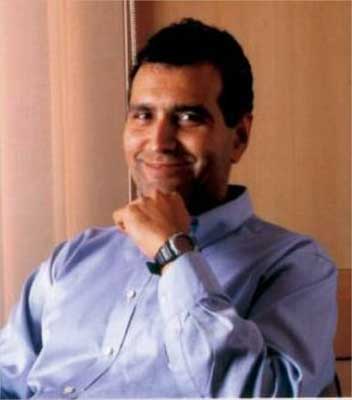
"Chairmen of PSU banks have met their targets and will get their bonuses and incentives, which are linked to their performance," sources said. MD Mallya, chairman and managing director, Banks of Baroda, told Hindustan Times that all public sector banks have adhered to the set goals, which includes meeting credit and deposit growth targets for the current fiscal.

"All the state-owned banks have comfortably met their targets, which had been set in the beginning of the fiscal especially when the going has been tough worldwide," he said. The finer details of the details of the incentive package are yet to be worked out.

Performances of PSU bank heads are assessed on the basis of targets set in the statements of intent given to the finance ministry in the beginning of the year. Performances of CEOs are judged on the basis of their achievements of credit and deposit growth targets, quality of assets and recovery of non-performing assets.

SK Goel, chairman and managing director, UCO Bank, echoed similar sentiments and said all state-owned banks have managed to achieve their targets.

Friday, January 30, 2009

Yeddyurappa not to allow "pub culture" in Karnataka

Bangalore (PTI): In remarks that may ruffle some feathers, Karnataka Chief Minister B S Yeddyurappa on Thursday said that he would not allow growth of "pub culture" in the state but made it clear that people taking law into their hands will be dealt with firmly.

He also said that he will discuss the issue of banning Sri Ram Sene, the outfit accused in the pub attack case, in the state cabinet.

"We won't allow this pub culture in Karnataka to grow. But on the other hand, those who take law in their hand will be dealt with very firmly," he told TV channels.

His remarks came even as Sene chief and an accused in the pub case Pramod Muthalik reminded the BJP that they formed the government in Karnataka on the Hindutva plank and asked the party not to sacrifice Hindu organisations for the sake of expediency.

Yeddyurappa claimed that Sene has no connection with BJP. "That's an individual organisation," he said.

Replying to a question on the issue of banning Sene, he said, "we will discuss it with the police officers and I will discuss it with the cabinet."

The police, he said, were also exploring the possibility of invoking the stringent Goonda Act against the pub case accused.

"Anyhow, we are not going to allow such incidents to happen again in the state. Nobody should take law into their hands and it is a very unfortunate incident. That is why I have taken immediate action and the situation is under control," he said.

You have no value for human lives: SC to Centre

The Supreme Court has slammed the Central government for its poor response on the issue of Indian crew on missing ships.

In October last year the court had asked the Centre to investigate and submit a status report on Jupiter.

Hearing a petition by the family of missing crew members of the ship Jupiter, the court criticised the Centre's half baked affidavit and said:

"You have no value for human lives. This case assumes significance in the wake of the Somalia piracy."

The court has now directed the Centre to file a detailed report.

Satyam investigation becoming farcical

The Satyam story was bad enough to begin with — corporate fraud of this order — Rs 7,800 crore — does no good to the image of either India Inc

or the country. But what followed, and is still unfolding, has been far worse. Almost a month after Raju stunned us with his confession we are nowhere near getting to the bottom of what transpired. Instead the story just gets murkier by the day.

In a twist that is so strange it could pass for something straight out of Ripley’s “Believe It Or Not”, the agencies most competent to investigate the crime — capital markets regulator SEBI and the Serious Fraud Investigation Office — continue to be denied access to B Ramalinga Raju, the main accused. Instead, the state police, perhaps the agency least qualified or competent to investigate sophisticated financial frauds, is looking into the crime. And, needless to say, are making heavy weather of it. Periodic leaks to the press — whether about the number of employees on the company’s rolls or the genuineness of fixed deposits reportedly held by the company — have only made matters worse.

Yesterday we had the sorry spectacle of the minister for company affairs Prem Chand Gupta publicly expressing his helplessness in the matter citing state jurisdiction. The headquarters of Satyam Computers might be in Hyderabad but the ramifications of the crime go well beyond the state. Financial fraud on this scale is not a matter for the state police but for a federal agency, whether SEBI or SFIO or CBI to investigate. There should be no dispute about the respective jurisdictions of the Centre and the state. Even if the state police can technically claim first right to investigate, surely the central government can intervene. Remember, the same party rules at the Centre and in the state. By not seeking help from SEBI and SFIO, the state CID has ended up giving the impression that it is not fully transparent and non-partisan. It is still not late to remedy the situation.

Thursday, January 29, 2009

TCS may call back 20% onsite staff in US

MUMBAI: TCS, India’s largest software company, is planning to move about a fifth of its employees working onsite at various locations in the US
to India, as general slowdown and reduced client requirements have declined the need for a large workforce in the US. According to a person familiar with the development, a communication was sent last week to various middle and senior-level management personnel, informing them about the proposal to shift people back to India, following a sharp fall in client requirements.


However, a TCS spokesperson, when contacted, strongly denied that 20% of the staff in the US was being moved back to India. “In the current environment, moving work to offshore locations (to India) is the focus for the company and its customers, as this helps optimise costs and increase operational efficiencies for both TCS and its customers,” he said, adding that less than 5% of TCS’ total US staff strength have come back to India in December 31, 2008.

The Tata Group company employs close to 14,000 employees in the US, who service many blue chip clients in the banking and financial services, auto and other manufacturing sectors.

Typically, most of the client requirements, include a combination of what is called ready-to-serve (RTS) work and enhancement work or value-addition. Since the slowdown in the US, most clients have completely stopped the enhancement work and hence require lesser number of people for delivering solutions onsite.


The move to shift personnel reflects the current hard economic reality where IT companies have to look seriously at cost reduction measures. A TCS employee working on a large banking project in the US said that fellow employees had been asked to return from the US, as clients had made certain project management positions redundant. While the number of such people are spread across the hierarchy, the number of people asked to shift is more in case of employees with around four years of work experience.

As the slowdown in the US accelerates, clients of TCS are asking the company to offshore its work. A large automaker and rental agency in the US, which is a TCS client, has decided to offshore its work, as it helps them save cost by more than 50%.

According to TCS, its offshoring locations model takes care of such changing dynamics, along with improving its bottomline. TCS spokesperson said that the company has a business model which is based on delivering services from offshore locations using the Global Network Delivery Model to global customers. “We are constantly working towards increasing the amount of work done from offshore locations in India and elsewhere. Our effort to increase the amount of work done from India has resulted in an offshore shift of 270 basis points in revenues in the past two quarters. The proportion of revenues earned from offshore location has increased from 40.9% (of revenues) at the end of first quarter, compared with 43.6% at the end of third quarter.”


However, offshoring work in India could become more difficult if the new US administration introduces tax rebate plans for companies employing the US citizens to retain work within the US.

Politically, the outsourcing model will be under pressure in the US. Two US senators, Dick Durbin and Chuck Grassley, have recently asked for stricter H1-B visa norms, which would increase costs and make it difficult for Indian IT companies to send employees onsite. On the other hand, the bill will also ask these companies to pay prevailing wages to H1-B workers, making offshore outsourcing more attractive

Faux pas? Padma award goes to wrong person

New Delhi: The Padma awards committee seems to have conferred the prestigious Padma Shri award in the field of art and culture to a man who turned out to be an exporter of shawls and not a national craftsman.

The blame game has already begun with senior government officials saying they had never recommended Hashmat Ullah Khan's name in the first place.

Spokesperson of J&K Academy of Art and Culture Javed Rahl said, “There is no person by that name in the field of art and culture in this state. Also, the J&K Academy of Art, Culture and Languages did not recommend anyone by this name.”

Khan was nominated for the Padma Shri under the art, culture and literature category. Then it was corrected to the craftsmen category, but when the hunt for Khan started after his nomination, it was found that no craftsman by that name existed in Jammu and Kashmir.

According to Khan, he got a call on January 24 evening informing and congratulating him for the award

“I was quite surprised because I had no idea that I could have got such an award,” a bewildered Khan said.

Khan, however, did not specify if the Government has tried to contact him after the faux pas or sought any clarification from him.

Speaking about his work, the exporter said, “I have worked for the benefit of artisans and never cared for fame or name. I have been working with weavers and craftsmen for the last 35 years. But apart from that nobody knows me in government circles. I am an unknown person.”

“I was shocked and wanted to know who the other person is. I don't how people are getting my number. I am amazed at the controversy that is building up now. In fact my name is quite unusual for a Kashmiri. So I don’t know how my name came up,” Khan added.

When asked if this award could have been recommended by some of his customers, he said, “I don’t have any idea.”

54% Australians worried over job security

The global economic crisis has left over half of the Australians worried about their jobs, with one in three planning to acquire further training and education to make themselves more employable, a study has said.

An online survey by private tertiary education provider 'Think: Education Group' found that 54 per cent of the respondents in its survey were concerned about job security and one third of them were looking for further training and education to become more eligible for employment.

However, the research found more than half (53 per cent) of the respondents felt they lacked time to study or train.

The study also found that over 26 per cent of the people surveyed gave earning money as their top career-related resolutions for 2009 with over 18 per cent desiring to get promotion.

Over 17 per cent of them wanted to get a new job and nine per cent wanted to keep their current job, said Malcolm Kinns of the 'Think: Education Group'.

The survey showed flexible learning, such as online and part-time study, was likely to become more popular as economic conditions worsened, media reports said.

"The more experience and qualifications a person has, the more valuable they are to an employer," Kinns said adding, "but finding the time to study can be very difficult, particularly for regional Australians who may feel they have to move to big cities to further their education."

Wednesday, January 28, 2009

Highest IT salaries: San Francisco, London

By: Douglas MacMillan
BusinessWorld logo
Even as some of the world's biggest IT employers trim staff to withstand the recession, wages for those who remain employed in tech appear to be holding up.

Pay for IT jobs is buoyant at companies that are eliminating staff since employees who keep their jobs "often are more senior people who cost a bit more" and work longer hours, says Al Lee, director of quantitative analysis at PayScale, a Web site that gathers information on salary info. "I wouldn't expect to see any downward trends in pay in these jobs." PayScale shared its information exclusively with BusinessWeek.com.

IT salaries are especially high in such markets as London and San Francisco, where big-name tech companies employ a large portion of the workforce, according to PayScale, which based its analysis on information entered on its site in 2008. Workers in major tech centers command earnings that average up to 33% more than the U.S. median, PayScale says.
The Valley Is Still Tops

Of the five US markets included in the PayScale survey, San Francisco topped the list of average wages in each of 10 different job titles, including software developer and IT project manager. In the Bay Area, home to such Internet giants as Google and computer makers such as Apple, software development managers ranked highest in pay, at $136,000 per year. The lowest-paid IT jobs in San Francisco are help desk specialists, who earn $53,300 a year, PayScale says.

Outside Silicon Valley, pay tends to be tied to demand in local industries. In Seattle, home to Microsoft and Amazon.com, software developers make an average of $88,400, higher than in most places.

The salaries tracked by PayScale may not remain high in coming months, as laid-off workers find new IT jobs, in some cases settling for lower wages, Lee says. "I expect annual increases will be much more modest" next year, he says. Also weighing on increases is a noticeable decline in the size of bonuses reported on the site, PayScale says.

Growing Government Positions

Overall, new job postings are down about 35% since last year on Dice, an online job board for technology positions around the country. According to Tom Silver, Dice's chief marketing officer, new postings on the site for jobs in the Silicon Valley area have dropped about 50%, to 2,700, since January 2008.

One market not covered in PayScale's research is faring well on Dice. In the Washington-Baltimore corridor, job postings were flat at about 7,400, roughly the same level as a year ago. "This is attributed to the growing number of government or government-related positions" in tech, Silver says.

Outside the U.S., PayScale found stark differences in IT wages. In five tech-heavy markets—London, Sydney, Toronto, Singapore, and

Bangalore—pay is highest in London. There, IT project managers make $107,000, a 30% premium over the median U.S. pay for the same position.


Meanwhile, in Bangalore, India, a help desk specialist makes only $10,700, or close to one-fourth what an average U.S. worker would make in the same role.

Sums Are Relative

Of course, IT job seekers have more to consider than just potential salary when deciding where to move. In tough times, it's especially important to consider the cost of living in a big city. PayScale found that experienced IT workers in Austin, Tex., have their median pay adjusted for cost of living, since about 90¢ has the same buying power in that city that $1 has, on average, across the country. By comparison, San Franciscans pay $1.74 to buy the same goods that the rest of the country buys with $1.

Moving from a low-wage area to one where pay is higher can sometimes work against employees. Explains Charles Geoly, managing director of executive recruiting firm Russell Reynolds: "If you have an individual who lives in Arizona, a place relatively hard hit by the downturn, and he or she is being recruited to Boston, a place that's not been hit quite as bad, the relative drop in equity value increases the switching cost for the employer." On the whole, Geoly says demand for his firm's services were down in 2008, but companies are still willing to pay nearly what they used to in order to fill their top posts with the best candidates.

Even during a recession, relative pay is less important to some job seekers than landing a satisfying job. According to PayScale's Lee, software developers who build video games at startups are less likely to be paid as much as someone who, for example, builds a new payroll system at a big corporation. "A lot of gaming companies tend to pay a little less than companies like IBM," Lee says, "mostly because it's the kind of work people really like to be a part of."

Douglas MacMillan is a staff writer for BusinessWeek.com in New York.

Copyright 2000-2009 by The McGraw-Hill Companies Inc. All rights reserved.
Provided by BusinessWeek

Tuesday, January 27, 2009

Satyam effect: 70 firms report director exit

Suresh P. Iyengar

Mumbai, Jan. 22 Even as the Government is finding it difficult to appoint a full-fledged Board of Directors for the troubled Satyam Computers Services, about 70 companies have reported that some of their directors, many of them independent ones, have resigned after the infamous Satyam episode.

Prominent independent directors who have relinquished their posts include Mr V.V. Ranganathan (Zee News Ltd), Mr Umesh Kumar Khaitan (Indo Rama Synthetics India), Mr S. Viswanathan (EID Parry India), Mr S. Balachandran (PTC India), Lt. Gen. R.S. Nagra (retd) (Empee Sugars & Chemicals), Mr S. Viswanathan (Coromandel Fertilisers), Mr Sanjeev Shah (Today’s Writing), Mr Dharampal Uppal (PBA Infrastructure), Dr M. Rammohan Rao (Bharat Electronics), Mr Somasekhar Sundaresan (Prime Focus) and Prof Krishna G. Palepu (Dr Reddy’s Labs).

Mr T.R. Prasad, (former Cabinet Secretary), who quit the Satyam board recently, has also resigned from TVS Motors, Nelcast, Taj GVK Hotels and GMR Infrastructure.

The independent director’s role is not very well defined and this could give rise to complications, said one of those who recently put in his papers.

“If an independent director has to check the bank balance of the company, the profit margin of different verticals and other financial aspects, then he will be playing the role of an auditor,” he said.

Analysts feel it will become increasingly difficult for companies to find suitable replacements within the six-month timeframe stipulated by the Securities and Exchange Board of India.

“Post the Satyam episode, celebrity directors will be more cautious in their approach and will do due diligence before signing up as independent directors,” said Mr Prithvi Haldia, Managing Director, Prime Database.

Mr D.R. Dogra, Deputy Managing Director, Care Ratings, said it was going to be difficult for companies to find credible replacements for the vacancies in the short term. More importantly, they have to ensure that unqualified people do not creep in.

“Compliance should come out of conviction and not by regulation. The infamous Satyam episode has now made financial officers and directors more diligent,” he said.

The Government has estimated that India Inc will require 3,000-4,000 independent directors within the next few months so that companies may comply with SEBI’s listing requirements. Over a period of time nearly 18,000 people would be required to work as independent directors in over 4,500 listed companies.

Efforts are on the establish an exclusive institute — Indian Institute of Independent Directors at Bangalore — to train independent directors; the proposal for such an institute, which is to be based on the public-private partnership model, is awaiting clearance from the Human Resources Ministry.

Monday, January 26, 2009

Satyam staff get offers but with 50% pay cut

Employees of Satyam Computer Services [Get Quote] are in a quandary over looking for jobs outside the company. Some admit that consultants are offering them jobs, but at salaries that are almost half their current cost-to-company (C-to-C) packages. Many others are running into a dead-end given the poor job market.

"We are in a tricky situation. If we join another company, we will get a lower salary. If we stick around, we are not sure how long we will be secure," summed up an associate (that's what Satyam calls its employees) from Hyderabad on condition of anonymity.

"Consultants are extracting details from Satyam-ites on their plans to relocate, their expectations on salaries and other perks, but they are not revealing who these clients are," said another associate who works at the company's Bahadurpally campus on the outskirts of Hyderabad.

A Bangalore-based company, he added, was throwing out the bait of mass recruitments for 200 positions. "We are, however, adopting a wait-and-watch stance and are deferring the calls," he claimed.

Rajasekhar (name changed) at the Bahadurpally campus said those who have attended interviews at other companies hesitate to take the process forward because there is no major jump in salaries and the job profile offered is not the same. "A job change will mean a lot of updating to fit the new job descriptions," he said.

Another employee, who initially thought of accepting an offer from Bank of America, is now thinking of sticking to Satyam. "There is increased confidence from clients. That is a good sign," he said, adding that clients like Cisco and General Electric (GE) have communicated their willingness to continue with Satyam.

An associate said her colleagues from Delhi and Gurgaon had tapped several sources for new opportunities but had not been successful so far. Her immediate superior, however, held a staff meeting January 23, about two weeks after founder Ramalinga Raju's January-7 confessions of financial fraud, and assured them that there would be no lay-offs, bringing relief to the 600-odd employees engaged in the vertical.

He also reportedly told them that 90 per cent of the amount required to pay January salaries was already in place and it was not a problem to mobilise the remaining 10 per cent. Satyam needs Rs 450-500 crore a month for salaries.

In another communication, the company has also assured employees that it would renew their insurance policies.

Since nothing has been said about February's salaries, however, employees did not feel confident about not looking for jobs elsewhere.

"There should be a takeover of the company. This will remove a lot of the psychological trauma associated with current developments," said a team leader.

Reports that Larsen and Toubro, Unitech, Essar and Aegis among other are showing interest in acquiring Satyam or at least some of its verticals are keeping their hopes alive.

He added, though, that many associates have decided to stay two or three months more. "I think we will all have work to do. After all, clients will need at least six months to a year to find new service providers," said one employee.

There are many associates who think like him. "Satyam is not Ramalinga Raju alone. The employees understand that and they're all working hard to see the bigger picture," is how another associate responded to a query on the impact of the new, government appointed six-member board's initiatives.

Meanwhile, a mail is doing rounds from the employees who see a future in Satyam. "When one man can create Satyam as an organisation of 53,000 people, why cannot 53,000 committed people rebuild one SATYAM?" the mail asks. Or perhaps he means 40,000 since Raju has also reportedly confessed to overstating Satyam's head-count.

Additional Reporters: B Krishna Mohan & K Rajani Kanth

Satyam Scam: Raju routed cash via Mauritius?

HYDERABAD/MUMBAI: Mauritius, which has over the years been a conduit for investments into India, has come under spotlight in the Satyam
probe.


Investigating agencies probing the scam at Satyam Computer Services are examining whether the software firm’s founder B Ramalinga Raju brought back laundered money into the country through Mauritius to buy shares or property here.

The practice, popularly known as round-tripping of investments, was rampant in the early 1990s, where many domestic firms used the Mauritius route to open shell companies and bring back money to evade taxes. These investors could escape tax, since Mauritius does not tax capital gains on profits from sale of shares.

Investigating agencies now suspect that Raju may have siphoned off thousands of crores overseas through irregular or fictitious foreign exchange transactions to launder money. “The (laundered) money could have found its way into India from Mauritius through sub-accounts of FIIs and then invested in assets here.

We are sounding out the foreign tax division, as round-tripping of investments through Mauritius is illegal if the source of funds are questionable,” said an official with an investigating agency who did not wish to be named.

After Dubai began attracting investments, some Indians have also opened shell companies in Dubai’s free-trade zone.

Money is remitted from India to these entities and brought back as investments in shares and properties after a year or two.

While these transactions look like disconnected genuine inbound investments, they are a camouflage for laundering money.

The Enforcement Directorate is understood to have been roped in to look at possible violation of the Foreign Exchange Management Act. “Investigating agencies may also ask details from banks which were collecting export receivables from Satyam,” the official said. Any evidence of money laundering by Raju will come under the purview of the anti-money laundering legislation as well.

Raju had confessed on January 7 that the firm’s books were fudged to inflate sales, profits and cash balances in a scam estimated at Rs 7,000 crore. Later, the firm’s former chief financial officer Vadlamani Srinivas claimed that there were only 40,000 employees (as against the claimed 53,000) and that Rs 20 crore had been siphoned off into several fictitious salary accounts for over four years.

The shocking revelations have created a huge uproar and raised questions about corporate governance at some of India’s top-performing companies. It comes at a time when the Indian IT sector - the poster boy of the country’s stunning economic success in the past few years - is struggling to cope with slowing demand in some of its biggest markets.

Agencies are looking at whether the money was remitted overseas under the garb of onsite salary payments. The new six-member board of Satyam, however, said last week that there was no prima facie evidence to doubt the employee count.

EAS Sarma, former secretary of the department of economic affairs (DAE), had earlier asked the central board of direct taxes (CBDT) if it had investigated specific cases of major ventures such as SEZs, IT projects and the Gangavaram Port near Visakhapatnam, where investments were made through Mauritius-based agencies.

“I have asked both RBI and Sebi under the Right To Information Act about Mauritius-based companies that are reported to have links with Satyam and other companies operating from Andhra Pradesh,” he said.
In a letter to the prime minister earlier this month, he said: “Satyam and Maytas represent only the tip of the iceberg. There is perhaps large-scale cross-border money laundering that needs to be traced and the culprits be brought to book.”

However, some tax experts said it may be difficult to pin down the round-tripping. “Under the Mauritius law, there are strict know your customer norms. They generally do not allow Indian residents to set up companies there,” said a tax consultant.

Parliamentary panel to take stock of Satyam fiasco

A Parliamentary panel will take stock of the leads that investigating agencies have got so far the case involving fudging of the financial books of Satyam Computer Services.

Top finance ministry officials are set to apprise the parliamentary panel on the nature of the scam and the progress made so far on the investigation based on inputs from key agencies, said a government official who did not wish to be named.


Sunday, January 25, 2009

India's outsourcing sector faces bleak outlook: analysts

MUMBAI (AFP) — India's software sector, reeling from a huge accounting fraud in one of its flagship companies, faces further problems as US firms scale back in a troubled global business environment, analysts said.

Two of India's top IT companies -- Infosys Technologies and Wipro -- have acknowledged that their revenues are under pressure.

Meanwhile, India's largest software exporter Tata Consultancy Services (TCS) saw its third-quarter net profit rise by a lower-than-expected 1.57 percent from a year earlier because of the global economic slowdown. It traditionally gives no guidance.

The flurry of dismal earnings news and a one-billion-dollar false accounting scandal at Satyam Computer Services earlier this month has combined to cool investor sentiment towards the once red-hot sector, which employs two million workers in India.

"We're seeing a clear slowdown for the IT giants (in the latest quarter) and it's not a surprise," said Apurva Shah, head of research at brokerage Prabhudas Lilladher.

Brokerage firms and analysts say the outlook appears bleak for the top IT companies for at least the next two quarters.

"The near-term outlook for India's IT sector is cautious and uncertain," said Harit Shah, software analyst at Angel Broking.

"Revenue visibility has become hazier than ever. With the US economy likely to undergo an extended period of painful transition, any recovery is likely to take some while," Shah said.

Infosys chief executive S. Gopalkrishnan said last week the budgets of overseas clients would be clearer by mid-February and they were expected to be "slightly less or flat".

TCS does not forecast revenues but admitted it was "operating in a challenging environment".

Infosys Technologies and Wipro said they lowered revenue guidance in their latest earnings forecasts because of the global economic situation.

Infosys' full-year dollar guidance was cautious with revenues expected in the 4.67 billion dollars to 4.71 billion dollar range -- representing growth of 11.8 to 12.8 percent, a far cry from earlier growth of plus 30 percent.

Meanwhile Wipro this week lowered its revenue guidance for the next three months to 1.04 billion dollars -- below the 1.12 billion dollars it notched up in the three-months to December last year.

"While Infosys has twice cut its annual guidance in the year to March 2009, Wipro commented on the difficulty in giving guidance even for a quarter," said analyst Abhiram Eleswarapu of BNP Paribas.

"We continue to be skeptical about Wipro's prospects" as its clients "continue to face turmoil," an analyst with BRICS Securities added.

Meanwhile, the National Association of Software and Services Companies (NASSCOM) lobby group has now delayed its growth forecast for India's IT sector for the year to March 2010 due to the Satyam scandal.

India's business community has been rocked by Satyam founder B. Ramalinga Raju's declaration on January 7 that he had fudged the company's accounts for years and that one billion dollars in cash on its books was non-existent.

A new set of auditors are now restating its earnings.

Uncertainty in the sector's future business volumes could be compounded if outsourcing laws undergo a change now that Barack Obama has been installed as the 44th US president.

During his election campaign, Obama said he would offer incentives to companies that created jobs at home and halt tax breaks to those that ship work abroad.

Close to four-fifths of the world's biggest companies outsource work to India, with about 60 percent of the contracts coming from the United States.

However, India's IT firms have brushed off concerns that Obama would formally seek to curtail outsourcing.

NASSCOM has said it believes that these fears are unfounded, despite Washington's efforts to boost job opportunities at home.

Saturday, January 24, 2009

Firms prefer to lay off youngsters vis-a-vis oldies

By Joseph Weber
BusinessWeek
Last fall, drugstore chain CVS Caremark (CVS) cut some 800 jobs in Northern California after acquiring Longs Drugs, a Walnut Creek (Calif.) pharmacy rival. Despite those cuts, the company continues to recruit baby boomers and other older workers to staff stores across the country. "We need their expertise," says Stephen Wing, director of workforce initiatives at CVS Caremark in Woonsocket, R.I. "When you're in your 50s and 60s, you're in your prime."

Companies nationwide are laying off workers by the tens of thousands. But many are trying to spare the post-55 set from the ax, a reversal of the top-down trends in past waves of layoffs.

They're being driven by legal concerns, since boomers are in a protected age group, and by a need to keep experienced hands in place to keep the companies running and positioned for an upturn. "Seniority matters," says Marcie Pitt-Catsouphes, director of the Sloan Center on Aging & Work at Boston College.

All age groups are being hit by cuts now coursing through Corporate America, but government statistics so far suggest that the burden is falling far more heavily on younger workers. The unemployment rate among workers 55 and over is not only lower than for the younger set, but it has risen less sharply.

Joblessness for those 55 and older jumped to 4.9% in December 2008, a rise of 1.8 percentage points from the 3.1% level of December 2007. By contrast, for their younger colleagues, those aged 25-54, the rate climbed to 6.3% in December, compared with 4% a year before, a sharper rise.

The different impact comes into even more stark relief with the government's measures of employment. The number of people employed in the younger set has fallen from 100.5 million in December 2007 to 97.7 million as of last December, a 2.9% slide. By contrast, the number of those working among the 55 and older set has actually risen by 878,000, climbing to nearly 29.1 million.

Fewer Buyout Offers

Some companies have taken deliberate steps to hang on to veterans. Many, for instance, are shunning voluntary buyout offers, which tend to encourage older workers near retirement to jump ship, and instead are targeting cuts to keep the most productive workers. When Charles Schwab (SCHW) recently eliminated about 100 positions, it identified the positions it no longer needed rather than letting workers opt out wholesale. The company's most conspicuous old hand, Chairman Charles Schwab, 72, wasn't among those urged out the door.

Similarly, involuntary cuts are planned at a broad range of companies. Among them are Alcoa (AA), which is cutting some 13,500 jobs, Advanced Micro Devices (AMD) (900 jobs, plus some 200 cut in a divestiture or through attrition), and WellPoint (WLP) (some 1,500 jobs, including 900 unfilled positions).

Typically, says outplacement expert John Challenger of Challenger, Gray & Christmas, companies move to such involuntary cuts "as a recession wears on" and they find they remain in trouble. He expects to see the numbers of involuntary cuts climb.

Even when they offer voluntary buyouts, companies typically reserve the right to say no. Walgreen (WAG), for instance, is now offering a voluntary program as it tries to cut 1,000 jobs from its 11,000-person corporate and field manager workforce, but a spokesman pointedly says management will decide which of those who apply for the buyout will get it. If Walgreen doesn't generate 1,000 departures, it will move into a targeted involuntary program. Often, adds outplacement expert Challenger, "companies will go to their best people and say: 'We don't want you to go.'"

Separately, Walgreen, which employs about 237,000 overall, is continuing to work with AARP in a program designed to attract older workers for its stores. Both CVS and Walgreen want to attract and keep older workers, especially on the store floors.

"They come to you with the work ethic and the customer-service skills we're looking for," says CVS executive Wing. Customers seeking direction on over-the-counter treatments for minor ailments, he adds, often find comfort in people who have "had that ache or pain." They're also seen as role models for younger workers.

Salvage the Knowledge

Some companies don't have any choice but to let go of younger workers first. "First-in, last-out" rules at unionized companies, for instance, mandate such preferences. Deere (DE) is following such rules this month in announcing an indefinite layoff of some 188 staffers at its Dubuque (Iowa) plant, which builds gear for the hard-pressed construction industry.

But 172-year-old Deere, like a lot of old-line firms, is heavily populated by boomers and prizes their experience. The typical tenure at Deere tops 23 years and quite often stretches well beyond that, executives say. "The more mature a worker is and the longer the time they've spent at Deere, their knowledge goes up exponentially," says Laurie Simpson, director of team enrichment in the company's human resources department.

Experts cite practical and legal reasons to explain why this wave of layoffs has proved less harsh on older workers than prior downsizings have. "It's what we're calling 'workforce optimization,'" says Roselyn Feinsod, a consultant at Towers Perrin, the human capital advisory firm. "It's not blanket cutting across the board, but a much more thoughtful approach. It's a much more targeted approach to RIFs [reductions in force] than there was in previous eras."

Singling out high-paid, generally older, workers for trimming got plenty of companies into legal hot water for age discrimination in past years. So smart companies now know to avoid that risk, says Gerald Maatman Jr., a Chicago lawyer at the corporate labor law-oriented firm Seyfarth Shaw. Companies in survival mode, he adds, "pick the best and brightest people, those who can do more with less." That approach favors time-tested and seasoned boomers, says Maatman.

Volatile Age Issue

Still, companies must tread carefully to avoid showing favoritism based on age. They could wind up facing reverse-discrimination suits from younger workers who feel targeted. Few companies will openly discuss any age preferences or even will release information on the age makeup of their layoffs.

Caterpillar (CAT) recently offered a voluntary buyout program to its salaried and management staff, and a spokesman noted that it didn't relate to age or tenure with the company. "Basically, anyone who thought it made sense for them could take the package," spokesman Jim Dugan says.

Still, some organizations are candid about the need to keep boomers in place. Jean Jackson, vice-president for workforce planning for Baystate Health, a 10,000-employee health-care system in western Massachusetts, points to seasoned nurses who can mentor younger recruits in the operating room. When Baystate laid off 55 staffers last November, only 20 were 55 or older (and the system has since hired back nearly half of all those it let go, finding new spots for them). Says Jackson: "Our ability to keep seasoned, longtime employees for longer periods of time will be critical for us."


Joseph Weber is BusinessWeek's chief of correspondents, based in Chicago.

Copyright 2000-2009 by The McGraw-Hill Companies Inc. All rights reserved.
Provided by BusinessWeek

Friday, January 23, 2009

Resul Pookutty's Oscar score, music to Indian ears

Mumbai: Resul Pookutty is suddenly a well-known word across the nation. He has bagged an Oscar and a BAFTA nomination and has made it to Hollywood's Cinema Audio Society's nominations for his audio work in Slumdog Millionaire. But not many know who exactly sound designer Resul Pookutty is and what he does.

He is the talent that created amazing sound designs in Mithya and Saawariya as well as in Mixed Doubles and Zinda.

Resul Pookutty's name is seen on posters and credit rolls of films but people are yet to figure what exactly he does in the world of moviemaking.

36-year-old Resul Pookutty is one of the best known sound designers in the industry. A graduate of Pune's FTII, Resul has been in the industry for 12 years now with a filmography that has an interesting mix of biggies like Saawariya, Dus Kahaniyaan, Black, Gandhi My Father, Zinda, Bluffmaster and small independent films like Amu, Raghu Romeo and Mixed Doubles.

"While I cater to the mainstream cinema, there is also another section of films which I personally relate to. There are friends of mine, there are people who come up with brilliant ideas, who have no money to make. I also idenitfy with them where I do far more creative work and with constraints," said the now celebrated sound designer.

Starting his career with Rajat Kapoor's lesser known film Private Detective, Resul came into limelight with his work in Black. Black was a songless film but the sound got everyone talking. Then there are films like Gandhi My Father where Resul's work went unnoticed.

"Gandhi My Father was one of my most emotional, troubled films. I got emotional. I wept. I was emotionally troubled while mixing the film. There is lot of me in the film. I tried to get a particular texture, a kind of ageing effect in Gandhi's voice from his young to old days. We worked on that with actors, in the mixing stages, to get a particualr texture which involved a lot of multi microphoning and multi track recording and effectively used that," said Pookutty.

The good work gave him an opportunity to work with one of his favourite directors, Danny Boyle, whose Slumdog Millionaire is now the toast of critics at the Oscars.

Though things have slowly changed in terms of recognition for technicians and appreciation for experimentation in the Indian film industry, Resul still feels that sound gets stepmotherly treatment.

But the Oscar may ensure that when next time you catch a film, you will hear it as much as you see it.

Air traveller, caveat emptor

Telecom Dispute Settlement and Appellate Tribunal Chairman Justice Arun Kumar, who was flying back from Pune to Delhi the other day, discovered the hard way that even bitter competition may not improve attitudes to customers. His office had booked a business class seat on a Jet Airways flight but when he presented the ticket, he was told there were no business class seats on the flight. A long argument followed, but the Jet attendant was adamant — Justice Kumar would have to buy another ticket in order to fly economy. Finally, however, he relented and endorsed the business class ticket, sparing Justice Kumar the need to buy an economy ticket. While applying for a refund of the difference between the cost of the two tickets from Jet’s Delhi office, the TDSAT chief has lodged a complaint with the civil aviation ministry.

Software engineer from AP found dead in US

January 22, 2009 11:47 IST

An Indian software engineer from Andhra Pradesh was found dead in his apartment in Indianapolis in the United States on Tuesday evening.

Muthyala Purushottam, 27, was found dead in his apartment in a south eastern neighbourhood of Indianapolis City on Tuesday evening, police said.

This is the latest in the series of deaths involving students and professionals from the south Indian state in the US over the past few months.

A resident of Anantapur in Andhra Pradesh, Purushottam worked with Triton Infotech in Indianapolis.

Purushottam, son of police sub-inspector M Nagalingam, went to the US two years ago and was living with his wife Praveena, who also hails from Anantapur.

An Indianapolis police official, requesting anonymity as she is not authorised to speak to the media, told PTI that the police received an emergency call at about 6.15 pm.

The body was first found by his wife, also a software techie, who then alerted the neighbours, who in turn called the police, the official said.

Upon reaching the apartment, the police found the deceased lying on the floor and there appeared to be some marks on his neck. He was immediately taken to the hospital. The autopsy report is awaited, she said.

The official said that while initial investigation has indicated that it is a case of suicide, the police is continuing with its investigation to confirm the reasons and cause of his death and also the circumstances under which it happened.

Thursday, January 22, 2009

TCS to go slow on lateral hiring

NEW DELHI: The country's largest software company, Tata Consultancy Services (TCS), plans to go slow on lateral hiring. According to a report in

a leading business daily, faced with the current tough business environment, TCS will be focusing more on trainees.

The company, however, is not planning any freeze on salary hike, though it said that the next year's salary hike would be in single digit per cent range.

TCS has been very controlled about the numbers that we take from here. The focus is on trainees as from cost management perspective this will balance out, said, Ajoy Mukherjee, VP and head, global HR, TCS, in the report.

TCS which reported net additions of 8,692 employees in third quarter, the highest in any of the last five quarters, however, assured that it will honour its commitment on hiring 24,800 people during financial year 2009-10.

Mukherjee added that while I am not saying that we will not hire experienced people, but it will be based more on domain expertise and business need. Besides, for off-campus recruitment, which we did in the fourth quarter to fill on gaps due to attrition, is also clearly ruled out this year. The other focus area also is shift from onsite to offshore.

Further, despite troubles in the US economy, TCS reported a robust 32 percent Y-o-Y growth in business in the region with 320 bps improvement in operating margin at 33.4 per cent in the just ended third quarter. Growth in the European market was lower at 23.4 per cent and came on 180 bps lower margin of 29.2 per cent.

TCS, however, reported lower utilisation rate including trainees during the OND quarter. The company's utilisation rate fell from 74.7 percent in the last quarter to 71. per cent.

Wednesday, January 21, 2009

Defamation case against A.R. Rahman, Anil Kapoor

An office bearer of a slum dwellers' body has filed a defamation case against music director A R Rahman and actor Anil Kapoor alleging that the award winning film Slumdog Millionaire calls Indians dogs and slum dwellers slum dogs.

In a complaint filed before a local court in Patna, Tapeshwar Vishwakarma, general secretary of Slum-dwellers Joint Action Committee, has alleged that the film depicted slum dwellers in bad taste as it used the derogatory and objectionable title Slumdog Millionaire thus calling Indians dogs and slum dwellers slum dogs, which is defamatory.

While posting the case for hearing on February 5, chief judicial magistrate Raghvendra Kumar Singh directed Vishwakarma to produce evidence in support of his complaint.

The meaning of Slumdog Millionaire in Hindi is the millionaire dog of slum dwellers, Vishwakarma alleged, adding that such a name was a violation of human rights and honour.

Vishwakarma said he has already approached the national and state human rights commissions for necessary action against Rahman and Kapoor. Kapoor portrays the role of a game show host in the film.

Slumdog Millionaire, which tells the rags-to-riches tale of an orphan from a Mumbai slum, won four Golden Globe awards, including one for Rahman, and has been nominated for 11 BAFTAs.

Sunil Jain: Serious fraud

Here’s a tip for the Serious Fraud Investigation Office (SFIO): investigate the Ministry of Company Affairs (MCA)!

This may sound facetious, but more often than not, and this will probably be true of Satyam as well once the real details are known, siphoning off of funds is done through lending to subsidiaries and allied firms, and then not recovering these funds. Yet, in a large number of cases, over the years, bureaucrats at the MCA have chosen to ‘compound’ the offence instead of prosecuting and removing the management — so, in many cases, companies that saw several hundred crore rupees being siphoned off got away with fines running into a few thousand rupees.

The problem, and hence the advice, is that there is no way of knowing whether this practice is still prevalent today. While MCA officials proudly proclaim that, unlike in the 1990s, no company is ‘vanishing’ after raising IPO money, they’re a lot less sanguine about vanishing funds. A good example of just how little comes to light are the series of serious allegations made by the Ambani scions in their fight over the years of wrongdoing by each other — none of these are anything that the MCA came up with, nor have they been seriously investigated afterwards. The Delhi Electricity Regulatory Commission, to cite another example, has accused two ADAG-owned firms of inflating their costs by several hundred crore rupees (which they hoped to recover from electricity consumers in Delhi) by entering into over-invoiced transactions with a group firm — whether this is true will be decided in court, but who examines related-party transactions in the MCA? Ditto for the allegations that have now surfaced about a major promoter whose investment companies have invested thousands of crores of rupees in raising holdings in the parent company — the allegation is this money was siphoned off from the parent company, but no one in the MCA is looking at this.

A great blow-by-blow account of how the MCA process works is the story of the Shree Krishna group of companies. In this case, group firms ‘lent’ money to affiliates for a variety of purposes, including buying shares of companies. Since nearly Rs 300 crore had been diverted in this manner, various MCA (it was known as the Department of Company Affairs then) officials recommended criminal prosecution and removal of the directors. The DCA, however, decided to ‘compound’ the errors. For instance, Rs 46.4 crore invested in the shares of a group company in violation of Section 372 of the Companies Act (this prescribed norms for inter-corporate investments) was described as ‘inadvertent’ and ‘unintentional’ — at the end, fines of Rs 58,000 were paid in 2002 to regularize Rs 300 crore of funds which were diverted! The Regional Directorate in Mumbai, which wanted formal permission to petition the ICAI to act against the auditors who certified the fake accounts, was asked who gave it permission to write to the ICAI on its own, even if informally!

The point is that, even today, there is no way of knowing what offences are being ‘compounded’ in this manner. Take the case of a company that ‘lends’ money to an affiliate without taking the necessary permissions — in all likelihood, it will be booked under some section where the penalty is just a few thousand rupees (the penalty for audit failure is a Rs 10,000 fine!). Even today, believe it or not, a company can raise money from the public for one purpose and then, after an AGM, change the purpose for which it raised the funds. So let’s say it doesn’t have an AGM or holds it in a faraway place so that shareholders don’t get there. What’s the penalty? A few thousand rupees. Ironically, in the aborted Satyam-Maytas deal, the company never even needed to get the MCA’s approval as Satyam was buying shares (in Maytas) and that doesn’t require any government permission. An audit, a serious one, of all the cases of compounding of offences over the years would surely throw up interesting results.

Even if you assume that all of this is in the past, or does not apply to the SFIO which, by its very nature, examines only a handful of cases, the problem does not stop — how seriously the SFIO with just 10-12 officers (that’s a fourth of its sanctioned strength) can examine even the limited cases it gets is another matter. The problem here is that the National Company Law Tribunal (NCLT) has been stuck in the courts for more than six years, so whenever the SFIO is able to wrap up the Satyam case, it will have to be heard by ordinary courts — going by past experience, this could take several decades. Which is why, though the SFIO has filed 737 cases (till December 2007) against various persons in 29 companies, it hasn’t got a single conviction. The NCLT was a means to fast-track all of this with special courts dealing only with company law-related cases. All appeals would first go to a dedicated appellate tribunal and only after this would they go to the Supreme Court — this is exactly the model used in other areas such as telecom and the power sector.

The SFIO, by the way, is not even a statutory body and so does not have powers of search and seizure and can’t even interrogate people freely — perhaps why it is seeking the court’s permission to be able to interrogate Ramalinga Raju and Satyam CFO V Srinivas. Even the documents from Satyam’s offices have not been shared with the SFIO. This is the real serious fraud.

Govindraj Ethiraj: Two faces of corporate dishonesty

A businessman I met at an industry body gathering a few years ago narrated this distinction between giving a bribe and paying ‘speed money’. “A bribe is payment to a government officer for doing something he should not do and speed money is payment for doing something he should.” The discussion was to do with logistics in general and the specific challenges of clearing goods through the log-jammed ports.

I tried arguing, for a moment, about the greater good about not doling out speed money to keep the system clean and transparent. I gave up when I heard a senior customs official present at the gathering acknowledge that speed money had to change hands, if you did not want your products to rot at the docks or your importers to dishonour a time-bound consignment.

A week ago, the World Bank in Washington out of the blue announced it was banning IT services major Wipro from doing business with it for four years for “providing improper benefits to Bank staff”. Turned out Wipro had offered New York Stock Exchange listed American Depository Receipt (ADR) stock to the World Bank, “through the bank’s chief information officer and staff.”

Three World Bank staffers purchased 1,750 shares for approximately $72,000 at the initial public offer price, Wipro revealed after the World Bank’s announcement. And quickly sought to play down the impact of the World Bank’s ban on its revenues. The ‘broad market’, perhaps hands full with the unravelling Satyam scandal seemed to take the explanation with good stead.

So what was Wipro doling out, bribe or speed money? I would assume that like any restricted offering, which is what a Directed Share Programme ought to be, the upside was in the fact that some people could get hold of the shares as against others who did not. The price is incidental. Somewhat like getting a well-priced IPO stock in India in the primary market, with the expectation it will zoom on listing or thereabouts.

So maybe it was closer to speed money. Handing out a favourable allotment in a share offer because a good relationship will help the company in the long term. And what better way to do it than to make your customers a part of the shareholder family? Except that World Bank employees are not customers — the Bank is and it’s what I would call a governmental organisation. Nor are they the equivalent of customs officials who can hold up cargo. But then that’s the point, the fine line only gets finer.

On the other hand, hear Wipro’s pronouncements (on its website) about unyielding integrity. “On integrity there will be no compromise…we will always act to establish the foremost standards of honesty and fairness.” And another one: “Integrity is being ethical beyond doubt. It is living the law of the land in spirit. It is what will give us the confidence to stand up to any scrutiny.” And so on.

Wipro chairman Azim Premji in an email communication to his employees did stand up to that scrutiny and quite aggressively at that. “Let me reaffirm that Wipro was right from a legal and as well as an ethical standpoint. We believe what we did was right and we did it in the right manner,” he said.

I had a thought. What if Mr Premji had ‘confessed’ that Wipro had indeed provided improper benefits to World Bank staff — since no one is using the word bribes — and that he was prepared to, as key promoter and chairman of the company, face the consequences and the law of the land. Would things have spun a little differently? Maybe, maybe not. But then Mr Premji did not own up. Nor then has he sued the World Bank for slander or improper action.

To be fair, Mr Premji did not engineer a financial fraud à la Mr Raju. Second, it’s possible that Mr Premji did not know who the ADR shares were being offered to. And these were mostly given off by the head of the local outpost or thereabouts. Though it’s unlikely the transaction would have happened were the internal guidelines on whom to give shares to or not very clearly defined.

Which brings me back to the first point. Businessmen have clearly two kinds of rules and values, one for what they think they can’t or should not do and second, what they are entitled to or at least their companies are. I am sure if you are a board member or a senior enough employee you must have heard that oft-used phrase, “We have to do this. It is right and good for the company.” So the distinctions between what is illegal or unethical blur.

I am not being naïve here to say Indian businesses are the only ones who pay speed money and palm it off as legitimate business expenses when clearly it is not, even from an accounting perspective. But I do find it amusing that every other businessman who has bashed Satyam publicly knows fully fell that Satyam only represents the worst of balance sheet excesses. And of course fraud.

Here is an aside which I am sure some know. Several businessmen have told me privately since l’affaire Satyam erupted that in India (or perhaps anywhere else for that matter) you do not accept your financial follies, at least publicly. Two businessmen from fairly large companies said to me: “We are not saying what he did was right. But Ramalinga Raju was an idiot to have confessed.”

The only unfortunate moral of the story is that do what you have to do but don’t get caught. And if you do, then leap up in righteous indignation! Or better still, find the right definition or phrase for what you are doing. And, like speed money, wait till that phrase gets institutionalized. And till then, whatever else happens, just don’t confess.


Tuesday, January 20, 2009

Satyam may have inflated employee count - report

MUMBAI, Jan 20 (Reuters) - Satyam Computer Services Ltd (SATY.BO) may have up to a fifth fewer staff than the Indian outsourcing company has said it has, the Economic Times said on Tuesday, citing an unnamed source familiar with a fraud probe.

The newspaper said the Serious Frauds Investigation Office believes Satyam's headcount could have been inflated by 15-20 percent to siphon off money as salary payments to non-existent employees.

"Since a major chunk of the costs were actually salaries, a minor distortion in the number of employees could change the personnel expenses significantly," the paper quoted the source as saying.

Asked to comment on the report, a Satyam spokeswoman told Reuters: "We believe the numbers are accurate at this point of time."

The Economic Times also said engineering and construction firm Larsen & Toubro (LART.BO) had appointed Japan's Nomura (8604.T) to advise it on a possible deal with Satyam, in which it already has a stake of about 4 percent.

A spokesman for Larsen said the company does not comment on market speculation.

The newspaper also said unlisted Aegis, part of India's Essar Group, was interested in buying Satyam's business process outsourcing (BPO) business.

"As a group, we constantly look at opportunities in sectors where we are. We would not like to comment on specific proposals," an Essar spokesman said.

Manpower expenses constitute more than 60 percent of total costs at Satyam, and investigators say the ratio of manpower cost to revenue has remained constant over the past three years despite an increase in the number of employees, the Economic Times said.

The company's website says it had close to 53,000 staff, including those in subsidiaries and joint ventures as at end-September, and it has since said that around 2,000 staff have left.

Satyam, India's No.4 software services exporter, was plunged into crisis after founder Ramalinga Raju resigned as chairman earlier this month, revealing profits had been falsified for years and $1 billion of cash on the books did not exist. (Reporting by Ami Shah and Prashant Mehra; Editing by Ranjit Gangadharan & Ian Geoghegan)

Suit against Upaid withdrawn

Following a deep financial crisis, Satyam Computers has finally withdrawn the disparagement case against Upaid. Upaid had said it has filed a motion in Collin County, Texas district court requesting depositions from top Satyam executives. According to sources, the company has decided to withdraw as there are other major issues to be discussed on the financial front.

To recall, online and mobile payment services leader, UK-based Upaid Systems is already fighting a forgery case against Satyam in a US court, had filed a motion against Satyam Computer Services with the state court, saying they are looking for a testimony from Ramalinga Raju, CFO Srinvas Vadlamani, and the company's Head of Corporate Governance Jayraman after the abortive Maytas deal.

In an earlier release, Upaid said Satyam is facing suits in the US Federal and state courts filed by Upaid claiming fraud, forgery and breach of contract, as a result of which Upaid has suffered damages to its business and prospects in excess of $1 billion. The Federal Court proceeding is currently scheduled for a Texas jury trial in June of 2009, and Satyam is facing the potential of a very sizable judgment against it.

Monday, January 19, 2009

Satyam managers struggle to retain customer base

PUNE: Senior managers of beleaguered software major Satyam Computer Services Limited are in a fix as their efforts to retain the company's customer base have been seriously affected, owing to lack of Forex, air travel, visas and carry world money (CWM) cards.

"We are hoping that the new board members will revive the company," a senior company officer told TOI. "However, our task is becoming more difficult with each passing day. We are unable to cater to customer demands from onsite projects (ongoing projects abroad) for want of visas, air tickets, Forex and CWM cards."

He said that none of the company's branch offices in India uses cash transactions to book air tickets or for Forex (foreign currency). Annual contracts with Forex dealers and travel vendors are carried out by the company's head office, which settles these bills after the travel proposal is sanctioned by the project heads at various branches.

"Hitherto, no one refused to supply Forex or book air tickets once I mailed them the order. However, since last week, our contractors have stopped giving us credit and are demanding previous dues. I have not been able to send a single person onsite and all those who are onsite, are stranded," the officer said.

The same is the case with vendors appointed to get the visas processed from the consulates. "The vendors have simply refused to process our papers and get the visas stamped," he said.

Another officer pointed out that several scheduled trips, which were critical for onsite work, have been postponed indefinitely. "Clients are mailing us every day asking when the new manpower will be sent and we are unable to answer them," he said.

The problem is further compounded with onsite manpower running out of cash. Every employee sent abroad for onsite projects is provided with a CWM (carry world money) card. The company puts the money in the card account from India and the employees are able to withdraw the same onsite to pay for lodging, travel and hotel bills and other office work-related expenses.

"CWM cards are getting depleted. Onsite salaries, which are made every fortnight, have still to be disbursed. The employees are worried as not all have reserves," the officer said.

"It has become impossible for them to focus on the project and satisfy the demands of the clients."

He said that the issue has been brought to the notice of the "existing top brass" and they have promised that they will deal with it. "They have been promising to take action for the last one week and the clients are getting agitated," said the officer.

"The issue is not just about the non-payment of salaries, the possible attrition or about the competition poaching our clients. The liquidity crunch affecting critical air travel and transactions of Forex and CWM cards will alone ruin our onsite customer base," he added.

Be prepared, advises Gartner Inc

Pune: The move by the Satyam management to mail the latest Gartner Inc report to the staff in Pune on Thursday has sent jitters through the management here.

"Gartner's report is considered the last word by most of us in the IT sector. In this report, they have said that the Satyam customers, as a contingency measure, should consider assessing the ability of other service providers to take over the projects run by Satyam," a senior Satyam officer said.

Headquartered in Stamford, USA, Gartner is one of the world's leading information technology research and advisory companies, and provides technology-related insights to its customers.

The report, released by Gartner Inc in two parts - January 9 and 12 - also warns Satyam customers that there is a possibility of staff and management attrition and that they should be prepared to mitigate service disruption.

"Gartner has advised our customers to opt for various alternatives, including contract re-negotiations, exploring the exit clauses in the contract and opt for alternative service providers," the officer said.

Gartner has asserted that the Satyam scandal will have limited financial impact within the Indian IT industry and that such cases rarely occur among other large Indian service providers. "But, for all of us at Satyam, this report is a strong indication that our client base may erode very fast," the officer said.

Sunday, January 18, 2009

Corruption in India like Africa: WB official

January 16, 2009
Bribery in the World Bank's lending methods is as rampant as ever, says a former Bank official who has written a book on this corruption.

Steve Berkman contends that Indian IT majors Satyam [Get Quote] and Wipro [Get Quote], who were barred from World Bank projects for offering their stock to Bank officials, represent a miniscule problem compared to the kickbacks and commissions that go to government officials for approval of Bank projects.

Berkman, who was an advisor to various project teams within the Bank on human resource issues and capacity building, retired from the Bank in 2002. He is the author of an expose on corruption in this multilateral institution titled, The World Bank and the Gods of Lending, based on his 16-year experience auditing Bank projects, including the $800 million loan to health sector projects in India.

While most of his experiences were in Africa and Latin America, he said the corruption "I've seen there (in India) is no different than what I've seen in Africa and other places."

In an interview with rediff India Abroad, Berkman said he strongly believes that Paul Wolfowitz was pushed out of his position as World Bank president after an entrenched bureaucracy at the Bank disliked his anti-corruption campaign and not because of the mini-scandal about his girlfriend, which "was more of a side-show."

The problems for Wolfowitz -- a former Bush administration official -- began in July 2005 when Berkman said he suspended the massive Bank loan for health sector projects in India because of allegations of corruption.

"My experience has been that -- and again, one of the things I was trying to shed some light on in my book -- is that almost always (corruption) emanated from government officials in these developing countries. In my experience, they have always been the catalysts for the corruption and the fraud."

Berkman, now 75 and living a retired life in Leesburg, Virginia, near Washington, DC, says the gods of lending are the international bureaucrats who run the Bank and are the ones who conspired to nail Wolfowitz using the mini-scandal with his girlfriend to call for his ouster.

"Quite often," he argued, "everybody seems to be talking about the companies that bribe these officials, but what never seems to come out is that in fact, it is the officials who are the catalysts for this and they are the ones that are more of less coercing the business. That if you want a contract you have to pay us -- that kind of thing."

In most developing countries, Berkman said, "the spectre of corruption throughout the governments in these countries -- I mean nothing is done in some countries at all for the benefit of the people. It is merely for the benefit of the people who are running the show."

"But as far as the Bank staff goes," Berkman said, "for many years, I would have never believed that the Bank staff were also corrupt, but since the early 1990s, I think it has become obvious that we have some bad apples too."

In his book, in a scathing castigation of senior Bank managers and board members -- the so-called gods of lending -- he writes that 'they have created the myth that they are the "cutting edge" of development, while they hide the appalling number of failures within the Bank's portfolio -- failures that enrich the government elites of the Third World while creating mounds of debt that cannot be repaid.'

According to Berkman, 'It is this single truth that exposes the hypocrisy of the whole business: The Bank pretends it is lending for noble purposes, while the borrowers pretend they will put the money to good use.'

Instead, he writes, how Bank funds are regularly 'placed in the hands of officials with a history of looting national treasures.'

In the case of the $800 million loan to health sector projects in India, a team of investigators found dummy companies that were paid by the Bank for products and services that were never delivered and a plethora of bribes and kickbacks that went into the pockets of senior government officials. This was the basis of Wolfowitz's suspension of the loan to India.

In the wake of allegations that by holding up a follow-up loan until the discrepancies in the earlier loan had been fully investigated and fixed he was 'depriving the poor of needed health care,' and that his actions smacked of political considerations, Wolfowitz told Newsmax that 'The India example is particularly interesting because it refutes many of the objections that were commonly raised against the anti-corruption efforts.'

While acknowledging that India was indeed a close strategic partner of the US and a shining example of a successful developing democracy, Wolfowitz told Newsmax that it 'didn't make it right to turn a blind eye to corruption in World Bank health loans that were actually making people sick,' because tainted pharmaceuticals had been bought by Bank funds and distributed to the public.

At the time a senior Bank official told rediff India Abroad that when Wolfowitz had written to then Indian finance minister Palaniappan Chidambaram about the alleged corruption and the Bank's concern over corruption in India projects, an angry Chidambaram, irritated by what he believed was the Bank president's patronising tone, had curtly responded that India was as concerned or more about corruption and implying that New Delhi did not need lessons about fighting corruption from 'a holier than thou' Wolfowitz.

India is the largest beneficiary of World Bank lending.

In the interview, Berkman acknowledged that since he left the Bank, it had "done a lot in terms of fighting corruption and dealing with it, but at the end of the day, I remain convinced that as much money is being stolen now through bribes and kickbacks and embezzlement as there was 10, 15 years ago."

He said he did not believe "there has been any change although the Bank now talks openly about corruption and has taken some steps to deal with it."

"I would be willing to bet that there is more money being stolen now than was stolen 10, 15 years ago," he added.

In the wake of the Bank banning Satyam, Wipro and Megasoft Consultants Ltd for 'providing improper benefits to bank staff,' Berkman acknowledged that firms vying for Bank contracts may have devised new ways of bribing Bank officials through the offering of shares during Initial Public Offers and such.

"There are always ways to get around the system, but I don't see any big fish being caught and that's troublesome," he said.

Berkman said the IPO offerings to Bank officials were "the least of the Bank's problems. At the end of the day, whatever they may have gotten with stock options or whatever, I think is nothing compared to the rampant corruption that is being practiced on the Bank's lending operations."

"If one would just take 10 percent as the rate of corruption on Bank-funded projects -- I think last year they disbursed almost $25 billion -- then 10 percent is $2.5 billion," Berkman said, "and in many countries the figure is much higher. When I worked in Nigeria, it was closer to 40 percent and most likely still is. That's an awful lot of money."

"So, in terms of where the Bank has come in the last 10 years, I feel that they have made some progress, but they still have a very long way to go -- people are still robbing them blind."

While senior Bank officials declare that things have changed and corruption is not as rampant as it was, Berkman said, "my observations lead me to conclude that things haven't changed at all. In fact, in private conversations with a number of people who are still there, the general consensus is that things are worse -- I mean worse in the sense that they still circle the wagons and they are more concerned with appearing to fight corruption than in doing anything about it."

Although making the case that Wolfowitz was forced out because he came up against the 'gods of lending' with his anti-corruption efforts, Berkman said, "Wolfowitz was a bad choice anyway. I mean he came to the Bank with a lot of baggage. Let uss face it. He was not popular to begin with and then he touched a very sensitive nerve at the Bank."


Saturday, January 17, 2009

HDFC reduces its lending rate for loans upto Rs30 laks

Housing Development and Finance Corporation (HDFC), the country's largest housing sector lender, yesterday slashed its home loan rates by 50 basis points i.e. half a per cent.

With this cut all new floating rate loans upto Rs30 lakhs are available at 9.75 per cent the same level as they were in 2006. Also loans above Rs30 lakh will be at 10.75 per cent

Terming the reduction a special offer, HDFC officials said that such offers were typical of the financial year-end deals.

The biggest gainers this are those seeking to avail of loans between Rs 20 to Rs 30 lakh. After the first stimulus package the PS banks reduced the rates of all new home loans to 9.75 per cent for loans between Rs5 lakhs and Rs20 lakhs.

At present, State Bank of India (SBI), the country's largest bank, offers home loans above Rs20 lakh at 10.25 per cent and ICICI Bank at 12.50 per cent. Public sector banks currently offer home loans up to Rs5 lakh at 8.5 per cent and loans between Rs5 lakh and Rs20 lakh at 9.25 per cent.

Reduced cost of funds
HDFC has cited reduced cost of funds as a reason for bringing down the rates to this level. The housing development company has cut its deposits rate by.50 per cent to 0.75 per cent from 15 January, 2009.

On 2 January 2008 the government and the Reserve Bank of India announced a second stimulus package for the economy that includes a further easing of liquidity and liberalisation of various rules and regulations, to give a boost to spending and investment (See: Second stimulus aims at boosting spending, investment).

RBI had simultaneously cut key rates - for the fourth time in less than three months - and reduced the amount of funds banks need to set aside to free up cash and boost lending, ina bid to inject capital into banks.

The repurchase rate (Repo) was reduced by a percentage point to 5.5 per cent, and the reverse-repurchase rate to 4 per cent. The central bank also reduced the cash reserve ratio, or the proportion of deposits banks must hold in reserve.

At present, State Bank of India (SBI), the country's largest bank, offers home loans above Rs 20 lakh at 10.25 per cent and ICICI Bank at 12.50 per cent.

Friday, January 16, 2009

W. Somerset Maugham

"If nobody spoke unless he had something to say, the human race would very soon lose the use of speech."

Lazard Asset sells stake in fraud-hit Satyam

A news cameraman films outside the headquarters of Satyam Computer, the country's fourth-largest software company,... Enlarge Photo A news cameraman films outside the headquarters of Satyam Computer, the country's fourth-largest software company,...

Fri, Jan 16 11:47 AM

Lazard Asset Management has sold its 5.3 percent holding in fraud-hit Indian outsourcer Satyam Computer Services Ltd for about 777 million rupees ($16 million), stock exchange data showed.

The transaction of 35.7 million shares was done at around 21.7 rupees a share in two bulk deals at the National and Bombay stock exchanges on Thursday, when the stock had plunged about a third, the data released late on Thursday showed.

Satyam, India's No. 4 software services exporter, has been battling for survival since founder Ramalinga Raju resigned as chairman last week, saying profits had been falsified for years and $1 billion of cash and bank balances did not exist. Its shares have fallen from a record high of 544 rupees last year.

The government had replaced its board with three new members last week and doubled the size on Thursday, as it works to limit the damage from India's biggest corporate scandal.

(For full coverage on Satyam click http://in.reuters.com/news/globalcoverage/satyamstory)

(For Quotes and Interactive Charts of Satyam Computer Services click http://in.reuters.com/money/quotes/chart?symbol=SATY.BO)

Vivek Paul to be new Satyam CEO?

Vivek Paul

The markets are abuzz with the news that Vivek Paul, former vice chairman of Wipro, might be appointed the new chief executive officer of Satyam Computer Services.

Paul resigned from Texas Pacific Group (TPG), a private equity firm where he was a partner, in December, leading to the rumour that he might be picked to head the beleaguered Satyam.

Paul was considered as a possible buyer for Satyam at one time.

Before joining TPG, Paul was with Wipro. He joined in 1999 and took the company from a $150-million firm to a billion-dollar IT giant by 2005. He left Wipro as vice chairman in 2005 to join TPG.

Paul is a BITS Pilani graduate and an MBA from University of Massachusetts. Born in 1959, Paul is currently on the board of Electronic Arts, the world's leading game publisher, and Elevance Renewable Sciences Inc., a leader in developing chemicals from renewable sources.

Thursday, January 15, 2009

Satyam employee ends life fearing job loss

A 23-year-old employee of scam-ravaged Satyam [Get Quote] Computers allegedly committed suicide in Chennai, apparently fearing that he may lose his job, police said.

Vishwa Venkatesan, hailing from Salem, on Wednesday consumed poison. He was referred to the General Hospital where he died, they said.

The fear of losing his job drove him to take the extreme step, they said.

Venkatesan had earlier also made similar attempts after the scam broke out early this month but was saved due to the timely action, police added.

Prime Minister puts on hold media gag bill

New Delhi: Prime Minister Manmohan Singh on Wednesday put the Cable Television Networks (Regulation) Act on hold.

Sources told CNN-IBN that the PM wanted to take into account the media's reservations on the matter. It is believed that the Government's proposed amendments to the Cable Television Networks (Regulation) Act were drawn against the backdrop of the 26/11 attacks.

While the media has put in place a method of self regulation after it came in for cristicism over the coverage of the 26/11 terror, the Government wants still more reining in especially while covering anti-terror operations.

The act now monitors stories on sex, crime, footage of narco-analysis admissions and others.

Political parties across the board also came together to support the electronic and print media against the proposed law to control content, saying the law will thwart freedom of speech and information

Samajwadi Party leader Amar Singh and CPM General Secretary Prakash Karat have both said that they oppose the proposed law.

Amar Singh said that the SP will use its leverage as a supporting party of the UPA to stall the bill and the CPM has said that that there should be no movement on the proposed law for the time being.

Meanwhile, senior CPI-M leader Sitaram Yechury said his party has asked the Government to form an independent regulatory board for the media industry.

“We have suggested to the Government that such a board be formed. How that will be constituted can be decided once the Government accepts this concept,” Yechury said.

According to the proposed act:

  • District Magistrates and Sub-divisional Magistrates besides Commissioners of police will have the power to block live transmission by any channel and confiscate transmission equipment.

  • Visuals and footage will be provided through a nodal agency in any such situation deemed "nationally important.”

  • Television channels will therefore not be able to effectively cover communal riots and even agitations like the Gujjar Andolan.

  • Officers will have the power to decide whether repeat telecast of a footage is necessary (and thereby in the national interest) or not.

  • They will also decided if any information is unauthenticated and should therefore be blocked.

  • Decisions regarding the nature of phone-in of reporters and victims or their interviews and if these disturb public order, will also rest with these officers.

  • They will also decided if such phone-ins and interviews are against national interest.

Editors feel that the existing laws already arm the Government with substantial powers to legally act against channels violating the licensing agreements, but these amendments are almost a throwback to the Emergency era and the worst possible assault on the Fourth Estate.

Raju a conman as early as 1983?

HYDERABAD: More skeletons are tumbling out of B Ramalinga Raju’s cupboard. While reviewing the dealings of the various companies floated by Raju

with the state government, officials stumbled on to the fact that Satyam Computers is not the first company that he defrauded . Over 25 years ago, Raju had gypped the Andhra Pradesh Industrial Development Corporation (APIDC) of Rs 52 lakh, which in those days used to be a more substantial amount.

Ramalinga Raju had set up the Sri Satyam Spinning Mills in 1983. Located in Shabashpalli village of Donthi mandal, Narsapur taluk in Medak district , the mill was a Rs 9 crore project to which the APIDC had contributed Rs 52 lakh in 1982 as loan.

A few years later, the company manufacturing synthetic yarn suffered losses and was reported sick and subsequently remained closed for sometime. Not surprisingly, the company’s management did not either pay interest or repay the prinicipal. In 1997, under the name Samrat Spinners, the company went public by floating 80 lakh equity shares of Rs 10 each aggregating Rs 8 crore.

In 1999, Raju sold off the company and its assets to T Devender Reddy of Gayatri Industrial Products. Devender acquired the manufacturing unit by buying 22.72 lakh equity shares of Samrat and stayed on as MD until May 2001. Since then, the APIDC has been running from pillar to post to recover the loaned amount. ‘‘ The corporation is unable to claim the money from Raju since he has sold off the company and neither can we recover it from the new owners of the company . In effect, Rs 52 lakh has to be written off as bad debts,’’ one official told TOI. According to sources, the corporation has been writing to Ramalinga Raju and Devender on the issue of recovery of the dues. ‘‘ Several letters were written to the different managements. As late as last year, the corporation’s MD had spoken to Raju but the latter’s reply was that he was no longer associated with Samrat Spinners and, therefore, was not answerable to APIDC about the dues,’’ an official said.

However, corporation sources said the state is virtually helpless when the borrowers do not repay the dues. ‘‘ So far, we haven’t been able to do anything except issue notices. One has to see whether the various agencies probing the affairs of the software company can do anything better,’’ another source said.

Wednesday, January 14, 2009

Satyam’s Audit Unreliable, Price Waterhouse Says

By Saikat Chatterjee and Harichandan Arakali

Jan. 14 (Bloomberg) -- PricewaterhouseCoopers LLP’s Indian unit said the audit reports of Satyam Computer Services Ltd. can no longer be relied on, after the software exporter’s founder admitted $1 billion of false accounting.

Chairman Ramalinga Raju’s Jan. 7 admission that Satyam’s finances had been inaccurate for “several years” rendered the audits invalid, Price Waterhouse said in a letter to directors sent to the Bombay Stock Exchange today. The auditor relied on financial statements from Satyam to prepare the report, it said.

Satyam’s government-appointed board named KPMG and Deloitte Touche Tohmatsu today to restate India’s fourth-largest software exporter’s accounts. The auditors need to quickly assess the state of Satyam’s finances to clear the way for a bailout to save the Hyderabad-based company’s 53,000 jobs.

“For any financial institution to extend loans to Satyam to solve its liquidity problems, the bank has to at least know what it’s getting into,” said Apurva Shah, head of research at Mumbai-based brokerage Prabhudas Lilladher Pvt. “Any solution has to start with knowing the extent of the problem, at Satyam practically everything is doubtful.”

Chairman Raju said on Jan. 7 that he’d fabricated $1 billion of cash and assets, sparking an 83 percent plunge in Satyam’s stock that wiped out $2.2 billion of investor wealth. The government said on Jan. 12 it may provide funds to bail out Satyam, after new director Deepak Parekh said its working capital requires “immediate attention.” Satyam would have to restate earnings for several years, he said.

Satyam declined 4.8 percent to 29.55 rupees at 1:50 p.m. in Mumbai today.

Fraud Inquiry

The government yesterday directed the Serious Fraud Investigation Office to start an inquiry into Raju’s claims, joining the state police, capital markets regulator, and accounting body in investigating the false accounts.

The Institute of Chartered Accountants of India yesterday set up a six-member panel to examine Satyam and Price Waterhouse. The auditor has said it complied with accounting rules.

“We placed reliance on management controls over financial reporting, and the information and explanations provided by the management, as also the verbal and written representatives made to us during the course of our audits,” PwC’s unit said today. In view of Raju’s letter “our audit reports and opinions in relation to the financial statements for the Audit Period should no longer be relied upon.”

Raju, 54, was arrested on Jan. 9, two days after telling Satyam’s board he had falsified accounts for several years. The chairman, his brother Rama, and Chief Financial Officer V. Srinivas are remanded in judicial custody until Jan. 23.

To contact the reporter on this story: Saikat Chatterjee in New Delhi at schatterjee4@bloomberg.net; Harichandan Arakali in Bangalore at harakali@bloomberg.net.

Last Updated: January 14, 2009 03:30 EST

KPMG, Deloitte named new Satyam auditors

New Delhi: Under fire after the Satyam fraud, auditing firm PricewaterhouseCoopers has been replaced as the company's auditors.

PwC had been accused of complicity in the scam. Sources in Dow Jones tell Network 18 that KPMG and Deloitte have been finalised as the new auditors.

Sources say PwC India's Partnership Oversight Board is meeting in Mumbai and the company’s global CEO Samuel Di Piazza is likely to attend the meeting.

POB is likely to take a call on leadership change at the company. A section of PwC's partners have been demanding that the present top brass be changed.

However, sources say the company's legal advisors have advised against any penal action against its employee S Gopalkrishnan, who approved the Satyam audit, until an enquiry is held.

A day after reports emerged that he may be arrested, Satyam's former director T R Prasad has also issued a statement. Prasad says, “Some T V channels have been broadcasting that I was likely to be arrested. So far no investigation agency contacted me. I have relevant material to establish that while serving as an independent director on Satyam Board, I have faithfully.

discharged responsibilities. I am in Delhi presently, and if any investigative agency would like to interrogate me or arrest me, kindly email me so that I can extend full cooperation to them”.

Karnataka cops slammed for handcuffing arrested scribe

January 13, 2009
Media organisations across Karnataka have strongly condemned the state police force for forcing B V Seetharam, publisher of the Kannada daily newspaper, Karavali Ale, to wear handcuffs while he was being produced at a court in Udupi.

Seetharam, chairman of Chithra Publications Private Limited, was arrested on January 9 in connection with a defamation case. A non-bailable warrant had been issued against him as he had failed to appear before the court. Seetharam was handcuffed when he was produced before the civil judge at Udupi.

Seetharam's advocate Vikram Hegde told rediff.com that the incident was unfortunate. "I don't see any reason why they had to handcuff Seetharam. I feel the police's intention was to humiliate him. He has been writing against the people in power and some very powerful elements are against him," he added.

The incident sent shock waves across the state. In an attempt at damage control, the police department suspended the two head constables who had handcuffed Seetharam.

Inspector General (Western Range) Ashit Mohan informed the media that the department has initiated disciplinary proceedings against the two constables, Nagesh Shetty and Raveendra Shetty, and an inquiry will be conducted.

The Karnataka Union of Working Journalists adopted a resolution condemning the incident and termed it as an assault on democracy. Union members met Director General of Police R Shrikumar who assured them that he was looking into the matter and suitable action will be taken.

Seetharam's family now plans to approach the state human right commission. "Some elements have tried to humiliate my husband and they are doing everything possible to embarrass him. Even when the constables were taking my husband to court, he tried to argue with them by quoting the provisions of the law on handcuffing, as laid down by the Supreme Court. But the policemen did not listen to him and my husband decided to keep quiet. The police may have acted against the constables, but we will continue to fight this matter," the journalist's wife S Rohini told rediff.com.

The Supreme Court has clearly stated that only dangerous criminals can be handcuffed while being produced in court.

In its ruling on the Citizens for Democracy versus the State of Assam case, the Court observed that handcuffing and chaining in public degrades a person's finer sensibilities. It added that handcuffing in such cases violated human dignity and was a slur on Indian culture.

Tuesday, January 13, 2009

Letters: Reality of 'real' accounting

The editorials in the January 8, 2009 edition of the Business Standard (‘Compliant and complacent’ and ‘The cost of the DMK’) are very relevant. It would be interesting to know what fellow journalists have to say about the points raised. Does everyone maintain discreet silence and look sideways even at closed door parties? Is it easier to go after junior level government or public sector officials or some hapless minister who is not politically well connected and is not worth a few billion dollars?


As an Indian citizen, I am curious and remain uninformed about what are the illegalities (if any) about donations to the Clinton fund. If I remember right some time back there were reports about taped conversations on influence peddling and bribery in which judges were referred to by name? Again, the repeated pieces in Business Standard about the telecom licences handed out for a song?

I would also like to know about what action has been taken on allegations made (several media reports are readily available on Google) about specific violations of the Sebi Act and regulations. And, I did not see follow up media coverage about the RBI slapping a fine on a company for using ECB proceeds for capital market activities.

The recent revelations about Satyam are startling. However, I know at least four CEOs who have told me about how they manipulate who heads their so called “independent” Audit Committee. I guess this is helpful when it comes to fudging accounts. Further, they are quite open about how shell companies are set up with token equity, which is provided by somebody in the sponsors’ family. Later, substantial assets are transferred for a song to the shell company. Very soon this shell company, now worth quite a bit, is sold back to the parent company for a relatively large amount etc. I would be surprised if some other companies are not indulging in similar practices.

All this is distressing stuff. I guess one can only shrug and get back to work. Hopefully, real “accounting” does get done about this kind of stuff at times.

Code Breaker

There is a myth about the peacock. Swollen with pride at its beauty, it suffered a curse that made its once-sweet voice turn hoarse. Such lessons in modesty come to mind in the week of disgrace for a company that was, not so long ago, a darling of the country’s iconic software sector.

Satyam Computer Services had become, alongside the Charminar, a symbol of pride for Hyderabad, and its founder-chairman Byrraju Ramalinga Raju, a local hero. Apart from being a profitable technology showpiece, Satyam was a New York Stock Exchange-listed company honoured with the prestigeous Golden Peacock award for corporate governance.

The award was stripped off last week as Raju sang less like a peacock and more like a canary in full public view. He confessed to violating sacred rules of corporate governance — a term management pundits use for ‘good boy behaviour’ in the world of public companies that use investor capital.

Raju’s plain admissions amount to a swindle involving at least Rs 7,000 crore, aided no doubt by its globally-renowned auditor Pricewaterhouse in errors of either omission or commission — or worse. To put it plainly, he had overstated the revenues he did not have, understated the debt he did, and cooked up profit numbers. All to keep up a face of success — for years.

Quietly, the shares his associates and he controlled had come down to 3 per cent from 25 per cent in a boom phase, enabling him to raise cash that helped build a parallel real estate empire that will increasingly be in the news over the coming days as the nether side of a fraud that bombed.

But numbers don’t quite tell the story.

Beneath it all stands not only a plain web of deceit and feet of clay, but a moral fable of modern capitalism, especially for a latter-day follower like India embracing it all with a neo-convert’s zeal.

We have to look at the honourable people who aided and abetted this tragedy that left 53,000 employees and countless investors in the lurch. We also need to see it, perhaps, through the prism of a small town boy from a rural Andhra belt whose obsession with local pride brought him global dishonour.

Go global or bust

Shareholder democracy lies at the heart of listed companies that promise much — very much like political parties seeking votes in elections by promising the moon. Limited liability companies borrow from banks, but the money they owe is not owed by the managers or even shareholders as individuals or promoters, but by a somewhat abstract entity called the Firm. These companies, in turn, are owned often by a huge diversity of shareholders, who effectively place trust in the founders and/or managers. Between the trusting bankers and the unsuspecting shareholders lie corporate governance procedures, institutions and practices that supposedly help a healthy system of accountability.

When these fail — as they did with Enron in the US and now Satyam in India — it is a crisis of confidence.

As it turns out, the golden feathers of the failed peacock had a brandname auditor in Pricewaterhouse, which seems to have rubber-stamped numbers it was meant to verify and police. Non-executive independent directors, who act like custodians of public good in a listed company, included figures like Harvard don Krishna Palepu and the dean of Indian School of Business, Rammohan Rao. They have since quit, and Rao has lost his job as well.

Such names act like brand ambassadors to a company seeking public capital. When they appear a little more than mannequins to dress shop windows, trust is eroded.

Satyam shook others in Corporate India who might have genuine plans to seek overseas capital to build real businesses. It shook employees awaiting a Promised Land on the day their loyalty-based stock options would turn into profitable shares. It shook up middle-class investors waking up to a new fantasy of pensions based on share market gains.

The Promised Land, if any, lay elsewhere.

Take the boy out of the town, but…

It lay in two companies called Maytas Infrastructure and Maytas Properties, controlled by the Raju family. Maytas, an anagrammatic reverse of Satyam, was in perfect asymmetry to Satyam in more ways than one.

Satyam is built around services delivered by hourly wages by skilled programmers and knowledge workers, and was accountable to global investors. But being the small town boy he was and probably still is at heart, it seems Maytas is where Raju’s heart lay, notwithstanding his management-speak aimed to please Satyam’s Fortune 500 customers. His family came from Vijayawada, and tentatively lurched into a global IT revolution that proved a path to social mobility.

Land, political connections and local glory must have been heady wine for the US-educated Raju. The denouement came in early December, when he tried to use $1.6 billion in cash from Satyam to effectively control Maytas. That led to a howl of protest in the world of corporate governance, where combining a software business with a real estate game amid a financial meltdown and a property bubble was like mixing stale vodka with champagne.

Mountain out of a mole hill

As it turns out, Satyam’s cash was non-existent. Ironically, Maytas probably has more assets in thousands of acres of land, besides lucrative politically-blessed infrastructure contracts, unless the murky trail leads us to murkier grounds.

Raju might end up with the dubious honour of setting a corporate precedent for umpires to wake up in this game. The tracts of land that Raju controls through Maytas may come to the rescue of whatever little is left of his reputation. But then, that would be looking for poetic justice.

Monday, January 12, 2009

Indian call centre employee punished for harassing British woman

London, Jan 10 (IANS) British Telecom (BT) has taken disciplinary action against an Indian employee at its India-based call centre after a woman complained of receiving amorous text messages from him.

The unidentified woman, from Portsmouth, England, told BT the person had identified himself as Hemant when she rang the company to send over an engineer to set up a landline at her new house.

Strangely, the call centre worker rang her back to ask her where she worked and what she was doing that day, the woman said.

Thereafter she started receiving text messages from him.

One read: 'Hello, Hemant this side with whom you spoke two hours ago regarding ur BT order. U must be thinking dat why I called u up second time without any reason of the call but to be honest I got attracted towards u and ur wonderful voice. Can I be ur friend?'

Another message read: 'As precious as u r to me, as precious only few can ever be, I know all friends r hard to choose but u r someone I never want to lose. Take care xxx.'

The woman's boyfriend rang the call centre and told the Indian worker he was being reported to the police. The texting stopped immediately.

The woman told The Telegraph: 'The messages were inappropriate and very creepy. I felt as if I was being stalked. I was left feeling scared and violated and I am worried he is still able to access information of female customers.'

A BT spokesperson said action has been taken against the worker. The company apologised to the woman by sending her a bouquet of flowers and 250 pounds as compensation.

Does Satyam have cash to pay salaries?

Beleaguered Satyam [Get Quote] management, struggling to set its house in order, is facing a major challenge to fight rumours and disinformation particularly relating to employees and their salaries.

The day started with a 'rumour' by some Satyam employees that there was an internal e-mail that talks about layoffs and uncertainty about salaries over the next two months, but it was later found that there was no such internal communication.

"No such e-mail exists," a Satyam spokesperson told PTI, adding that because of the uncertainty of the situation there are all kinds of rumours floating. But the management is doing everything in its ability to reach out to its employees and ensure that their future is safe.

Asked if the rumours could also have been generated by comments made by acting CEO Ram Mynampati that though the company had ensured the December salary for its 53,000 strong workforce, liquidity was a cause for concern, she said: "It looks like he may have been misinterpreted."

Debunking all the speculation and rumours about the employees, the spokesperson said that the workforce was intact and there was no plan to downsize.

However, Satyam did not confirm if it has enough cash to pay the salaries of all it employees.

Employees at the company said on condition of anonymity that they were hearing about imminent lay-off of people who were sitting on the bench or were close to completing their assigned projects. Besides, those being retained would be asked to take substantial salary cuts, they added.

At the same time, global HT consultancy firm Hay Group's Practice Leader Mark Thompson said that employees would suffer the most from the fraud.

Global HR consultancy firm HayGroup's Practice Leader Mark Thompson said: "Based on past experience . . . as with Enron, Worldcom and the Mirror Group, it is likely to be the employees who will suffer most from the fraud perpetrated by their bosses."

In early 2000, the collapse of energy trader Enron had left thousands of people out of work, another 8,500 had lost their jobs at accounting firm Arthur Andersen; and Tyco eliminated 15,000 employees in February.

Analysts at technology research firm Forrester said employees and clients would soon desert the company amid competitive wooing by the rivals.

The research firm added that it has already been consulted by over half-a-dozen rivals of Satyam on competitive strategies to be adopted to take over the business from the clients of the beleaguered IT firm.

Satyam on Wednesday made a shocking disclosure of fudging of accounts by its founder Ramalinga Raju, who then quit as chairman, leaving an uncertain future for the company and its 53,000 employees.

Raju, in a statement on Wednesday, said Satyam's profits had been massively inflated over many years but no other board member was aware of the financial irregularities.

The timing of this news is the most unfortunate part about it given the fragile state of the global economy, Hay Group's Thompson said.

The scandal will damage corporate India's reputation, may have implications for the whole BPO and IT Services sector and would certainly give some 'hotheads in the US a little more ammunition to use against the logic of outsourcing to India,' Thompson said.

"However, there will not be a long term impact on the employer-employee relationship.

Instead, we may get tied up with a series of reviews into corporate governance and a host of new regulations attempting to prevent this kind of thing from happening again," Thompson added.

Another global staffing services firm Manpower said at this point of time 'employees should assess their current skill sets and explore the opportunities in sectors showing positive hiring intent like energy, telecom and mining.'

Executive search firm Headhunters India's CEO Krish Lakshmikanth has said the company might lay off over 10,000 employees by the next month as it has little cash to pay salaries.

"It is most likely that Satyam will cut 10,000 jobs next month as the company is left with no cash to pay the salaries.

The current fiasco is likely to put pressure on salaries, which may reduce by 10 per cent due to the surplus of about 20,000 people in the jobs market," Lakshmikanth said.

Lakshmikanth said till Tuesday evening there were about 7,800 Satyam employees who had posted their resumes on job sites and by Wednesday afternoon, it rose to 14,000.

Satyam's interim CEO Ram Mynampati said on Thursday the company has taken care of the salary for December, but its liquidity position was not encouraging.

IT-BPO employees union UNITES said, "We are in touch with the senior and top-level management of Satyam, all kind of rumours are doing the rounds but we still do not have any clarity on the isuue."

"It is unlikely that there will be any layoffs as the new management is trying to portray that all is well in Satyam.

Moreover, this being the election year, even if the company do not have money government might chip in to rescue the employees," UNITES general secretary Karthik Shekhar said.

According to the latest Manpoer Employment Outlook Survey hiring intent in IT & ITeS sector has gone down drastically this quarter, compared to the last quarter, but the space is showing a positive hiring intent, with net employment outlook of 23 per cent for the first quarter of 2009.

"In India, IT and ITeS sector has been a low-cost and high-quality player and will surely emerge big again after the crisis," Manpower India added.

Meanwhile, UNITES India, a union of ITeS professionals, has warned that over 50,000 IT professionals in India may lose their jobs over the next six months as the situation in the sector is expected to worsen due to the impact of global meltdown on the export-driven industry.

Saturday, January 10, 2009

Shocked Satyam employees begin job hunting

Thu, Jan 8 02:50 PM

Hyderabad, Jan 8 (IANS) Jolted by the biggest fraud in India's corporate history, thousands of employees of Satyam Computer Services have begun hunting for jobs in other companies.

About 15,000 software professionals and other employees of Satyam have sent their CVs to placement companies and job portals during the last two days. Fearing trouble, more than 200 employees have also resigned during the last three to four days, sources in the company said.

A day after founder-chairman B. Ramalinga Raju resigned after admitting Rs.70-billion fraud, there was panic and confusion among 53,000 employees.

Though facing an uncertain future in Satyam, the employees attended to their duties at company headquarters and other offices, including business process outsourcing (BPO) centre, here Thursday.

'Like several of my colleagues, I have also sent my CV. Everybody is afraid of losing the job and it's better to search a new job before it's too late,' said a BPO employee on condition of anonymity.

Inside the premises, the employees discussed in groups the shocking developments, the uncertainty and future plans. But they avoided the media on the instructions of their higher-ups.

There was tight security around Satyam work centres in the city as security guards tried to keep a battery of reporters and cameramen at bay. Anxiety was writ large on the faces of employees as they walked into the campuses.

Some employees are trying for alternate jobs in the very companies for which they are doing project work at Satyam. While employees who have over two years or past experience are confident of securing new jobs, freshers were the worst hit.

The employees have said they were angry because only a few days ago Ramalinga Raju had assured them that the management was doing everything possible to get Satyam back on track.

Raju had written a letter to the employees amid 'wild speculations and unchecked rumours' following the Satyam board's bid to acquire Maytas Infra and Maytas Properties.

Satyam employees are spread over India and abroad. The company has centres in India, the US, Canada, Brazil, Britain, China, Hungary, Egypt, the United Arab Emirates (UAE), Malaysia, Singapore and Australia.

The Andhra Pradesh government has said that the interests of shareholders and employees were of prime concern. As Satyam was the brand image of Hyderabad, the government was keen to rescue it.

Chief Minister Y.S. Rajasekhara Reddy wrote to Prime Minister Manmohan Singh to set up a management team to run the affairs of Satyam 'to restore the confidence of the global customers in its business continuity, so that the interests of the employees and other stakeholders are protected till an alternative credible management is put in place for the company'.

He suggested that the management team be comprised 'personalities of globally known integrity and competence like Azim Premji, Narayana Murthy and S. Ramadorai'.

Is Satyam staring at Ctl+Alt+Del?

Thu, Jan 8 12:51 PM

As the Satyam drama unfolds, more clarity on its financial standing will emerge once the auditors recast the books after accounting for the fudging. At the first glance, it looks like Satyam as a corporate entity will not go under and capsize. It does have a sound operational base and has created a place for itself in the market. However, the dastardly acts of the top management have put a cloud over the enterprise that was created with a lot of effort. The fraud has not only brought the board members of the company under scanner but also the bankers, auditors and the analysts who kept on reviewing the company four times a year. The future prospects look truly grim.

"Satyam will now be enquired under civil and criminal laws not just in India but in the US as well. Though both the countries have similar laws, we have seen that the enforcement in the US is quite stringent. The new board and leadership will matter a lot to its relationship with the clients," said industry veteran, Deepak Ghaisas, former CEO, India Operations and CFO of I-flex Solutions. Industry experts also feel the chairman's admission of guilt comes in the wake of something worst coming for the company.

The possibility of a takeover from private equity investors is also in jeopardy. Industry players feel that Satyam will not get buyers as the acquirer will have to face the legal liabilities. Moreover, the company may find it difficult to get suitors as even its client list and deal flow is under scrutiny. The fact that Satyam could be forging the number of clients is not completely ruled out by experts.

"Clients are the biggest assets for an IT company. For any suitor that Satyam may have, its deal flows will be the biggest consideration. However, as admitted, Satyam showed bloated revenues in its second quarter results," said an analyst with a Mumbai-based brokerage. He added that there could only be two ways of doing it. Either the company was showing more revenues from its existing clients or it could be having dummy clients.

"Considering that IT companies are in no compulsion to reveal the names of their customers or give a break-up of individual clients, this could be possible. However, cooking up the names big companies as their clients could be a little remote," said an IT analyst on the condition of anonymity. "It will be difficult for any company to evaluate Satyam as there is no clarity on any subject, be it its client list or the number of clients it has," said Ashutosh Gupta, vice-president, investment research, Evalueserve.

Harish H V, partner, Grant Thornton, said, "People want to wait and watch what else is there before they take it up." Apart from this, their woes could be added by client migration. Religare Hichens Harrison said, "In short term we will see lot of Satyam's clients migrating to competition like Infosys, TCS and Wipro. Also, this development would make Satyam unattractive for any competitor or a PE player to take over the company." Kaustubh Dhavse, deputy director, ICT Practice, Frost and Sullivan, South Asia and Middle East, said, "Satyam will be in an uncertainty phase during the coming months. All its existing contracts might be in jeopardy. Satyam needs to put confidence among its clients, as there will be thoughts among their clients of moving away. "

For employees it remains a wait and watch situation as well. "We have been asked not to panic but it remains a concern for us in terms of the brand value we are connected to," says a Satyam employee. Another employee adds that around 400 employees at the Delhi office have been asked to look for a job on Wednesday.

At the same time industry experts feel there could be more to the situation. According to a source, "There is an air of uncertainly and if things should be believed Satyam may be on the sale block." The source said the sequence of events look like the minds are played to beat down Satyam shares to a level that it becomes an attractive catch. The source added that Satyam, the fourth largest IT company in the country, may interest service providers, or even for a financial firm who may look at fixing the finances and keeping profit as it may look at diluting stake after the buy or selling the business in bits and pieces to service providers.

HR managers in the industry say this comes as an added woo to the IT industry which is already reeling under the pressure of attrition, retention, rupee fluctuations, economic slowdown etc. HR managers believe that Satyam has deeply hampered the morale of the employees and going ahead company will not be able to attract talent for quite some time. "More people from the top management will leave following the resignation of few directors in the past," said Atul Srivastava, Sr. VP and head, Corporate HRD, Datamatics. According to Shiv Agrawal, CEO of ABC consultants said, "Most of the senior employees have money in the form of ESops which is now as good as nothing. Hence there is a real loss for them as far as money is concerned." Had the market been good today we would have heard people quitting Satyam in thousands, say experts.

Friday, January 9, 2009

Is there a political move to bailout Satyam ex-chief?

Will former Satyam chief Ramalinga Raju's ability to win friends and influence people in the political sphere bail him out of the present crisis?

Given the muted reactions coming from different political parties, critics suspect behind-the-scenes efforts are on to bail out Raju.

Andhra Pradesh Chief Minister YS Rajasekhar Reddy has written to Prime Minister Manmohan Singh to form a management committee comprising Narayanmurthy, Wipro's Azim Premji and TCS's Ramadorai to take care of Satyam.

"We all have to make effort to see that the company survives, the 53,000 employees survive, their order book also survives. So, I have sought the intervention of the prime minister," said the Andhra Pradesh Chief minister.

However, political reactions to the Satyam fiasco have been few and far between.

Members of the Raju community are in despair and why not? Nagarajuna chief K S Raju and Ramalinga Raju are two of the most influential Rajus in India.

But why are the political parties not aghast at the biggest fraud by a Telugu bidda? They say that's because the Raju community even if not politically strong has huge financial clout.

Chandrababu Naidu's friendship with Ramalinga Raju is an open secret, one reason why the Telugu Desam finds itself on the backfoot.

"Previously when we were in power, he was with us. Now, he is with this government. So, whoever is in the government, these entrepreneurs will go to him. For that we do not have to repent for having encouraged the entrepreneur," said Mysoora Reddy, TDP MP and Spokesperson.

Critics however smell a political rat in the deals between Satyam-Maytas and the Andhra government, especially in the Hyderabad Metro Rail project.

"The very fact that Andhra Pradesh government was not putting cash and was willing to offer land free of cost to the project developer in anticipation of future revenues obviously suggests that the land being offered by the government had some kickback portion," said C Kutumba Rao, analyst.

A senior BJP leader, who demanded a CBI probe into Satyam's dealings was reportedly reprimanded by the party leadership, a sign that no political outfit is yet prepared to press the 'delete' button on Raju.

Infy not to hire Satyam employees

NEW DELHI: Infosys Technologies, the country’s second-largest IT services exporter by sales, has told its human resources (HR) executives to refrain
from hiring employees of Satyam Computer Services.

This comes a day after revelations of financial fraud at Satyam, which has left its 53,000 employees in a state of uncertainty.

“We have asked our recruitment staff not to poach anybody from Satyam. The company is in the middle of a crisis and people will jump ship,” Infosys Technologies HR, education & research and administration director TV Mohandas Pai told ET. On Wednesday, Infosys had ruled out any possibility of taking over Satyam. “We will not touch such a tainted company,” Infosys founder and non-executive chairman N R Narayana Murthy had said.

A person familiar with the matter, who asked not to be named, said that Infosys would refrain from even hiring domain experts or project managers from Satyam. Infosys has even advised staff against entertaining calls from Satyam employees. This development comes as Satyam employees flood search firms and job portals with their resumes.

Although Satyam’s top management put up a brave face on Thursday, saying it has assured employees of their future, the flood of messages at job portals and frenzied blog postings tell a different story. Addressing a conference on Thursday, Satyam’s interim CEO Ram Mynampati said that the company had taken care of employees’ December salaries but faced a cash crunch.

Satyam auditor PWC says followed auditing standards

NEW DELHI, Jan 8 (Reuters) - PricewaterhouseCoopers, the auditors of Satyam Computer Service's (SATY.BO) accounts, said on Thursday the audit had been carried out in accordance with auditing standards and were supported by appropriate evidence.

"The audits were conducted by Pricewaterhouse in accordance with applicable auditing standards and were supported by appropriate audit evidence," the firm said in a statement.

Pricewaterhouse said it would fully meet its obligations to cooperate with the regulators and others. (Reporting by Devidutta Tripathy, Editing by Mark Williams)

Satyam fiasco: IT firms to feel ripple effect

The Indian IT outsourcing industry, which is thriving on the goodwill and reputation it has built over a period of time among the global clients, is expected to bear the brunt of the Satyam [Get Quote] episode in coming quarters.

The industry, which is also passing through one of its lows in the wake of the ongoing global financial downturn, expects that clients will now be more cautious, despite Satyam's case being an isolated one.

"I think, the people who outsource works to us will ask more questions, and this is very natural. It will take due course to improve. However, Satyam does not represent the whole Indian IT industry, this is just one individual act. However, we need to talk to our clients and give them assurances," said T V Mohandas Pai, director of human resources, Infosys Technologies [Get Quote].

Suresh Senapati, CFO, Wipro [Get Quote], adds: "This has nothing to do with the industry and the nature of business. This is just an isolated case and can not be assumed as a trend in the Indian IT industry. However, this of course, will make the customers more suspicious and could have some impact because of this development."

Unlike other sectors, the Indian IT services sector is too much dependent on global customers since the domestic market is yet to come to a standard level. Most of the companies rely on the US for more than 60 per cent of their revenues, followed by Europe about 20 per cent.

While outsourcing a contract to an Indian IT outsourcing company, the clients do a due diligence, which includes a thorough observation of the focus, intent and size of the company, and the projects they have already executed for other clients. Any suspicious activity on the part of a vendor is enough to instill a sense of fear since most of them work with the service providers on a long-term basis. Industry sources say that companies are making all-out efforts to keep their clients in good faith.

"The industry needs to bring back confidence among the clients, the ways of doing may differ from company to company. Each company need to figure out how they will handle such a situation," added Rostow Ravannan, CFO, MindTree [Get Quote].

Sources believe, while the affected company (Satyam) is expected to loose out many of its existing clients, this will have some ripples among the industry as a whole.

Research firm Forrester says close to 35-50 per cent of the clients are expected to walk away from Satyam. This, however, can have a positive impact on other Indian IT services companies, which can grab many of the clients apprehensive of financial fraud by the company.

"Such kind of development makes the affected company more vulnerable while at the same time it provides a lot of opportunities for the non-affected companies. This of course is an opportunity for us and we might see a lot of their (Satyam's) clients approaching us," said Senapati of Wipro.

The movement of clients from Satyam to other IT vendors is, however, not expected to be easy. Clients will start reviewing the exit clauses in their contracts with their Indian providers. They are also likely to conduct a more microscopic due-diligence for large deals thereby deferring the decision on upcoming vendor contracts.

"The industry speculation about Satyam's demise is likely to alarm clients and they will be looking at the first opportunity to exit from any business-critical engagements. Those with infrastructure, outsourced to Satyam, will be the first to make the transition to another provider," said Sabasachi Satpathy, co-founder of Mindplex Consulting, an outsourcing advisory firm.

Sudin Apte of Forrester asserts that after this shocking disclosure, "Around 30-50 per cent clients would review their deals with Satyam". These, he explains, are primarily the 100-odd ones that have deals of around $1 million or lower.

Nasscom President Som Mittal said: "The IT-BPO industry has high sets of corporate governance and this is an isolated case of governance failure. The blame of such an isolated incident should not be put on the entire country or industry because such issues have taken place in Europe and more recently, in the US."

Thursday, January 8, 2009

A monk who’ll buy a Ferrari

I would like to think that I would have made a swell monk were it not for some shortcomings in my personality. Right on top of the list is the fact that I’m not an early riser, a mandatory requirement it seems, in joining any monastic order, the Opus Dei and the Wine Club of India included. And apparently, being an unbeliever doesn’t help anyone’s monastic aspirations.

Also, let’s just say that being disciplined isn’t one of my strong points. But while the armed services never appealed to me for its strict adherence to the chain-of-command principle — “Hazra, jump off the cliff for god and country!” “Er, you’re not being serious are you, sir?” — the religious monastic life, with its controlled obsession that resembles true scholarship, always seemed attractive. At least in theory.

And, No. 34 on the list of obstacles but not No. 34 in importance, is the plain truth that I was never keen on sublimating my erotic requirements by singing hymns full of double-entendres or by having just a ‘spiritual consort’.

At the foundation of monastic life lies the principle of Disorder Within Order. And what can better illustrate this lifestyle choice than the physically pro-active, worldly wise (the ‘order’ bit) but the metaphysically grounded (the ‘disorder’ bit) Ramakrishna Order of monks. Started by the chief disciple of the 19th century mystic Ramakrishna Paramhansa, Swami Vivekananda, in 1897, the Ramakrishna Math is all about using soft power (a cultural force like cricket and Bollywood) for “one’s own salvation and the welfare of the world”. When on the morning of the last day of 2008 I visited the Ramakrishna Mission at Belur, an hour’s drive away from my parents’ house in Calcutta, I felt it: I was Anakin Skywalker-turned-Darth Vader visiting the headquarters of the Jedi knights. The Force was temporarily with me, a one-time potential monk now moved over forever to the Dark Side.

My decision to forgo yet another Park Street pub crawl on the morning of December 31 raised quite a few brows. Someone wanted to know whether I was getting religious in my old age. I had to deftly point out that dolphins don’t have to breathe through gills to appreciate sea life. And that a vegetarian can derive pleasure by studying non-vegetarians. Well, I didn’t give either of the convoluted analogies as explanation, but you know what I mean. I don’t have to be a believer to be impressed by the aesthetic delights of the sprawling grounds at Belur Math. After all, I grew up under the jolly gaze of the Jesuits — a model for the Ramakrishna order in their mix of intellectual, spiritual and humanistic explorations — and I never gave up cracking Jesus jokes.

But I must confess that my visit to Belur was based on a more personal reason. As a kid, I would tag along with my grandmother, who I suspect saw Ramakrishna as a sort of long-distance boyfriend. (She did bear an uncanny resemblance to the Kali-worshipping ‘mad’ mystic’s wife, Sharada.) And away from the Disorder Within Disorder of the Calcutta of the 70s and 80s, Belur would provide a quiet, clean, ordered day trip filled with river breeze and incense smoke. The monks were impressive in their bearings and I loved the no-fuss, no-nonsense look and feel of everything that marked this as so different from any other religious place I had been to.

Last week, even as I noticed that Calcutta was crumbling away at a much more furious pace than even Rajiv Gandhi could have foreseen when he called Calcutta a “dying city” in 1985, Belur Math, like one of those famous clubs of Calcutta, offered a grand, peaceful and inviting contrast. My New Year’s Eve trip was about nostalgia, about admiring these missionaries, and about being a genuine fan of the ‘much-Freudian’, ‘much-loony’ Ramakrishna and his my-grandma-resembling mystic wife. It had nothing to do with religious faith. As ‘Swami’ Henry Rollins, punk rocker, philosopher and guide, once pointed out, being a monk was about having ‘iron in the soul’: madness with order, passion with strength.

Have a great new year and keep your noses clean.

Kingfisher saves Rs 744 cr; thanks to accounting changes

Wednesday, January 07, 2009 15:09 [IST]
New Delhi: Private carrier Kingfisher Airlines saved close to Rs 744 crore during the six-month period ended September 30, due to some changes in accounting methods, in absence of which the losses sufferred by the Vijay Mallya-promoted company would have been about Rs 1,400 crore.

The company informed the Bombay Stock Exchange about the impact of "change in the method of accounting" in a "Limited Review Report" prepared by its chartered accountants that the bourse has put on its website.

"But for the change in the method of accounting. The loss for the quarter ended September 30, 2008 would have been more by Rs 129.5 crore and for the half-year ended on that date would have been more by Rs 744.23 crore," Chartered Accountant B K Ramadhyani Company said in their report to the board of directors of Kingfisher Airlines.

The company had reported a net loss of Rs 483.25 crore for the quarter ended September 30, and a loss of Rs 157.87 crore for the quarter ended June 30, 2008 - resulting in a net loss of about Rs 641 crore for the six-month period ended September.

In its review report for the quarter ended September 30, the company also informed BSE that it has obtained approval of the shareholders through postal ballot for a proposal to hike its borrowing limit to Rs 7,500 crore.

Company officials were, however, not immediately available for comments.
Source : PTI

Satyam faces lawsuit in New York court

Washington: A US law firm has filed class action law suit against Satyam Computer Services Ltd in a New York court on behalf of those who purchased the company's American Depository Receipts over the last five years.

The complaint by the law firm of Izard Nobel LLP in the District Court for the Southern District of New York charges the fallen Indian outsourcer and certain of its executives of violating federal securities laws by issuing materially false and misleading statements.

After Wednesday's admission by the Company's CEO B Ramalinga Raju of a "multi-year" fraud in which Satyam's financial accounts and disclosures were systematically falsified, "the Company's ADRs fell $8.42, or 90 per cent, prior to the opening of the New York Stock Exchange," it noted.

Trading in Satyam Computer Services Ltd was halted on the New York Stock Exchange ahead of the market's open Wednesday.

The stock exchange said its regulators were evaluating news related to India's fourth-largest software company, with its shares halted until further notice.

The New York Times citing analysts said the revelations by the company's founder "could cause a major shake-up in India's enormous outsourcing industry and may force many large companies to investigate and perhaps revamp their back offices.

"This development is going to have a major impact on Satyam's business with its clients," it cited analysts with Religare Hichens Harrison as saying. In the short term "we will see lot of Satyam's clients migrating to competition like Infosys, TCS and Wipro," they said.

Satyam serves as the back office for some of the largest banks, manufacturers, health care and media companies in the world, handling everything from computer systems to customer service. Clients have included General Electric, General Motors, Nestlé and the United States government.

In some cases, Satyam is even responsible for clients' finances and accounting, the Times noted.

In a commentary titled "Satyam's Feet of Clay" the Wall Street Journal said: "Voting with your feet isn't the best way to enforce strict corporate governance. Yet for shareholders in many of India's family-controlled companies, it is the only option."

Noting that investors fled Satyam Computer Services in December after it planned to buy two property companies part-owned by its founders, the Journal said: "Wednesday's disclosure that the deals were a last-gasp attempt to plug a hole in the firm's finances, inflated for years by Chairman Ramalinga Raju, underlined how right they were to be scared."

"The affair - dubbed India's Enron - spotlights India's corporate governance," wrote commentatator Mohammed Hadi. "That Mr. Raju tried spending $1.6 billion on firms unrelated to Satyam's business and in which he had an interest, without shareholder approval, shows what he thought investors would tolerate."

Governance watchers aren't hopeful that the new level of scrutiny will endure, but legal changes would help, he said citing the example of Hong Kong which has made it mandatory to count proxy votes on shareholder resolutions at annual meetings.

Wednesday, January 7, 2009

The final assault

Business Standard / New Delhi January 05, 2009, 0:22 IST

Actor Naseeruddin Shah was interviewed on BBC World the other day and asked if he should be introduced as the ‘Anthony Hopkins of India’, given how the two are such great actors. Shah was quick to respond, only half in jest, “This is your British complex. Why don’t you describe Anthony Hopkins as ‘the Naseeruddin Shah of England’?”

Raju's resignation letter written to Satyam Board

http://ibnlive.in.com/pdf/RRaju-resignation-letter.pdf

Satyam boss Raju admits to accounting fraud, quits

January 07, 2009 11:35 IST
Last Updated: January 07, 2009 12:42 IST

Under attack over $1.6 billion acquisition fiasco of firms promoted by his family Satyam [Get Quote] Computer Chairman B Ramalinga Raju on Wednesday resigned and said he would subject himself to the "laws of land".

Minutes later, the company also announced resignation of its managing director B Rama Raju.

In a letter to the board, Raju has given balance sheet details. In a shocking revelation, he has said that the balance sheet details over the years was fictitious.

The balance sheet has inflated cash balances of Rs 5,040 crore (Rs 50.40 billion) and accrued interest of Rs 376 crore (Rs 3.76 billion) is non-existent. Rs 1,230 crore (Rs 12.30 billion) was arranged to Satyam and is not reflected in the books.

He admitted that second quarter numbers were inflated to Rs 2,700 crore (Rs 27 billion) when the actual figure was Rs 2112 crore (Rs 21.12 billion). He also said that other board member were unaware of the real numbers.

He admitted that the accounts manipulation started a few years ago. The attempts to stop manipulation failed, he said in his confession.

The Satyam balance sheet, as on September 30, 2008, had an accrued interest of Rs 376 crore (Rs 3.76 billion) which is non-existent. It also had an understated liability of Rs 1,230 crore (Rs 12.30 billion) on account of funds arranged by Ramalinga Raju. The balance sheet showed an overstated debtors position of Rs 490 crore -- Rs 4.90 billion -- (as against Rs 2,651 crore -- Rs 26.51 billion -- reflected in books).

The gap in balance sheet has arisen purely on account of inflated profits over a period of last several years.

The resignations, ahead of January 10 board meeting pushed the company into crisis and paved the way for immediate restructuring of the board and the management.

Satyam, considered a ripe proposition for acquisition, was pushed into crisis after Raju was forced to abandon the acquisition of Maytas Infrastructure and Maytas Properties promoted by his son.

In a regulatory filing the company said Raju would continue to be the chairman till the board is expanded.

"Under the circumstances I am tendering my resignation as the chairman of Satyam and shall continue in this position only till such time the current board is expanded. My continuance is just to ensure enhancement of the board over the next several days or as early as possible," B Ramalinga Raju said.

Satyam shares nosedived by nearly 54 per cent to Rs 83 after resignation of chairman, and managing director. DSP Merrill Lynch has terminated its engagement with Satyam Computer, the IT firm informed the Bombay Stock Exchange.

Meanwhile, reacting to the Satyam fiasco Sebi chairman C B Bhave said that the Satyam chairman's 'confession to the board is an event of horrifying magnitude'.

Satyam's woes deepen, 120 employees resign

Satyam, it certainly seems, has nothing going in its favour, with even its employees turning their back on the once famous IT major.
NDTV learnt from sources that hundreds of its employees have quit and many more are ready to follow suit.

A company statement dated December 31, 2008 read, “Please be assured that the board and the leadership team are doing everything possible to get Satyam back on track.

Another one dated January 1, 2009 read, “Let us not allow the past two weeks to cloud an entire calendar year of successes.”

But all in vain!
Even such desperate measures by a desperate management seem to have failed to arrest the exit of more than 120 employees at the controversy ridden Satyam.

Sources told NDTV that at least 120 of Satyam's employees from the lower and middle rung management have resigned after the Satyam-Maytas fiasco broke out and as many as 100 more, including the senior level management, are waiting to take a decision after the board meeting expected to take place on January 10.

The biggest uncertainty is apparently amongst the software development and BPO divisions.

However, when contacted Satyam said that 100’s a number, which is very diminutive and that such things happens very often, so aren’t indicative of recent events.
For a company with over 50,000 employees, such a number of more than 120 employees leaving may not sound very big.
But the job consulting firms say that in a bad market this number could be significant and that too because HR firms have received job enquiries from as many as 150-200 employees of Satyam, including some calls being made from the top management.

It’s clear that Satyam is not just facing the ire of investors but now, it is the low morale of employees including executive management who are on the look out.
Hence, Satyam's challenge is growing by the day and calls for an innovative strategy to restore the confidence of investors, employees as well as clients within a week’s time.

Tuesday, January 6, 2009

Oracle India trims salaries with hour-based payments

The world’s second-largest software products company Oracle is understood to have begun linking the payment of its 20,000-odd employees in India with the productive hours they spend in the company. This has resulted in salary cuts, ranging between 10 and 50 per cent across the board.

Company sources explain that if an employee is a billable resource for 15 days a month, he will be paid in full for that period while for the rest of the period, he is paid a “nominal” amount. Replying to an email query, a company spokesperson in India said: “Oracle does not comment on speculation or rumours.”

The company is also understood to have asked all non-billable employees (those on the bench) to get themselves engaged in internal projects, failing which they can explore opportunities outside the company. It is not, however, clear whether the company is asking the non-billable resources to work for outside companies as contract employees while still on Oracle’s rolls, or to use their non-productive hours to make money for themselves.

Initially implemented for the employees of Oracle Financial Services Software (formerly i-Flex Solutions), Oracle India has reportedly implemented this across all its centres in India.

Oracle India, however, has not communicated this decision to employees in writing. The team leaders and project managers in different centres have been informed about the decision orally.

“They are telling us that while many companies lare aying off employees, Oracle does not want to take such extreme steps. They are saying that once things start improving, we will be back to all the usual compensation and allowances,” said a senior employee of Oracle India on condition of anonymity.

Second quarter results announced last month show that Oracle had been able to maintain its profitability despite nearly flat revenue growth. Oracle’s net income fell half a per cent to $1.27 billion in the second quarter and sales were up 5.5 per cent to $5.6 billion, lower than analyst estimates. Revenues from new software licences, which is an indicator of future sales, were down 3 per cent to $1.6 billion.

Following its acquisition of i-Flex, sources also note that there were plans to lay off all employees of that company, a decision that was scrapped following intervention of Oracle’s management. Oracle feared that the lay-off of all i-Flex employees might suggest the failure of the M&A — an area that has been mastered by the California-headquartered company over the years.

Sources added that Oracle India has cancelled employee travel costs and withdrawn free snacks and food. Despite news that the company has not stopped recruitments in India, freshers who were given offer letters for annual packages of Rs 2.4 lakh to Rs 2.5 lakh earlier are now being asked to consider packages of Rs 1.5 lakh to Rs 1.8 lakh.

Satyam staff keep their fingers crossed

HYDERABAD: Amid the raging controversies, some employees in Satyam Computer Services have embarked on a job search, while a large workforce has kept its fingers crossed on the future of the company in the wake of reports suggesting that there is a likelihood of change in management.

Interestingly, over 90 of 100-odd associates of the company, in their private conversations, in the last fortnight, told this correspondent that it was a win-win situation for them. “If there is no change in leadership, nothing changes for us. Thousands of employees have been put in more than five years of service here,” said Harish, who works on a telecom software project.

Another project manager, who didn’t want to be identified, said: “If IBM buys the company and takes control over the management, they will try to push their products and thrust their ideology on us. If any other MNC (multinational company) takes the reins, they may be ruthless in firing employees. Satyam is not notorious for throwing out people in large numbers, though the recent financial crunch forced the company to bid adieu to a few hundreds of staff members.”

Once the scrip rode high on the bourses, customers would reinforce the confidence, said an executive in the senior management. Meanwhile, a website ( www.ramalingaraju.com ) was launched a couple of days ago with messages reposing faith in the leadership of Ramalinga Raju. Beginning with CEO of Megasoft G. V. Kumar, hundreds of Mr. Raju’s admirers are posting their comments pledging their support to him. Some even promised to invest in the company in favour of Mr. Raju. Mr. Kumar said: “It’s rather unfortunate that an entrepreneur and business-builder like him is being castigated for this just one single aborted step (right or wrong).”

From Amalapuram to America, Nuzvid to New Zealand, hundreds of people, including a large number of company employees, stood by Mr. Raju, while some cursed the analysts and media with the proverbial bell, book and candle for “maligning the Chairman of the company.”

P. Srinivasa Rao of Jallikakinada (Mr. Raju’s native village) described him as an eclipsed sun and predicted a ‘sun rise’ soon.

Rumours that some employees protested at Satyam Tech Centre in Bahadurpalli here and that Mr. Raju addressed the staff on Friday were, however, scotched by the company.

Take advantage of your tax deductions

Taxes are inevitable and it is our social responsibility to pay them. So how about adding a new year resolution to do your homework on various tax deductions available and take full advantage of them.

That way you can save your hard-earned money and avoid paying additional taxes.

I understand taxes are burdensome for all taxpayers. But tax deductions act as a tool to cool all the itching and burning.

Fortunately, there are legally permissible ways to reduce taxes and retain more of your hard-earned money in your piggy bank.

Everyone wants to claim tax deductions and there’s no doubt that saving money in taxes is high on everybody’s list of financial priorities.

But considering the complicated income-tax law, how many people really know about them or take full advantage of them.

Surely, you could be missing a few of them. That’s why it is worthwhile to be aware of the tax deductions which can save your moolah.Let’s look at some commonly overlooked tax deductions.


Home sweet Home

Your home is not only your living shelter but also your tax shelter. If you live in a rental apartment and are a salaried person then you can claim house rent allowance. If not, you can claim deduction of the rent paid in excess of 10% of the total income subject to certain specified limits/ conditions.

If you own your home you can claim the benefit of deduction in respect of the interest paid on loan from a financial institution. Many people often restrict this amount to Rs 1,50,000.

However, it is pertinent to note that this restriction applies only for property considered as self occupied in nature and does not apply in cases where the property is let out or deemed to be let out.

Further, expenses like stamp duty, registration fees and other expenses incurred during transfer of the house property for purchasing a house can be considered for the purpose of determining the benefit of tax deduction in respect of repayment of the loan installment.


Have a philanthropic heart

At times on an impulse we give donations which qualify for tax deduction. If we have paid them by cheque, we remember them more often than not whilst preparing our tax returns. But if we have paid by cash we generally tend to forget them.

It is essential we do a little charity for ourselves at the same time as well— after all charity begins at home.

All we need to do is get a written receipt in respect of our tax eligible donation. And off course, we shouldn’t forget to clean out our closets where we would have stored such receipts. Trust me, the resultant tax savings are worth the effort.


Education

Today the cost of education is scorching high which adds to the financial burden.

In this respect, in case you avail of a loan for higher education of your child or your spouse, then you can claim a deduction of the interest paid on such loan.

Health is Wealth

The deduction on medical insurance though of a small quantum of Rs 15,000 is often left out to be claimed. A bonanza is available in the form of an additional deduction of Rs 15,000 towards medical insurance premium paid for your parents.

Further, in case you have paid any amount for the medical treatment of any disabled person dependent on you then again you are entitled to a deduction in the range of Rs.40,000 to Rs.75,000.

Other finer points

Various deductions viz. life insurance premia, deferred annuity, contributions to provident fund, subscription to certain equity shares, tuition fees, house loan repayment, etc are all covered under a single basket of availing deduction upto Rs 1,00,000.

However, one tends to generally forget that all these are restricted under this cap.

At the end of it, just remember what’s one of the most important questions you need to ask every time you pay cash or write a cheque for payment or investment — Can I claim this as a tax deduction?

Monday, January 5, 2009

DMK leader Stalin caught on tape bribing voters

Chennai: Tamil Nadu Local Administration Minister and Dravida Munnettra Kazhagam (DMK) leader MK Stalin has allegedly been caught on tape distributing money to voters ahead of by-elections in Tirumangalam.

Opposition All India Anna Dravida Munnetra Kazhagam (AIADMK), which released the video showing Stalin distributing money, has called it a violation of poll code.

Stalin may also face trouble with the state Election Commission over the money distribution.

Both DMK and AIADMK are engaged in a bitter battle for the Tirumangalam constituency near Madurai where by-elections are to be held on January 9.

The video shows Stalin distributing money but the DMK denied it claiming the recording is not recent or from Tirumangalam but a party function.

However, AIADMK maintained that DMK has been involved in bribing voters.

"It is not surprising to hear that Stalin and other DMK ministers have been video taped and caught giving money as enticement to the voters in Tirumangalam constituency. This is how cheap the DMK can get. They give money to voters to win an election,' said AIADMK General Secretary J Jayalalithaa.

Earlier, after launching his campaign for the Tirumangalam by-election, Stalin said that all those who did not get the free colour television sets would get them soon.

"We could give only 35,000 TV sets in the first phase. In the second phase we gave 25 lakh TVs. Now we have ordered for 40 lakh TV sets. The tender has been finalised and orders have been placed," Stalin said at Perungudi.

He said Tamil Nadu was the only state to implement programmes like wedding assistance, 33 per cent reservation for women in local bodies and assistance of Rs 6,000 for the women before and after delivery.

He claimed that the DMK had implemented the poll promises 100 per cent and was doing more than what was promised.

(With inputs from PTI)


Video - http://ibnlive.in.com/videos/81946/dmk-leader-stalin-caught-on-tape-bribing-voters.html

Isaac Newton

"Tact is the knack of making a point without making an enemy."

227 test positive for drugs in Juhu rave party case

Mumbai: At least 227 people, including 36 young girls, of the 246 people arrested in connection with the Juhu rave party in October last, have tested positive for drugs.

Deputy Commissioner of Police (DCP) Vishwas Nagare Patil said on Sunday they had taken samples of 231 youths including 36 girls and 15 drug peddlers, out of a total of 246 people, and sent them for forensic test at the Forensic Science Laboratory, near the Mumbai University, Kalina campus.

He said according to the reports received by the Anti-Narcotic Cell of the city police, of the 195 boys, 176 tested positive, while among the 15 peddlers, 12 men and one woman tested positive.

On October 5 last, the Anti-Narcotic Cell had raided 'Bombay-72 Degree East' restobar and seized narcotic drug worth Rs 9,57,100 and Rs 1,56,000 in cash from possession of the peddlers.

Except the drug peddlers, all the others were released on bail by the special NDPS court, considering their age and that it was their first offence, Mr Patil added.

Consumer forum makes ICICI Lombard pay its dues

Fri, Jan 2 01:03 PM

Chandigarh, Jan 2 (IANS) ICICI Lombard general insurance company here has been asked by a consumer forum to pay Rs.263,750 to a customer who had taken a policy for his vehicle that was subsequently damaged in an accident.

Coming to the rescue of the customer, the district consumer disputes redressal forum Thursday directed the insurance company to pay the sum to G.L. Kaushal, who got his vehicle insured from the company Aug 18, 2007 with a cover of Rs.689,296.

The insurance cover was valid up to Aug 17, 2008.

'My car was damaged in an accident at Panipat in Haryana on April 18, 2008. I immediately informed the police and the insurance company. The insurance company had also appointed an evaluator to decide the insurance money but I have not got any money till date,' Kaushal told IANS Friday.

'After incurring huge financial loss and mental harassment, I approached the consumer forum in August 2008,' said Kaushal.

In the argument, counsel for ICICI Lombard said that Kaushal did not submit the required documents in time and that had led to the delay in the proceedings.

However, the forum, after hearing all the arguments, directed ICICI Lombard to pay him Rs.263,750 along with Rs.5,000 as cost of the litigation proceedings.

India, Malaysia sign labour agreement

NEW DELHI: After nearly two years in negotiation, India and Malaysia finally signed an agreement on Saturday for the "orderly" recruitment and dep

loyment of workers and the procedures for monitoring recruiting agents and employers.

The memorandum of understanding (MoU) was signed by Minister for Overseas Indian Affairs Vayalar Ravi and Malaysian Human Resources Minister S Subramaniam.

The draft agreement had first been discussed in February 2007 during the fourth joint commission meeting in Delhi. After formal negotiations ended and the MoU was initiated, the Indian government gave its approval March 20, 2008.

Describing the agreement as a "major milestone" in relation between the two countries, Ravi said one of the "important components is to check unscrupulous agents". He added that India had already signed similar labour agreements with all major gulf countries except Saudi Arabia.

The Malaysian minister said the agreement would allow "orderly recruitment" for workers to get employment in each other's country.

Subramaniam noted that the deal would delineate the responsibility of recruiting agents, workers and employers.

A joint working group will be set up, comprising three officials from each country. This group, to meet twice a year, will draw up the administrative procedures to implement and monitor the agreement.

According to Subramaniam, there are officially 133,000 Indian workers in his country. The majority of them - nearly 55 percent- are in the services sector and another substantial number is in the plantation industry.

As per Indian figures, 30,916 workers were given permission to migrate to Malaysia for employment on their emigration check required (ECR) passport in 2007.

At the same time, the visiting minister noted that Malaysia had a long-term policy to decrease the proportion of foreign workers in the country's workforce.

Subramaniam pointed out that Malaysia had nearly three million foreign workers, accounting for 25 percent of the workforce of 12 million. "As a nation, we feel that this is a very high number and we would like to cut it down and our target is of course to bring it down to 1.6 to 1.8 million."

The minister said this would be done through providing incentive to increase the proportion of high-technology industry in the economy. "We cannot be reliant on labour intensive technologies," he said.

Denying that there was any quota for Indian workers, he said the recruitment would depend on the supply.

Subramaniam will attend the Pravasi Bharatiya Divas in Chennai next week and noted that there will be large delegation from his country to the conference.

Sunday, January 4, 2009

Failing to get job, IIT student commits suicide

Kanpur: Upset over not getting a job through campus recruitment, a post graduate IIT student on Saturday allegedly committed suicide in Kanpur by hanging himself.

G Suman, a second year M-tech student hailing from Nellore district of Andhra Pradesh, was found hanging from a ceiling fan in his hostel room this afternoon, Sanjay Govind Panday, Director of IIT Kanpur.

Suman, who was pursuing electrical engineering, was upset after he failed to get a job offer during a recent campus recruitment by several multi-nationals, Panday said.

He would rarely meet anyone and would lock himself in his room. However, when he did not come to the mess for breakfast and lunch today, his friends went to his room which was locked from inside.

They saw Suman's body hanging from the fan, Panday said adding he was taken to a hospital where he was declared dead.

Panday said Suman had confided to his friends a number of times his disappointment over not getting a job due to the economic recession. "Even after studying so much, we are not able to get a job," he would say to his friends.

A special committee of professors has been set up to probe the incident, Panday said.

Suman's family has been informed and the body sent for a post mortem. Police are investigating the case.

Friday, January 2, 2009

Drink, but make sure the stuff is genuine

Thu, Jan 1 01:13 PM

New Delhi, Jan 1 (IANS) Those in the habit of downing a few pegs of 'good quality foreign whisky' to beat the winter chill should carefully examine what exactly they are drinking.

Going by some cases dealt with by Delhi High Court recently, there are chances that one could be consuming 'deceptive' local liquor, which is not just an imitation of a well-known foreign brand but even uses its discarded, empty bottles, purchased from kabariwalas (scrap merchants).

The high court's observations came when two leading foreign wine and spirit manufacturers - Pernod Ricard (PR) of France, along with its subsidiary Seagram - filed a case against the local Rhizome Distilleries, while California-based Sutter Home Winery sought legal remedies against the Future Wine & Spirit Brands.

Both sued the Indian companies for infringement of their registered trademark and copyright and won the cases.

In the first case, the French company, which also produces well-known whisky brands like Chivas Regal, 100 Pipers, Ballantines and Blenders Pride, accused the Indian distillery of trading upon the goodwill and reputation built up by them.

They argued the use of their distinctive trademark of their brand would indicate that the Rhizome's brand was also their product, and may lead to confusion or deception in the minds of consumers.

Upholding their claim, the high court restrained Rhizome Distilleries from manufacturing, selling, offering for sale, advertising, directly or indirectly dealing in whisky or any other alcoholic beverages under the trademark Imperial Gold, which was deceptively similar to the Imperial Blue brand manufactured by Pernord Ricard.

'It is not inconceivable that sub-standard whisky may prove to be even more injurious than a sub-standard medicinal or pharmaceutical product, and may lead to lethal consequences, even wholesale disastrous ones...,' said judge Reva Khetrapal, ruling in favour of the French company.

In another case too, the court granted an injunction to well-known Californian wine firm Sutter Home against Indian firm Future Brands, which was selling its wine under the name Sutter House.

Sutter Home had contended that it was a most blatant copy since not only was the name nearly identical and confusingly similar, it was also being used in relation to the same kind of products, sold through similar channels and targeting a similar audience.

The court agreed with the contention and stopped the Indian firm from using the name for any of its wines or other products.

Outright sale likely after Satyam Board meeting: Forrester

New Delhi (PTI): A potential sale of Satyam Computers seems quite likely after the IT major's special board meeting next week, technology research firm Forrester has said.

Commenting on the company's "diversification failure" in relation to its aborted acquisition of two companies promoted by the family of Chairman B. Ramalinga Raju, the analysts at Forrester said "management and governance miscues could have a long-term impact."

"Earlier in December, Satyam's management team made a major miscalculation that will likely haunt the company for years. The firm announced and then quickly cancelled after a shareholder revolt plans to diversify its business and acquire 100 per cent and 51 per cent stakes in real estate and physical infrastructure companies Maytas Properties and Maytas Infra, respectively, for $1.6 billion," an analyst with Forrester said in a new report.

"It is looking more and more likely that after the special board of directors meeting on January 10, 2009, there will be management and governance changes and even potentially the outright sale of the company," they noted.

The research firm also said Satyam's business associates need to review their dependence on the company to safeguard themselves from the fallout of a sell-off of the company.

"Sourcing and vendor management executives would need to review their dependence on Satyam and ensure that they have strong contingency plans and change of ownership clauses in the event that Satyam is acquired or the fallout from this serious misstep affects the firm's ability to compete long term," Forrester said.

Satyam's shares have been rising for past five past trading sessions amid speculations about a potential takeover attempt on the company.

The scrip, which had dipped to its 52-week low level of Rs 114.65 last week, has recovered amid speculations that the company is becoming a ripe target for takeover as valuations are turning attractive.

In the last five trading session the scrip has advanced over 35 per cent.

At the end of today's trade shares of Satyam settled with a gain of 7.17 per cent at Rs 182.35 on the Bombay Stock Exchange.

Thursday, January 1, 2009

IT firms give IIT campuses a miss

IT firms' decision to hire fewer students this year has hit Masters of Technology (M Tech) students at the Indian Institutes of Technology (IITs) hard. The IITs say only 25 to 40 per cent of the M Tech students have been placed so far in contrast to last year when most IITs had achieved around 90 per cent placements by this time. IT firms are the largest employers of M Tech students. The IITs on their part are telling students to take up higher studies or join start-ups. Some are also considering extending the placement period, which began in the first week of December, to April 2009. The placement figures so far have been from their 23rd day of placements. "We have around 450 M Tech students of which only 20 per cent have been placed so far. A few IT companies declined to visit the campus given the current financial meltdown," said P K Jain, placement director, IIT Roorkee.

Wipro Technologies, which used to recruit around 50 students on an average from IIT Roorkee, has declined to visit the campus this year. The institute is in talks with Patni Computer Systems and Satyam Computer Services for campus visit. This year, Tata Consultancy Services (TCS) hired only 13 students against 36 last year and Infosys Technologies only four against seven last year. International Business Machines Corporation (IBM) also lowered recruiting, hiring just nine students this year against 12 students last year.

IIT Guwahati says it has not heard from TCS and Wipro. "We are facing problems placing M Tech students. Big IT firms that used to frequent our campus have not shown up," said an official. The institute has registered around 30 per cent placements for its M Tech students and 80 per cent for B Tech students. At IIT Kanpur, 45 per cent of M.Tech students have been placed so far against 73 per cent per cent last year. TCS has recruited 13 students but Wipro, Satyam and Infosys , which recruited five or 10 students each, did not visit campus at all. The institute has, however, placed around 76 per cent of the students for its dual-degree programme.

"The placements might have to be extended by some more time," said B Lohani, placement chairperson, IIT Kanpur. At IIT Roorkee, IT companies have offered students Chief Technical Officer (CTO)-level posts with an annual salary of around Rs 6 lakh. Students have also been recruited for general profiles at an annual salary package of Rs 3.5 lakh.

Realty industry wakes up to reality: Bubble has burst

Sun, Dec 28 11:46 AM

New Delhi, Dec 28 (IANS) The five-year boom in India's realty industry came to a crashing halt in 2008, following an acute liquidity crunch, falling sales and rising interest rates.

The year, though, started on a positive note.

The Dubai-based Emaar MGF raised $1.64 from the primary market in late January, and two motnhs later, Delhi-based realtor BPTP registered the country's largest land deal, shelling out over Rs.50 billion ($1 billion) for 94 acres of land in Noida, on the outskirts of the national capital.

But after that, the fairy tale run for the industry ended.

As apartment prices shot through the roof, and interest rates soared, buyers turned away, which immediately hit sales. Subsequently, over the rest of the year, realty stocks began to get hammered on the bourses.

'Slowdown and higher interest rates started spilling over on the realty sector and the immediate impact was visible in realty stocks,' said Sanjay Verma, managing director of South Asia operations for realty consultancy Cushman and Wakefield.

The realty index of 14 real estate stocks was the worst performer and slumped 80 percent, outpacing the 58 percent drop in the Sensex, the benchmark sensitive index of the Bombay Stock Exchange.

As a result, valuations of realty stocks of even major developers such as DLF, Unitech, Omaxe and Parsvnath were greatly eroded.

DLF, which had raised Rs.100 billion (over $2 billion) in June 2007 in what was then the largest-ever initial public offering (IPO) in India, saw its share value dropping by 79 percent.

Emaar MGF scrapped a proposed $1.64-billion public offer in February after failing to attract investors, while Indiabulls Properties Investment Trust, backed by billionaire Lakshmi Mittal, dropped 10 percent on its trading debut in Singapore.

BPTP hit the news once gain in May as the company failed to pay the first instalment on time due to cash crunch and requested the Noida authority to grant a two-month extension to cough up Rs.12.5 billion.

The crisis deepened after investment bank Lehman Brothers filed for bankruptcy mid-September, blocking even the private equity route for developers.

Big developers like DLF, Unitech, Ansals API and HDIL were particularly hit as Lehman Brothers, along with Merrill Lynch, another cash-strapped investment bank that had to be sold, had direct investments in these companies.

'What hurt the overall housing sentiment was the increasing borrowing rate. The current cost of borrowing for the company has risen to between 15.5 percent and 16.5 percent, compared with 12.1 percent for the year ended March 31,' said Unitech managing director Sanjay Chandra.

'The liquidity risk was accentuated by the slowdown in the overall real estate market and the increasing reluctance of financial institutions and banks to fund real estate developers,' added Verma.

According to real estate service provider Jones Lang LaSalle Meghraj (JLLM), a steep rise in the interest rates brought down demand of residential properties, which went down by 40 percent.

The slowdown faced by the realty developers was also reflected in their second-quarter results that showed profits dropping, ranging from four percent in the case of DLF to around 80 percent for Omaxe.

Worse, sales failed to pick up during Diwali, the best time for the industry, and even freebies like Mercedes and BMW cars and gold medallions failed to lure buyers. Sales, in fact, dipped up to 50 percent in both premium and middle segments.

Even rental prices for offices and malls fell by as much as 20 percent across India, and are set for further correction.

The impact of slowdown was also reflected in developers downsizing their manpower or whittling down pay packets. Unitech laid off 10 percent of its employees and DLF retrenched 12 percent.

Similarly Parsvnath cut salaries of its employees in the top and middle level management by up to 20 percent, while Omaxe, which fired 70 employees, also cut the remuneration of those who were retained by 10 percent.

Looking ahead, the industry does not foresee any upswing in fortunes in the immediate future, though the government and the central bank have been taking steps to infuse additional liquidity into the system, especially for sectors such as housing.

'This situation seems likely to persist for another 8-10 months at least. Most of the projects are getting delayed and buyers are not showing interest,' said Cushman and Wakefield's Verma.

'Due to higher risks of investing in real estate, the real estate sector will witness lower private equity deals in the next 12 months,' warned a report by the Federation of Indian Chambers of Commerce and Industry (FICCI).

'As funds will not be easily accessible, valuations are expected to go down further and the costs are going to be very high for developers,' said FICCI, adding that existing projects were witnessing time and cost overrun, while new projects were being deferred.

'This would eventually lead to a reduction in price in the coming four quarters and the market is expected to turn in favour of the end users. Focus will shift to mid range and affordable housing with a considerable correction in prices of the existing residential projects up to 15 percent.'